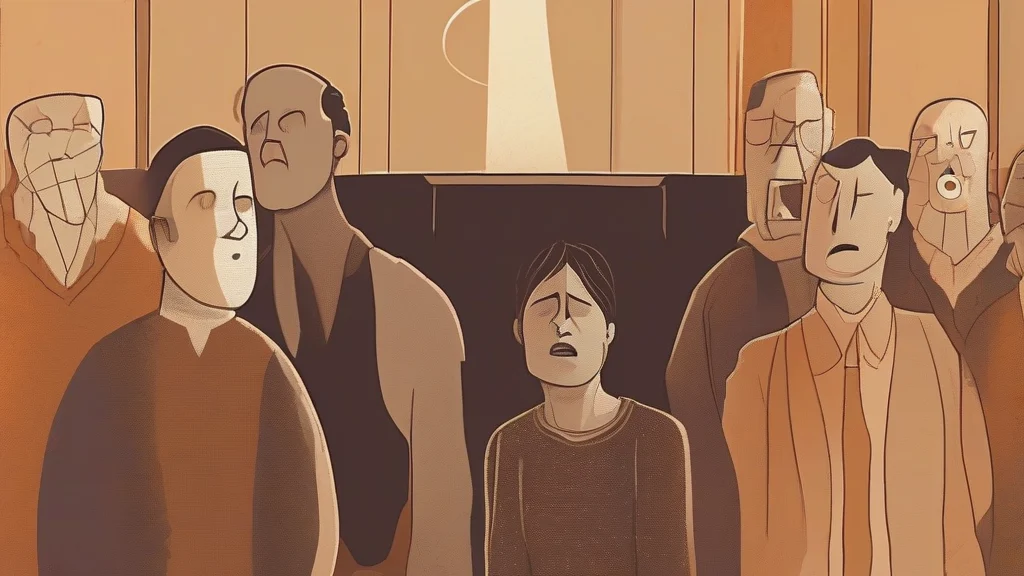
What does booed mean?
"Booed" is the past tense and past participle of the verb "boo," meaning to express public disapproval or contempt by shouting "boo" or making loud jeering noises at a performer, speaker, politician, or athlete. It is overwhelmingly used in contexts involving live audiences — stadiums, theatres, comedy clubs, and public gatherings — where collective reaction is visible and audible. A person who is booed may also be described as having been "booed off stage," meaning the hostility forced them to stop performing. The word is informal to neutral in register and always connotes negative judgment; its opposite is being cheered or applauded. Derived from the exclamation "boo," which emerged in English in the early nineteenth century as a sound used to startle people and later to voice scorn, "booed" captures a distinctive social phenomenon: the moment an audience stops merely watching and begins actively rejecting what it sees. It remains a vivid shorthand for public failure or unpopularity.
verbPast tense and past participle of "boo": to express disapproval or contempt for a performer, speaker, or team by shouting "boo" or making other loud sounds of rejection.
- To have expressed disapproval of someone (a performer, speaker, or athlete) by shouting "boo" or similar jeering sounds.
"The crowd booed when the referee awarded the controversial penalty."
"The comedian was booed after his opening joke fell flat."
"Fans booed their own team as they trudged off the pitch at half-time."
"Boo" is one of the few words audiences around the world instinctively understand without translation — and being booed has ended careers, from opera houses to political rallies.
Reviewed by Deb Chak, Editor. AI-assisted content curated by RJS Tech Solutions LLP.
Etymology of booed
"Booed" derives from the interjection "boo," which appeared in English in the early nineteenth century, originally as a cry intended to startle or frighten. Over time the word shifted to describe jeering and expressing contempt at public performances, with "boo" functioning both as a standalone exclamation and as the base of verbs and nouns such as "booing." The word's origin lies in imitative speech — it mimics a sudden vocal burst — rather than deriving from Latin or Greek roots, so it has no classical cognates.
Related word forms
How booed is actually used
"Booed" is informal to neutral in register and carries a clearly negative connotation — it signals public, collective disapproval. It is most commonly associated with sports arenas, theatres, comedy clubs, and political events. The passive form ("was booed") is especially frequent.
Easily confused with booed
"Boohoo" is an exclamation of mock crying or a fashion retailer, while "booed" is the verb form describing shouting in disapproval.