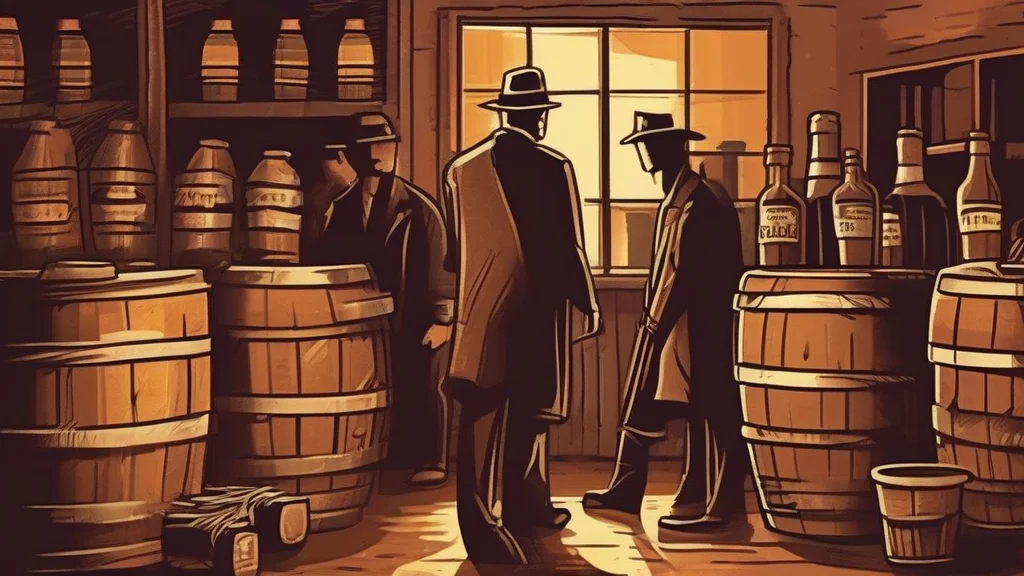
What does bootlegging mean?
Bootlegging is the illegal production, distribution, or sale of goods — most famously alcoholic liquor — undertaken to evade taxes, licensing restrictions, or outright bans. The term entered widespread use in nineteenth-century America, when traders hid flasks of whiskey in the legs of their boots while smuggling it into areas where sales were forbidden. It became indelibly linked with the Prohibition era of 1920 to 1933, when the ban on alcohol in the United States gave rise to vast bootlegging operations run by organized crime figures such as Al Capone. Today the word has broadened beyond liquor: it is commonly applied to the unauthorized recording and sale of music, films, and other copyrighted material. Bootlegging carries connotations of lawlessness, secrecy, and underground enterprise, yet it is often used neutrally in historical and journalistic contexts. Its enduring association with defiance of authority makes it a vivid and frequently invoked term.
nounThe illegal production, distribution, or sale of goods, especially alcoholic liquor, typically to evade taxation, licensing laws, or prohibition. The term also applies to the unauthorized recording or pirating of music and other media.
- The illegal manufacture, transportation, or sale of alcoholic liquor, especially during American Prohibition (1920–1933).
- The unauthorized recording, reproduction, and sale of copyrighted material such as music or films.
"During Prohibition, bootlegging flourished across America as smugglers ferried Canadian whisky over the border."
"Chicago's bootlegging trade made Al Capone a fortune during the Prohibition era."
"The band was furious to discover that a bootlegging ring was selling recordings of their live shows without permission."
The word comes from smugglers hiding flasks of liquor in their boot legs — a trick so common it named an entire criminal industry.
Reviewed by Deb Chak, Editor. AI-assisted content curated by RJS Tech Solutions LLP.
Etymology of bootlegging
Bootlegging derives from "bootleg," an American English compound referring to the leg of a boot. The verb arose in the mid-to-late nineteenth century from the practice of concealing flasks of illicit liquor inside boot tops or boot legs while smuggling them, particularly across state lines or borders where alcohol sales were restricted. The gerund form "bootlegging" followed naturally as the activity itself became notorious, especially during American Prohibition. Related words sharing this root include bootleg, bootlegger, and bootlegged.
Related word forms
How bootlegging is actually used
Primarily associated with American history and the Prohibition era, where it carries strong connotations of organized crime. In modern usage it extends figuratively to piracy of recorded media. The term is standard in both British and American English, though its historical associations are chiefly American.
Easily confused with bootlegging
"Bootleg" is the adjective or verb describing illegal goods or the act of making them, while "bootlegging" is the noun naming the activity itself.
Smuggling is the broader term for illegally moving any contraband across borders, whereas bootlegging specifically refers to illicit manufacture and sale, historically of liquor.