
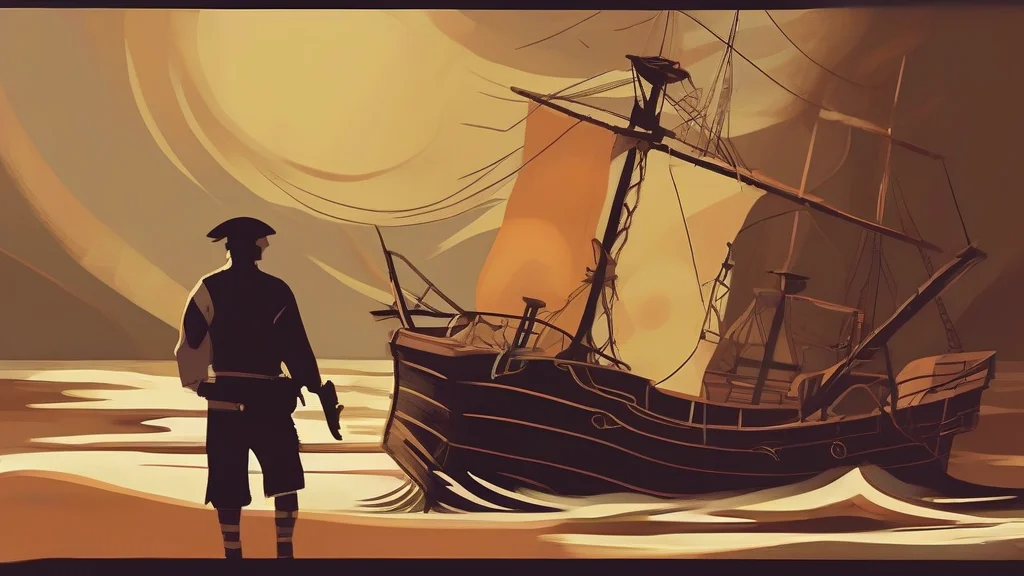
What does piracy mean?
Piracy means taking property by force, especially at sea, but it now also describes the unauthorized copying and distribution of copyrighted works such as software, music, films, and books. Historically, piracy was associated with organized maritime robbery and violence against ships and coastal communities. In contemporary usage, “digital piracy” usually refers to sharing or selling protected material without permission, often through online platforms. The word carries a strong negative moral and legal association: piracy is not merely imitation or informal borrowing, but a form of theft that deprives creators or rightful owners of income and may involve organized criminal networks. Understanding both senses helps distinguish maritime piracy from copyright infringement while recognizing how the word has expanded from the seas to the digital economy.
nounPiracy is the practice of committing robbery or other acts of violence at sea, especially as an organized activity. It also refers to the unauthorized copying, distribution, or sale of copyrighted works.
- The practice of robbery, violence, or illegal seizure of property at sea.
- The unauthorized copying, reproduction, distribution, or sale of copyrighted material, especially software, music, films, or books.
- The act of engaging in such practices.
"The company reported a sharp increase in digital piracy after several popular films were released without authorization."
"Coastguards intercepted a vessel believed to have been involved in piracy off the Somali coast."
"Education campaigns aimed to reduce piracy by discouraging the unauthorized download of copyrighted software."
Used for separate acts, cases, or instances of piracy.
"The platform has worked with authorities to reduce online piracies of newly released films."
From the Greek word for “sea robber,” piracy began as an organized threat on the high seas and now threatens creative industries online.
Reviewed by Deb Chak, Editor. AI-assisted content curated by RJS Tech Solutions LLP.
Where does piracy come from?
The word entered English through Old French pirate, which came from Latin pirata, “sea robber.” The Latin word derives from Greek peirates, associated with peirō, “to plunder” or “to capture.” Over time, pirate developed into a general term for maritime robbers, and piracy came to denote the practice or system itself; by the late 20th century, the term had also been extended to unauthorized commercial copying and distribution.
Related word forms
How piracy is actually used
The term can refer literally to maritime crime or figuratively to copyright infringement. In the modern commercial context, “digital piracy” is especially common, while “maritime piracy” distinguishes the historical or naval sense.
Easily confused with piracy
Privateering is historically authorized by a government to attack enemy ships, whereas piracy is unauthorized maritime robbery.
Plagiarism is the unattributed appropriation of another writer's ideas or wording, while piracy more broadly refers to unauthorized copying, distribution, or sale of protected works.