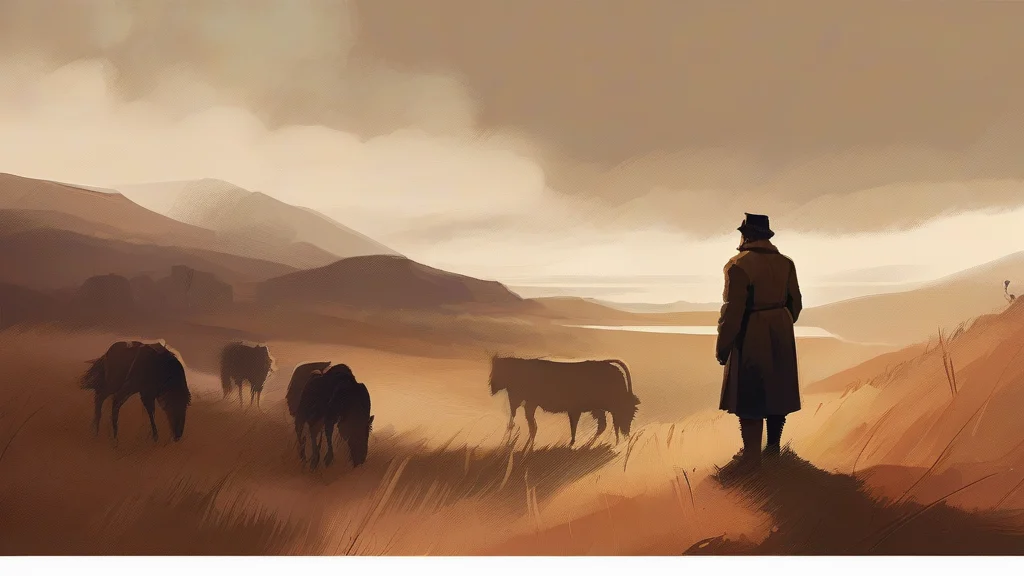
What does borderer mean?
A borderer is a person who lives in a region adjoining a national or political frontier, particularly the territory straddling the boundary between two countries. The word carries strong historical associations with the Anglo-Scottish border, where the 'borderers' were communities shaped by centuries of cross-border raiding, feuding, and military service, giving the term a slightly romantic or literary flavor today. In contemporary usage it appears most often in historical writing, journalism about frontier regions, or discussions of communities divided by international boundaries, such as those along the US–Mexico border. The capitalized form 'Borderer' may denote members of British Army regiments historically recruited from the border country. Because everyday English now favors phrases like 'border resident', 'borderer' tends to signal either historical context or deliberate stylistic choice, lending writing about frontiers a sense of continuity with the past.
nounA person who lives in a border region, especially the district along a frontier between two countries or territories. Historically, the term refers specifically to the inhabitants of the Anglo-Scottish border country.
- A person who lives in a border region or frontier district.
- Specifically, a historical inhabitant of the Anglo-Scottish borderlands.
"The borderers had grown accustomed to raids and reprisals crossing the frontier."
"The borderers traded freely across the frontier that officials sought to close."
"In Tudor times the borderers of the Anglo-Scottish marches were famed for their feuding clans."
Standard plural, used for multiple inhabitants of border regions.
"The treaty brought little peace to the borderers who farmed the contested valley."
For centuries, being a 'Borderer' meant living in the lawless Anglo-Scottish frontier where raiding was practically a way of life.
Reviewed by Deb Chak, Editor. AI-assisted content curated by RJS Tech Solutions LLP.
Etymology of borderer
Borderer derives from the noun 'border', which entered Middle English from Old French 'bordure', meaning the edge or margin of something. The agentive suffix '-er' was added to denote a person associated with that edge, producing a word attested from around the sixteenth century for dwellers on a frontier. It shares this French root with related terms such as 'bordure' in heraldry. Its most famous application came in reference to the peoples of the Anglo-Scottish borderlands.
How borderer is actually used
The term is somewhat literary or historical in register; in modern usage 'border resident' is more common in everyday speech. Capitalized as 'Borderer', it can refer specifically to people of the Anglo-Scottish border country, including members of historic regiments bearing that name.
Easily confused with borderer
A 'boarder' is someone who pays for lodging and meals in another's home or lives at an institution, whereas a 'borderer' is a person living in a border region.