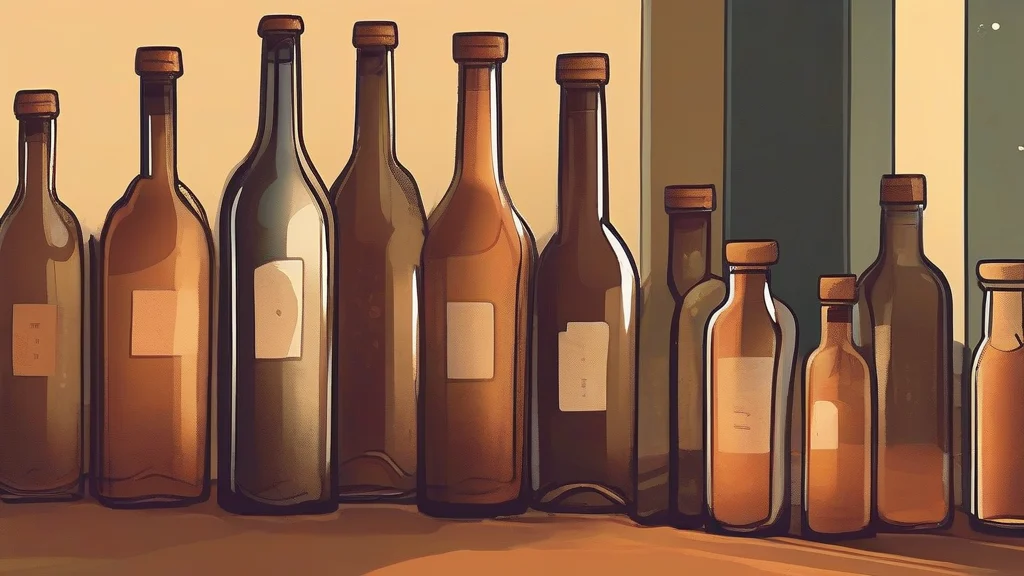
What does bottled mean?
'Bottled' serves primarily as the past tense and past participle of the verb 'to bottle', which means to place a substance—most often a liquid such as wine, beer, sauce, or spring water—into bottles for storage, transport, or sale. It also functions as an adjective describing goods that come in bottles rather than in cans, cartons, or from taps, as in 'bottled water' or 'bottled lemonade'. Beyond the literal sense, the phrase 'bottled up' is widely used figuratively to describe emotions that have been suppressed rather than expressed, carrying a connotation of quiet tension or withheld feeling. In British informal speech, saying someone 'bottled it' means they lost their courage at a crucial moment. The word derives ultimately from Medieval Latin 'buticula', a small cask, the same lineage that gave English the word 'butler'—originally the household officer responsible for the wine bottles. Its everyday commercial associations make it a familiar and versatile term in both domestic and industrial contexts.
Put (a liquid or other substance) into bottles or similar sealed containers, typically for storage or sale.
"They bottled the cider in October and stored it in the cellar."
In the phrase 'bottled up', the sense is figurative, referring to suppressed emotions. British slang 'bottled it' means to lose one's nerve.
Contained or sold in bottles, especially as opposed to being canned, draught, or fresh from the tap.
"The restaurant offers both tap and bottled mineral water."
Most commonly seen in commercial terms like 'bottled water' and 'bottled beer'.
The word 'butler' originally meant exactly what it sounds like it should: the servant in charge of the bottles.
Reviewed by Deb Chak, Editor. AI-assisted content curated by RJS Tech Solutions LLP.
Etymology of bottled
'Bottled' comes from 'bottle', which entered Middle English from Old French 'bouteille', itself borrowed from Medieval Latin 'buticula', a diminutive of Latin 'butis' meaning a cask. The same French source produced the title 'butler', originally denoting a servant who looked after the wine bottles of a great house. The verb 'to bottle' arose in the sixteenth century as bottling became a practical means of preserving liquids, and the figurative use in 'bottled up' developed later from the image of contents sealed tightly inside a container.
Related word forms
How bottled is actually used
'Bottled up' is almost always used figuratively to describe repressed emotions and carries a slightly negative connotation of unhealthy restraint. The adjective sense is most frequent in commercial contexts such as 'bottled water' and 'bottled beer'. In British English, 'bottled it' is informal slang meaning to lose one's nerve.
Easily confused with bottled
'Mottled' describes something marked with spots or blotches of different colors, whereas 'bottled' refers to sealing something in a bottle.