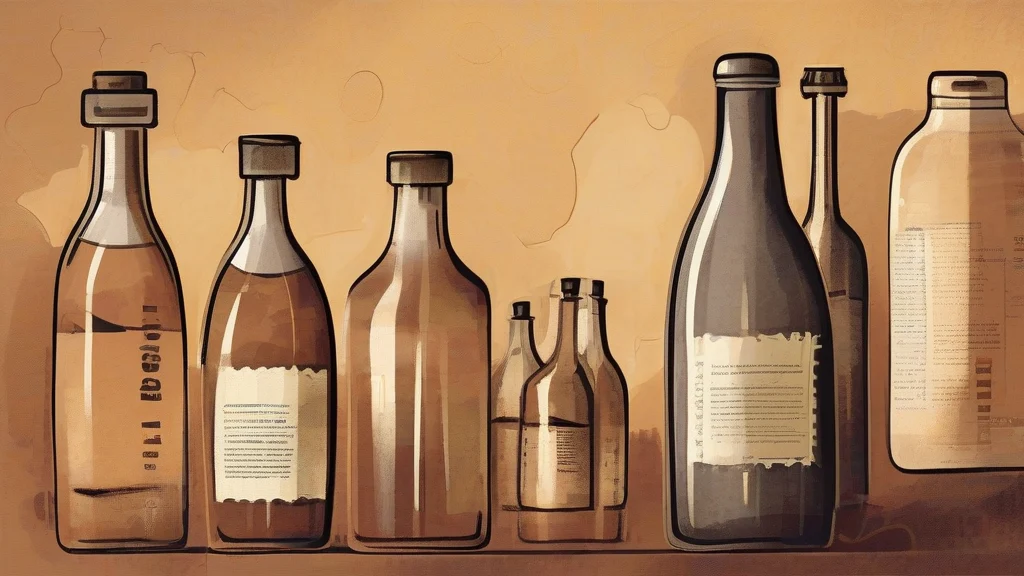
What does bottling mean?
Bottling is the process of transferring a liquid—most commonly wine, beer, water, sauces, or soft drinks—into bottles and sealing them for storage, distribution, or sale. As a noun, it names both the activity itself and, particularly in the wine trade, a specific quantity or batch filled at one time, so that critics may speak of 'an excellent early bottling'. As the present participle of the verb 'to bottle', it simply describes the act of filling containers. The word carries industrial connotations through phrases like 'bottling plant' and 'bottling line', yet it also has a homely side: in British English, home bottling refers to preserving fruit and vegetables in jars, much like American canning. Because bottling marks the moment a product leaves the maker's hands, its date is often printed on labels and treated as a point of reference for quality and ageing.
The act or process of putting a liquid into bottles and sealing them; also, a batch of liquid bottled at one time.
"This chardonnay is from the estate's first bottling."
In wine terminology, a 'bottling' identifies a specific batch and can carry quality implications.
Present participle of 'bottle': to put a substance into bottles and seal them.
"They are bottling the cider this weekend."
Rarely used; when pluralized, it usually refers to distinct batches, especially in wine tasting notes.
"Comparing the two bottlings revealed striking differences between vintages."
Before cork-sealed bottles became standard, wine was often stored in barrels — the humble act of bottling helped transform wine from a tavern drink into an ageable luxury.
Reviewed by Deb Chak, Editor. AI-assisted content curated by RJS Tech Solutions LLP.
Etymology of bottling
Bottling derives from 'bottle', which entered English in the late Middle Ages from Old French 'bouteille', itself from medieval Latin 'butticula', a diminutive related to 'butt' meaning a cask or barrel. The verb 'to bottle' arose by derivation from the noun, and its present participle came to denote the packing process as such. Cognates include French 'bouteille' and Spanish 'botella', all tracing back to that same Latin root for vessels.
Related word forms
How bottling is actually used
In wine contexts, 'bottling' can refer both to the process and to a specific vintage batch ('a fine early bottling'). In British English, home 'bottling' also commonly describes preserving fruit or vegetables in jars, overlapping with what Americans call canning.
Easily confused with bottling
'Coddling' means treating with excessive care or indulgence, while 'bottling' refers to sealing liquids in bottles.