What does canning mean?
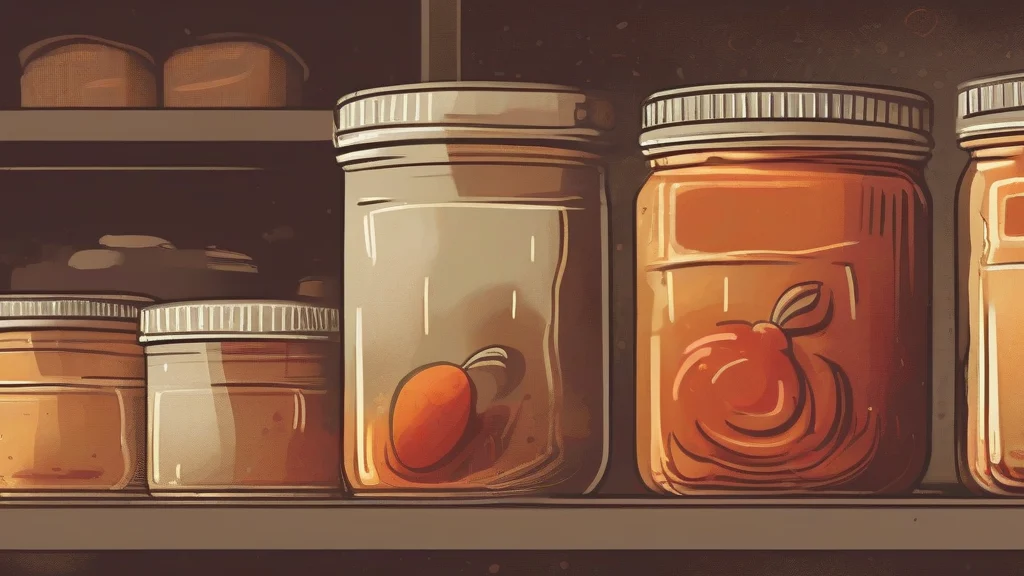
Canning is the practice of preserving food by packing it into airtight containers — typically tin cans or glass jars — and heating it sufficiently to destroy the microorganisms that would otherwise cause spoilage. Developed commercially in the early nineteenth century, initially to supply armies and navies with portable provisions, canning quickly spread to households, where "home canning" remains a beloved seasonal ritual, especially in North America during harvest time. The word also carries an informal American sense: the canning of an employee means his or her dismissal from a job. Because heat processing destroys not only bacteria but also enzymes and yeasts, properly canned goods can remain safe and edible for years without refrigeration, which made the technique revolutionary for food distribution. Today the term evokes both industrial food production and the homely image of a kitchen lined with jewel-colored jars of preserves.
The process or practice of preserving food by sealing it in airtight cans or jars and sterilizing it with heat.
"Water-bath canning works well for high-acid foods like tomatoes and pickles, while pressure canning is required for vegetables and meats."
In British English, preserving food in jars at home is often called "bottling" rather than canning.
(US, informal, usually with 'the') Dismissal from employment; the act of firing someone.
"Rumors of mass layoffs proved true when the canning of the entire design team was announced Friday afternoon."
As a mass noun referring to the process, "canning" is normally uncountable; the plural appears only rarely, in reference to multiple distinct instances or sessions of canning.
"Her autumn cannings yielded over forty jars of applesauce."
Canning was born of a French cash prize: Napoleon offered 12,000 francs to anyone who could invent a way to feed his army on the march — and confectioner Nicolas Appert won it with sealed glass jars around 1810.
Reviewed by Deb Chak, Editor. AI-assisted content curated by RJS Tech Solutions LLP.
Etymology of canning
Canning derives from the noun "can," a container that entered English in late Middle English (around the fourteenth century) from Old Norse "kanna," a drinking vessel, which itself traces back through Proto-Germanic to Latin "canna," meaning a reed or cane. When Appert's preservation method was adapted to sealed metal vessels in the early nineteenth century, English speakers naturally formed "canning" from this familiar container word, and the related nouns "canner" and "cannery" followed shortly after. The same Germanic root underlies words such as "canister" (from Latin "cannistrum," a basket woven from reeds), linking the humble food jar to a much older family of container terms.
Related word forms
How canning is actually used
"Canning" as food preservation is standard worldwide, though British speakers more often say "bottling" for home jar-preservation. The sense meaning job dismissal is chiefly American and informal. Note that the rare adjective "canning" (= shrewd, careful) is now largely confined to Scots dialect.
Easily confused with canning
"Cunning" describes crafty intelligence or slyness, while "canning" refers to food preservation (or, informally, firing someone) — they differ by only one letter.
An older adjective "canning," meaning shrewd or careful, survives mainly in Scottish dialect and should not be confused with the food-preservation noun.