
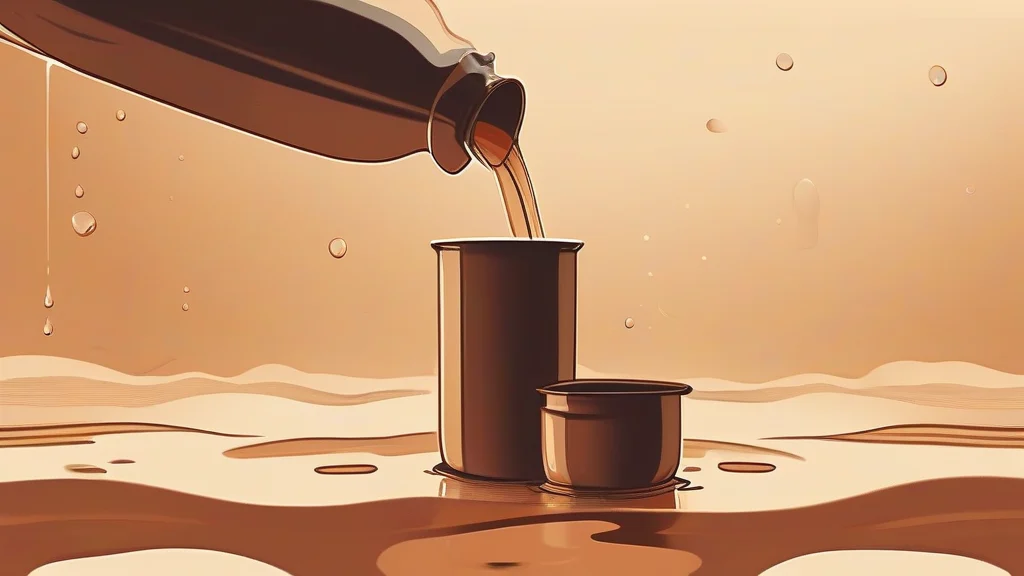
What does pouring mean?
“Pouring” is the present participle of “pour,” the verb for making a liquid flow from one container or place to another. In everyday use it describes an active flow—“The tea was pouring from the pot”—and “pouring rain” means rain falling so heavily and continuously that it resembles a torrent. The word can also be used figuratively: a speaker may be “pouring out” information, while donations or praise may be “pouring in.” As a noun, “a pouring” refers to the act or stream of pouring, though this use is less common than the verb form. As a participial adjective, “pouring” evokes abundance, force, and lack of restraint, often with the sense that something is arriving faster than it can be handled. The expression is standard in both British and American English and is especially useful for describing weather, liquids, speech, and large quantities of things.
As a present participle or gerund, it means causing liquid or another substance to flow from a container, or describing a liquid flowing forcefully.
"She stood aside as the workers were pouring concrete into the foundation."
It can also be used figuratively for the rapid expression of words, information, emotions, or resources.
The act or process of pouring, especially an individual flow of liquid or the dispensing of a liquid for evaluation.
"The pouring continued until the receiving vessel was full."
The noun is uncommon compared with the verb and participial uses; “outpouring” is often preferred for an extended emotional or verbal expression.
Describing rain that is falling very heavily and continuously.
"They waited beneath the porch until the pouring rain eased."
The established expression is “pouring rain”; the participial use is common in standard British and American English.
The plural is possible but uncommon; the singular “a pouring” is more usual for an individual act or stream.
"Each pouring was timed to ensure that the mixture remained consistent."
In “pouring rain,” the sky behaves like an tipped container that never runs out.
Reviewed by Deb Chak, Editor. AI-assisted content curated by RJS Tech Solutions LLP.
Where does pouring come from?
The English verb developed in Middle English as “pouren,” borrowed from Old French “pourer.” Old French “pourer” came through Medieval Latin “purare,” ultimately from Latin “porare” or “por(h)are,” a verb meaning “to pour.” The Latin word is generally traced to Indo-European elements associated with “through” and “to flow,” reflecting the image of liquid passing through an opening.
Related word forms
How pouring is actually used
“Pouring” is standard in both British and American English. As a participial adjective, it gives “pouring rain” a sense of force and abundance; the figurative use can suggest a rapid, sometimes indiscriminate flow of speech or information.
Easily confused with pouring
Pouring describes a forceful flow of liquid or heavy rain, whereas purring describes the low, continuous sound made by a cat or an engine.