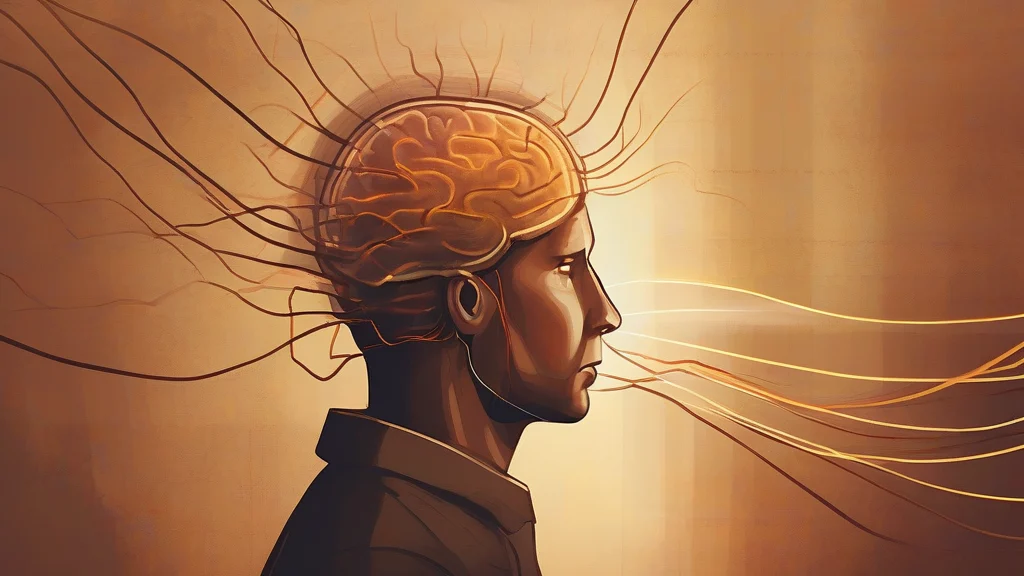
What does brainwave mean?
A brainwave is either a sudden, often inspired idea or one of the rhythmic patterns of electrical activity generated by the brain. In everyday, chiefly British and informal usage, having a brainwave means hitting upon a bright solution out of nowhere: 'Then I had a brainwave — why not sell it online?' In medicine and neuroscience, brainwaves are the oscillating voltage fluctuations recorded by an electroencephalogram, categorized by frequency into types such as alpha, beta, theta, and delta waves, which correspond to different states of consciousness from deep sleep to alert attention. The word's dual life is part of its charm: the metaphorical sense arose by analogy with the physical phenomenon, suggesting that a good idea arrives like a pulse of energy in the mind. Whether describing a flash of genius or the measurable rhythms of thought, brainwave links the poetry of insight to the physiology of the brain itself.
A sudden clever idea or inspiration.
"Her brainwave about renting out the spare room saved them financially."
Informal register; very common in British English.
A pattern of rhythmic electrical activity produced by neurons in the brain, recordable on an electroencephalogram.
"The neurologist studied the patient's brainwaves for signs of epilepsy."
Technical/medical register; usually plural.
The plural is standard and is the usual form in the medical/technical sense referring to multiple patterns of neural activity.
"Meditation is associated with increased alpha brainwaves."
Your brain literally produces brainwaves all day long — but the word for a brilliant idea and the word for measurable electrical pulses in your skull are one and the same.
Reviewed by Deb Chak, Editor. AI-assisted content curated by RJS Tech Solutions LLP.
Etymology of brainwave
Brainwave is a straightforward compound of 'brain' and 'wave', formed in English in the late nineteenth century when scientists first began measuring electrical oscillations in the nervous system. Its figurative use — a sudden bright idea — developed shortly afterward by analogy with those electrical pulses. Related compounds include brainchild (an original creation) and brainstorm, both built on the same root 'brain'.
How brainwave is actually used
The figurative sense ('a sudden idea') is informal and especially common in British English. The literal sense (patterns of neural electrical activity) is technical/medical. Plural is more common in the technical sense.
Easily confused with brainwave
A brainstorm is a session of producing many ideas (or a sudden confused mental state), while a brainwave is a single sudden idea — though 'brainstorm' is also used informally in British English to mean one clever idea.