
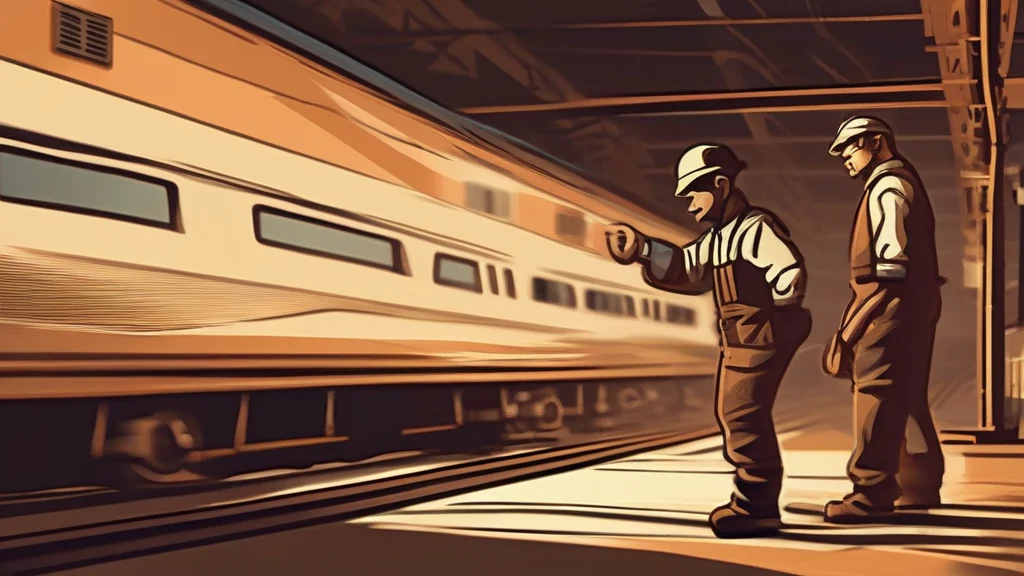
What does brakemen mean?
A brakeman — plural brakemen — is traditionally a member of a railroad train crew charged with operating brakes and performing hands-on work such as coupling cars, throwing switches, and signalling to the engineer. In the era before automatic air brakes, brakemen had to move between cars, often climbing atop rolling stock in bad weather, to wind down hand brakes manually, making the job notoriously dangerous. The title survives today mainly in freight operations with reduced crews and, notably, in the sport of bobsledding, where the brakeman rides in the rear seat and applies the brake after the sled crosses the finish line. The word combines "brake," from the Germanic root meaning an apparatus for stopping motion, with "man," and follows the irregular plural pattern of compounds ending in -man. Though increasingly historical in railway contexts, it remains a vivid term evoking the physical labor and hazard of early railroading.
A railroad worker responsible for applying brakes and assisting with the operation of a train, including coupling, switching, and signalling duties.
"The brakeman signalled the engineer with his lantern before the consist backed onto the siding."
Historically a core freight-crew position in North American railroading; now less common owing to air brakes and reduced crew sizes.
The member of a bobsled crew who occupies the rear seat and operates the brake, typically slowing the sled after it finishes a run.
"After the four-man sled crossed the finish, the brakeman dug in his heels and hauled the brake lever to halt their momentum."
"Brakemen" is already the plural form; the singular is "brakeman." The plural follows the regular -man → -men pattern of English occupational compounds.
"In the age of wooden cabooses, each freight train carried several brakemen stationed among the cars."
Before air brakes made them nearly obsolete, brakemen had to run along train roofs in all weather, spinning stiff hand wheels car by car to stop a moving freight train — one of the deadliest jobs in America.
Reviewed by Deb Chak, Editor. AI-assisted content curated by RJS Tech Solutions LLP.
Etymology of brakemen
The word brakeman is a compound of "brake" and "man," formed in English during the nineteenth century as railways spread and specialized crew roles emerged. "Brake" itself comes from Middle English, probably related to a Germanic root denoting an instrument for stopping or holding motion. Like other -man occupational compounds (fireman, oarsman), it forms its plural by changing -man to -men, giving brakemen. A variant form "brakesman" appears in older British sources but has largely fallen out of use.
Related word forms
How brakemen is actually used
"Brakemen" is the standard plural of "brakeman." In railroad usage the word is strongly associated with North American freight railroading, where brakemen were historically essential crew members; British railways used the related role of "guard." With the adoption of air brakes and reduced train crews, the occupation has declined sharply, so the term now often carries a historical or nostalgic flavor. In winter sports, it refers specifically to the rear-seat brake operator of a two- or four-man bobsled.
Easily confused with brakemen
"Breakmen" is simply a common misspelling; the correct spelling "brakemen" derives from "brake," the device for slowing a train or vehicle.