
What does brassware mean?
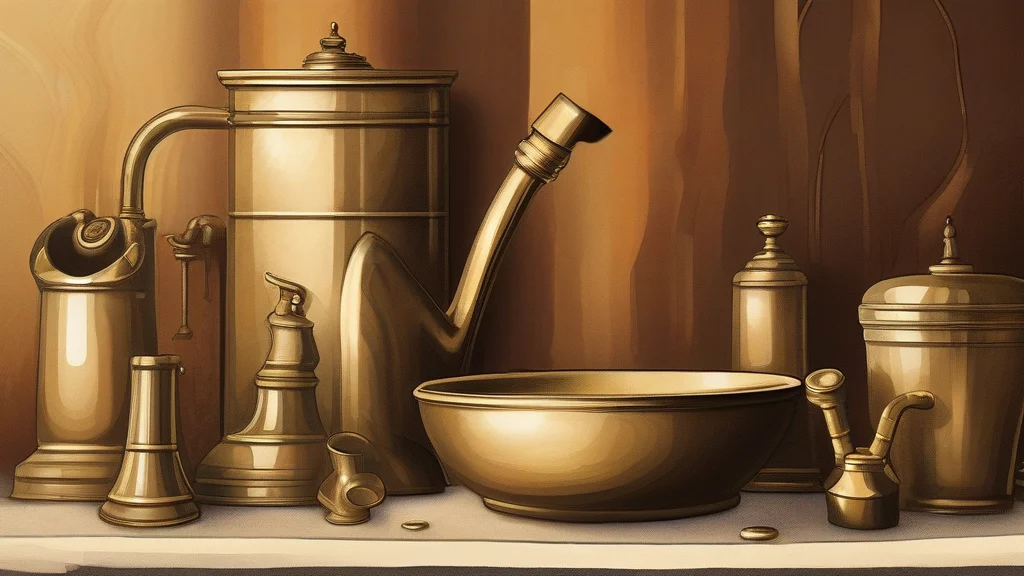
Brassware is a noun referring to objects made of brass, the durable golden-yellow alloy of copper and zinc. In everyday use, the word covers two overlapping categories: functional household fittings — such as taps, door handles, hinges, and bathroom fixtures — and decorative items like candlesticks, vases, bowls, and figurines. The term is particularly common in British English, where 'brassware' frequently appears in plumbing and interior-design contexts to describe premium taps and shower fittings, while elsewhere it often evokes ornamental pieces, including the richly engraved brassware traditions of India and the Middle East. Because polished brass develops a distinctive warm sheen but also tarnishes without care, brassware carries associations of craftsmanship, tradition, and attentive upkeep. As a mass noun it takes singular agreement ('the brassware is gleaming'), and related forms include brassy and brazen, which extend the metal's name into figurative territory.
nounArticles made of brass, especially household fittings and decorative objects such as taps, door handles, candlesticks, ornaments, and bedsteads.
- Household fixtures and fittings made of brass, such as taps, handles, and bathroom or kitchen hardware.
- Decorative or ornamental objects crafted from brass, such as candlesticks, vases, and figurines.
"The Victorian bathroom had been lovingly restored, with gleaming brassware on every tap and shower fitting."
"The showroom displayed a wide range of traditional brassware, from towel rails to basin taps."
"Her shelves were crowded with Indian brassware collected over decades of travel."
Brassware functions as an uncountable mass noun and does not take a plural form; quantity is expressed with phrases such as 'pieces of brassware' or 'a collection of brassware'.
"She arranged her pieces of brassware along the mantelpiece."
That gleaming antique doorknob or Victorian tap? It's not just hardware — it's brassware, and it can hold its polish for a century with nothing more than an occasional wipe.
Reviewed by Deb Chak, Editor. AI-assisted content curated by RJS Tech Solutions LLP.
Etymology of brassware
Brassware combines 'brass', a word of Old English origin recorded by the early Middle English period, with the suffix '-ware', from Old English 'waru' meaning manufactured goods or merchandise. The compound follows the same productive pattern as earthenware, silverware, glassware, and software, denoting goods made of a particular material. Its use grew alongside the domestic and decorative brass trades of the eighteenth and nineteenth centuries, when brass fittings and ornaments became widespread in middle-class homes.
How brassware is actually used
Brassware is an uncountable mass noun in most contexts and takes singular verb agreement. The term is especially common in British English for bathroom and kitchen fittings, while in other regions it more often refers to decorative brass objects. It carries connotations of quality, tradition, and careful maintenance, since polished brass is prized for its warm golden lustre.
Easily confused with brassware
Glassware refers to articles made of glass, while brassware refers to articles made of the metal alloy brass.