What does brayed mean?
"Brayed" is the past tense and past participle of the verb "bray," which primarily describes the loud, harsh, discordant cry made by a donkey. The word extends figuratively to human behavior: a person who brayed laughed or spoke in a loud, grating manner that listeners find coarse or irritating. This figurative use is almost always unflattering, carrying connotations of boorishness rather than mere volume. The term derives through Old French from imitative origins, echoing the sound it describes. In modern usage, "brayed" appears both in literal descriptions of animals — as in barnyards, fables, and nature writing — and in vivid character description, where writers deploy it to sketch an unpleasant voice economically. Its onomatopoeic force makes it more expressive than neutral alternatives such as "called out" or "laughed," which is why it survives in literary and journalistic prose whenever a speaker's tone needs sharp definition.
verbPast tense and past participle of "bray": to make the loud, harsh cry of a donkey, or to speak or laugh in a similarly loud, grating voice.
- To have made the loud, harsh cry characteristic of a donkey.
- To have spoken or laughed in a loud, grating, unpleasant voice.
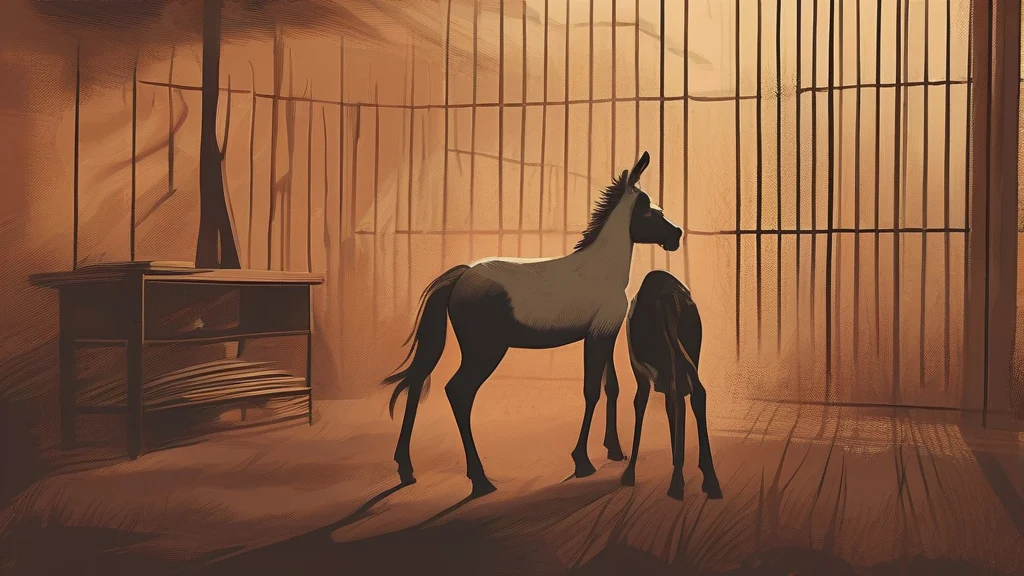
"The donkey brayed loudly at anyone who came near its paddock."
"The mule brayed insistently until it was fed."
"He brayed with laughter at his own joke, drowning out the conversation."
When someone 'brays' with laughter at your joke, English is comparing them directly to a donkey.
Reviewed by Deb Chak, Editor. AI-assisted content curated by RJS Tech Solutions LLP.
Etymology of brayed
"Brayed" comes from "bray," which entered Middle English from Old French "braier," meaning to cry out or bellow. The ultimate origin is likely imitative or expressive in nature, reflecting the harsh sound itself rather than deriving from a classical root. Related expressive words include "bawl" and "blare," which likewise capture loud, unmusical noise.
Related word forms
How brayed is actually used
"Brayed" carries a strongly negative connotation when applied to human speech or laughter, suggesting vulgarity, loudness, or lack of refinement. It is chiefly used of donkeys and, figuratively, of people whose voices are considered harsh or annoying.
Easily confused with brayed
"Braid" means to weave strands of hair or material together, while "brayed" refers to making a loud, harsh donkey-like sound.