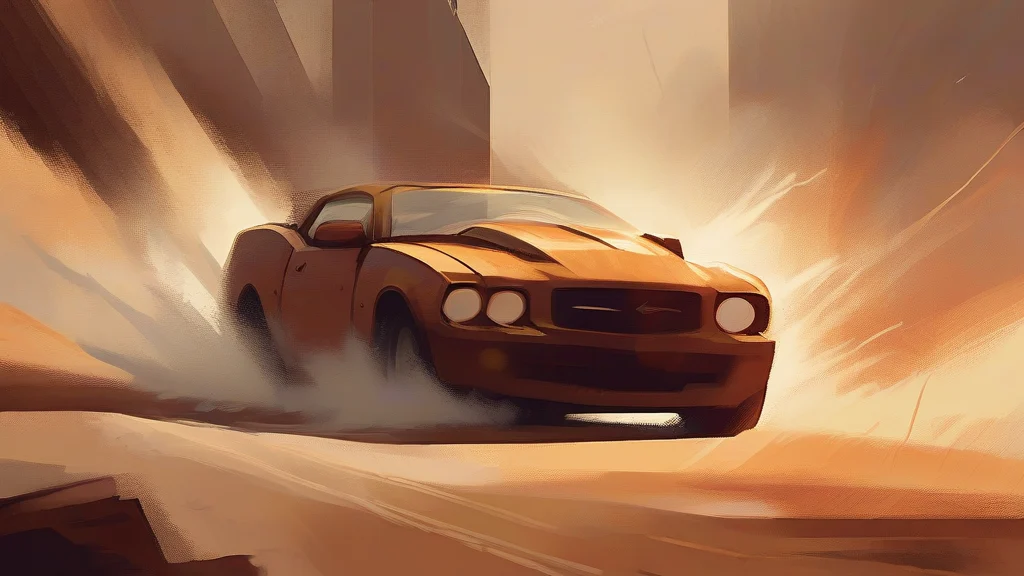
What does breakneck mean?
Breakneck is an adjective describing something done at a dangerously or recklessly fast speed. It appears almost exclusively in the phrase patterns 'breakneck speed' and 'breakneck pace', where it lends a vivid sense of peril — the image being that one is moving so quickly that a fall could literally break one's neck. The word is common in journalism and narrative writing to characterize driving, racing, economic growth, urban development, or any headlong rush of events. Its connotations are dramatic rather than purely negative: while it flags danger, it often carries an undercurrent of excitement or urgency, as in 'a breakneck descent down the ski slope'. The term dates back to the sixteenth century and was formed transparently in English from the compound of 'break' and 'neck'. Because its meaning is so immediately graspable, it remains a favorite of writers seeking a compact way to convey both velocity and risk in a single word.
adjectiveDangerously or recklessly fast, especially of speed or pace; so rapid as to risk disaster.
- (Of speed, pace, or activity) dangerously fast; recklessly swift.
"They drove at a breakneck speed down the narrow mountain road."
"The cyclists set a breakneck pace from the very start of the race."
"The city grew at a breakneck rate, swallowing farmland within a decade."
The word literally dares you to lose your head — 'breakneck' has meant 'fast enough to snap your neck' since the 1500s.
Reviewed by Deb Chak, Editor. AI-assisted content curated by RJS Tech Solutions LLP.
Etymology of breakneck
Breakneck was formed in English during the sixteenth century as a straightforward compound of the verb 'break' and the noun 'neck', on the model of other self-explanatory compounds like 'breakbone' fever-type formations. It first denoted something likely to cause a broken neck — a dangerous slope or ride — and soon settled into its modern sense of recklessly fast speed. It is a native English formation, not borrowed, so it has no true cognates in other languages, though its components trace back through Middle English and ultimately to Proto-Germanic roots shared with German 'brechen' and 'Nacken'.
How breakneck is actually used
Almost always used attributively before a noun (breakneck speed, breakneck pace) rather than predicatively. Carries a vivid, slightly dramatic register common in journalism and narrative writing.
Easily confused with breakneck
'Heartbroken' describes overwhelming grief from loss, while 'breakneck' describes dangerously fast speed or pace.