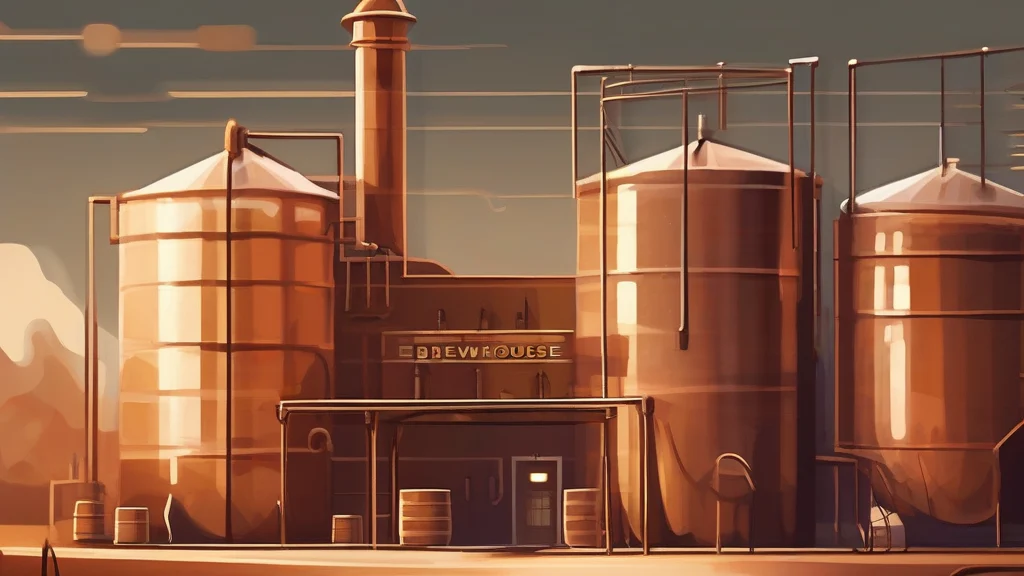
What does brewhouse mean?
A brewhouse is a building, or a section of a building, devoted to brewing beer. The term predates the modern word "brewery" and carries a distinctly historical resonance: it evokes the great monastic breweries of medieval Europe, the brewhouses that once stood on English country estates supplying ale to household and workforce alike, and the copper-kettled production halls of classic commercial breweries. Today it appears most often in heritage and craft contexts — preserved Victorian brewhouses open for tours, or craft breweries naming their production space the brewhouse, referring specifically to the area housing the mash tun, lauter tun, and kettle. The word is a straightforward compound of "brew" and "house," transparent in meaning yet rich in association. For anyone interested in beer history, architecture, or the language of brewing, "brewhouse" is an evocative alternative to the more clinical "brewery," conjuring steam, malt aromas, and centuries of brewing tradition.
nounA building or establishment where beer is brewed; a brewery, especially one attached to or associated with a public house.
- A building or plant where beer is brewed (a brewery).
- Historically, the brewing department of an estate, monastery, or large household.
"The old brewhouse behind the inn still produces a dark porter using Victorian equipment."
"Visitors can tour the restored brewhouse and watch copper kettles bubbling with wort."
"Records from 1582 show the abbey's brewhouse supplied ale to the entire village."
Regular plural; used when referring to multiple brewing establishments, e.g. comparing historic sites.
"Several of the region's surviving monastic brewhouses are now museums."
Many medieval monasteries ran their own brewhouses so monks could enjoy beer even during Lenten fasts — liquid bread, as they called it.
Reviewed by Deb Chak, Editor. AI-assisted content curated by RJS Tech Solutions LLP.
Etymology of brewhouse
Brewhouse is a compound of the verb "brew" and the noun "house," formed in Middle English from Old English roots. "Brew" descends from Old English brēowan, which shares a Proto-Germanic origin cognate with German brauen, Dutch brouwen, and ultimately with Latin fermentum-related and Indo-European roots connected to heating or boiling liquids. The compound follows a productive Old and Middle English pattern seen in words like bakehouse and bathhouse. Cognates include German Brauhaus, which is a direct parallel formation.
How brewhouse is actually used
"Brewhouse" is somewhat more traditional or historical in flavor than "brewery," which is now the standard term for commercial beer-making facilities. It often appears in heritage contexts — historic estates, monasteries, and preserved industrial sites. In modern craft-beer parlance, "brewhouse" can also refer specifically to the room containing the brewing vessels, distinct from the fermentation cellar.
Easily confused with brewhouse
A bakehouse is where bread is baked, while a brewhouse is where beer is brewed.
An alehouse is a tavern that sells and serves ale to drinkers, whereas a brewhouse is the place where the beer itself is made.