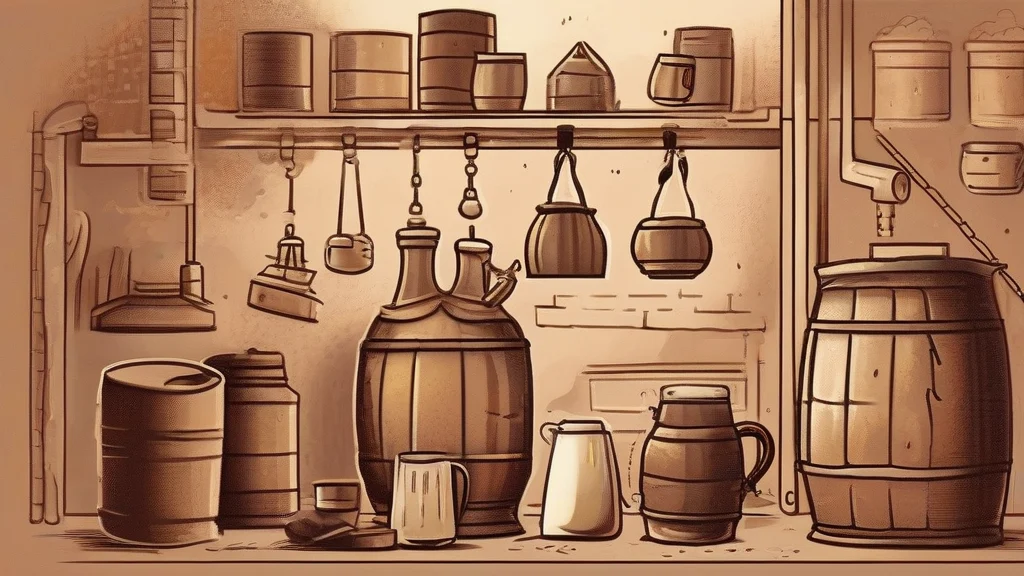
What does brew mean?
To brew is to make a drink — most commonly coffee, tea, or beer — by combining ingredients with hot water or by fermenting them. The word carries warm, domestic connotations when applied to beverages: people speak of brewing a pot of tea on a cold afternoon or brewing their own beer at home as a hobby. Yet brew also has a distinctly ominous figurative side. When we say trouble is brewing, or that a storm is brewing, we mean that something unwelcome is quietly taking shape and will soon come to a head. This dual character — cosy in the kitchen, menacing in the forecast — makes the word unusually versatile. Related forms include brewer, brewery, and the informal British noun brew meaning a cup of tea. Whether describing a carefully crafted ale or gathering political unrest, brew always suggests a process unfolding over time toward some eventual result, which is precisely what gives the word its evocative power.
To make (beer, tea, coffee, or another drink) by mixing, boiling, steeping, or fermenting ingredients.
"She brewed a pot of Earl Grey and set out two cups."
Often used transitively with the drink as object; also used intransitively ('the tea is brewing').
(Of something unpleasant, such as trouble or a storm) to begin to form or develop.
"Rumours had been brewing for weeks before the scandal broke."
Almost always used intransitively and figuratively; frequently appears in progressive tense.
A drink made by brewing; a particular batch or variety of brewed beverage.
"This microbrewery's latest brew is a rich, malty stout."
In informal British English, 'a brew' can mean simply a cup of tea.
Used mainly to refer to different varieties or batches of brewed drinks, especially beers.
"The festival featured craft brews from across the region."
The same verb that gives you your morning coffee has been warning us about brewing storms — and brewing trouble — since Middle English times.
Reviewed by Deb Chak, Editor. AI-assisted content curated by RJS Tech Solutions LLP.
Etymology of brew
Brew comes from Old English brēowan, meaning to brew, which shares a common Germanic root with related words such as broth. The term has been part of the English language since its earliest recorded stages and is cognate with similar words in other Germanic languages. Its figurative sense of things quietly forming developed naturally from the slow, unseen process of fermentation and steeping.
Related word forms
How brew is actually used
'Brew' is common in both everyday and figurative use. As a noun it can mean a particular batch or type of drink ('a strong brew'), often informally in British English for a cup of tea. The figurative sense of something forming ominously is well established in idiomatic English.
Easily confused with brew
'Brow' means the forehead or an eyebrow, whereas 'brew' refers to making a drink or to something forming ominously.