
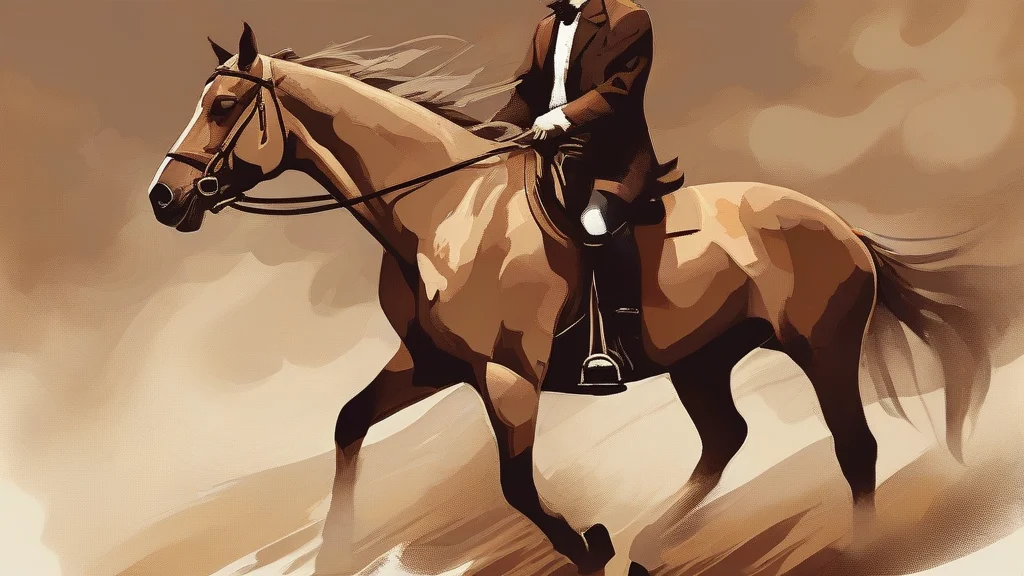
What does bridler mean?
A bridler is, literally, a person who puts a bridle on a horse — the headgear of straps and bit by which a rider guides and controls the animal. Formed as an agent noun from the verb 'to bridle', the word can also be used figuratively for anyone or anything that restrains, checks, or holds in check, much as a bridle restrains a horse. Both senses are rare in modern English: in stables people usually speak of grooms or simply say someone 'bridled the horse', and the figurative use has largely been absorbed by words like 'restrainer' or 'curb'. Where it does appear, 'bridler' tends to sound formal or literary, sometimes deliberately archaic for stylistic effect. Its chief claim on attention today may be its resemblance to 'bridal', a near-homophone with a wholly different meaning tied to weddings rather than horsemanship.
nounA bridler is a person who puts a bridle on a horse, or, by extension, one who restrains or checks something — as in 'a bridler of excess'. The word is rare and chiefly appears as an agent noun formed from the verb 'to bridle'.
- A person who fits or puts a bridle on a horse.
- Figuratively, a person or force that restrains, checks, or curbs something.
"An experienced bridler knows that calming the horse matters more than tightening the straps."
"The stable's head groom, a practiced bridler, fitted the young mare's first bridle without fuss."
"In her essays she cast herself as a bridler of runaway speculation, insisting on evidence before enthusiasm."
Regular plural; the plural is rare because the singular noun itself is uncommon.
"The yard employed two skilled bridlers for its young stock."
Despite sounding like it belongs at a wedding, a bridler's real business is with horses — and with holding things back.
Reviewed by Deb Chak, Editor. AI-assisted content curated by RJS Tech Solutions LLP.
Where does bridler come from?
Bridler derives from the verb 'bride', formed from the noun 'bridle', which comes from Old English 'brīdel', meaning the headgear of a horse. The Old English word's further origin is uncertain, though it may be related to the Germanic root behind 'bregdan', 'to pull or jerk', fitting for gear that pulls at a horse's mouth. The agent-noun suffix '-er' was added in Middle or early Modern English to denote a person who performs the action.
How bridler is actually used
'Bridler' is a rare, somewhat literary agent noun. In literal equestrian contexts, speakers more often say 'groom' or simply describe the action ('he bridled the horse'). The figurative sense — one who restrains — is even less common and carries a slightly formal, old-fashioned tone.
Easily confused with bridler
'Bridal' relates to a bride or wedding, while 'bridler' derives from 'bridle', the headgear used to control a horse — the two are near-homophones but entirely unrelated in meaning.