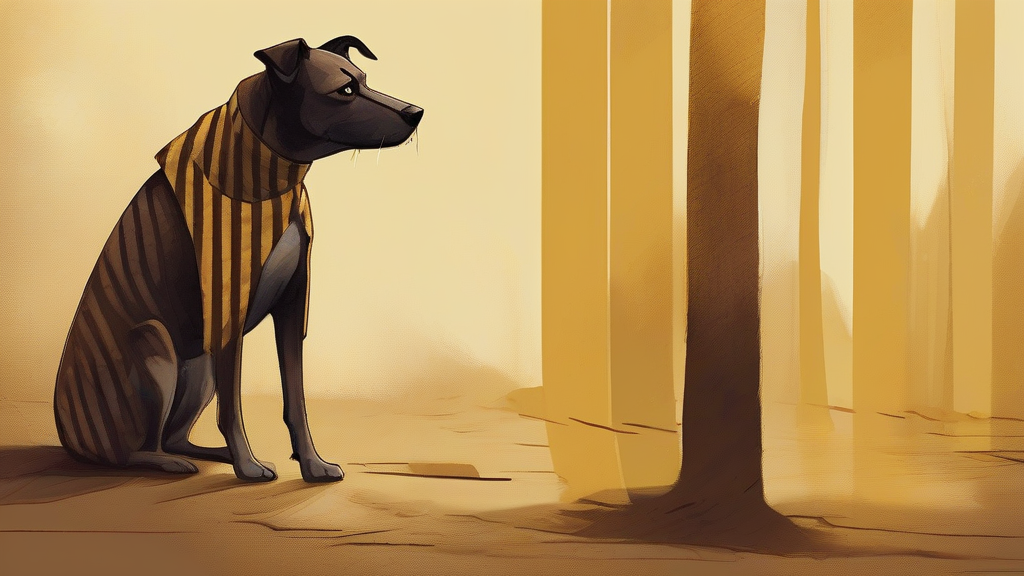
What does brinded mean?
"Brinded" is a literary adjective describing something marked with darker streaks or stripes against a tawny or grayish background — the coloring pattern we more commonly call brindled. It applies chiefly to animals, especially cats and cattle, whose coats show this mottled striping. The word is now rare in everyday English, surviving mainly in poetry, historical prose, and famous quotations: most readers meet it in the opening scene of Shakespeare's Macbeth, where the First Witch announces that "thrice the brinded cat hath mew'd." In such contexts it lends an archaic, atmospheric tone rather than conveying information that "streaked" or "striped" could not. Writers today who want to evoke rustic or early-modern diction may still reach for it, but anyone aiming at plain modern usage should choose "brindled" instead. Its enduring charm lies less in utility than in pedigree — a small, vivid word preserved by one of literature's darkest scenes.
adjectiveHaving a coat or surface marked with darker streaks or stripes on a tawny or grayish background; brindled. Now chiefly literary or archaic.
- Streaked or striped with a darker color on a tawny or gray ground, especially of animal coats (literary or archaic).
"The old barn cat was brinded, its gray fur shot through with darker streaks."
"The witch's familiar was a brinded cat, gray streaked with black."
"A brinded heifer stood quietly among the herd at dusk."
You already know this word from the creepiest line in Shakespeare: 'Thrice the brinded cat hath mew'd.'
Reviewed by Deb Chak, Editor. AI-assisted content curated by RJS Tech Solutions LLP.
Etymology of brinded
The origin of "brinded" is obscure, but it appears in English by the sixteenth century and is closely related to "brindled," the standard modern form of the word, which emerged shortly after. Both terms describe the streaked or striped marking seen on certain animal coats. The word's lasting fame owes much to Shakespeare, who used it in Macbeth (first performed around 1606), helping fix it in the literary canon even as everyday usage shifted toward "brindled."
How brinded is actually used
Rare outside literature and historical texts today; 'brindled' is the ordinary word for this kind of marking. 'Brinded' carries an archaic, poetic flavor and is most often encountered in quotations from Shakespeare.
Easily confused with brinded
'Brindled' is the standard modern adjective for streaked or striped coloring, while 'brinded' is an older, now chiefly literary variant of the same word.