What does bristol mean?
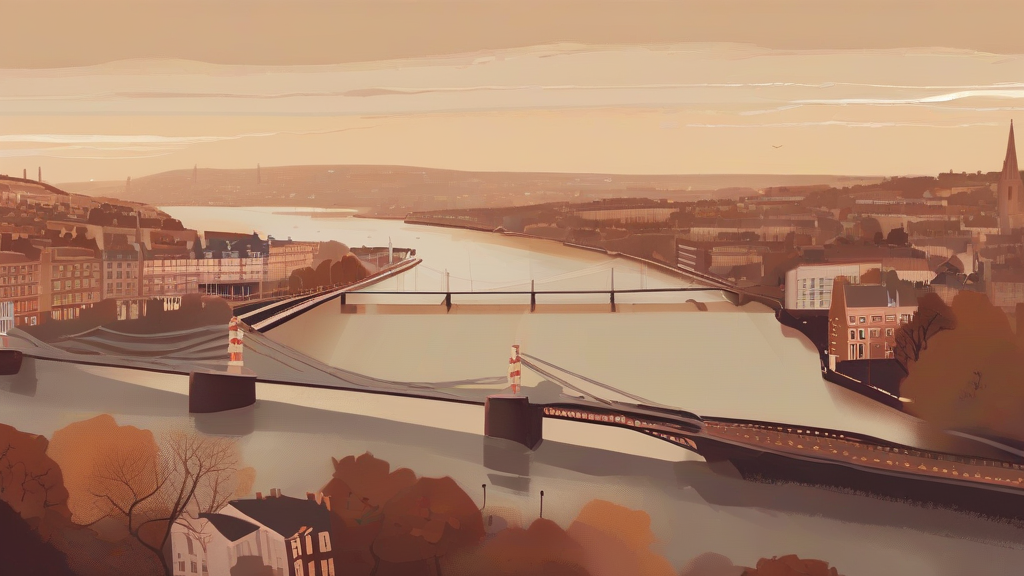
Bristol is a historic port city in southwestern England, situated on the River Avon a few miles inland from the Severn estuary. Its very name is ancient, deriving from Old English elements meaning roughly 'the place by the bridge.' From the Middle Ages onward, Bristol ranked among England's most important ports, trading wool, wine, and later goods with Ireland, Iceland, the Americas, and Africa — though its wealth was also bound up with the transatlantic slave trade, a history the city has confronted openly. Today Bristol is known for its universities, aerospace industry, vibrant music and street-art scene, and landmarks such as the Clifton Suspension Bridge. The city's name has traveled widely: numerous American towns bear it, and artists know 'bristol' as the smooth, sturdy paper first made there. People from Bristol are called Bristolians.
A port and unitary authority in southwestern England, on the River Avon near the Severn estuary.
"We spent a weekend exploring Bristol's harbourside."
Capitalized; no article.
Any of various places, chiefly in the United States, named after the English city.
"Her family settled in Bristol, Connecticut, in the 1890s."
(lowercase bristol) A fine, smooth, heavyweight card stock used for drawing, illustration, and printing.
"Ink flows cleanly across good-quality bristol."
Rarely pluralized; the plural appears only when referring to multiple distinct places named Bristol.
"There are more than a dozen Bristols scattered across the United States."
The name "Bristol" comes from Old English meaning simply 'the place at the bridge' — yet this 'place at the bridge' became one of medieval Europe's great trading ports, giving its name even to a kind of fine writing paper.
Reviewed by Deb Chak, Editor. AI-assisted content curated by RJS Tech Solutions LLP.
Etymology of bristol
The name "Bristol" derives from Old English "Brycgstow," composed of "brycg" ('bridge') and "stow" ('place' or 'meeting place'), referring to an early settlement at a bridge over the Avon; over time metathesis altered the pronunciation to its modern form. The city's name was carried abroad by settlers and merchants, appearing in American place names, and was applied commercially to the smooth card stock produced there, hence "bristol board." The demonym "Bristolian" follows the standard English pattern of adding "-ian" to place names.
Related word forms
How bristol is actually used
As a proper noun, "Bristol" is capitalized and normally takes no article. Lowercase "bristol" or "bristol board" is used mainly in art and printing contexts. A resident is called a "Bristolian."
Easily confused with bristol
"Bristle" is a short stiff hair or to react angrily, while "Bristol" is the English city (or a type of smooth card stock named after it).