
What does brock mean?
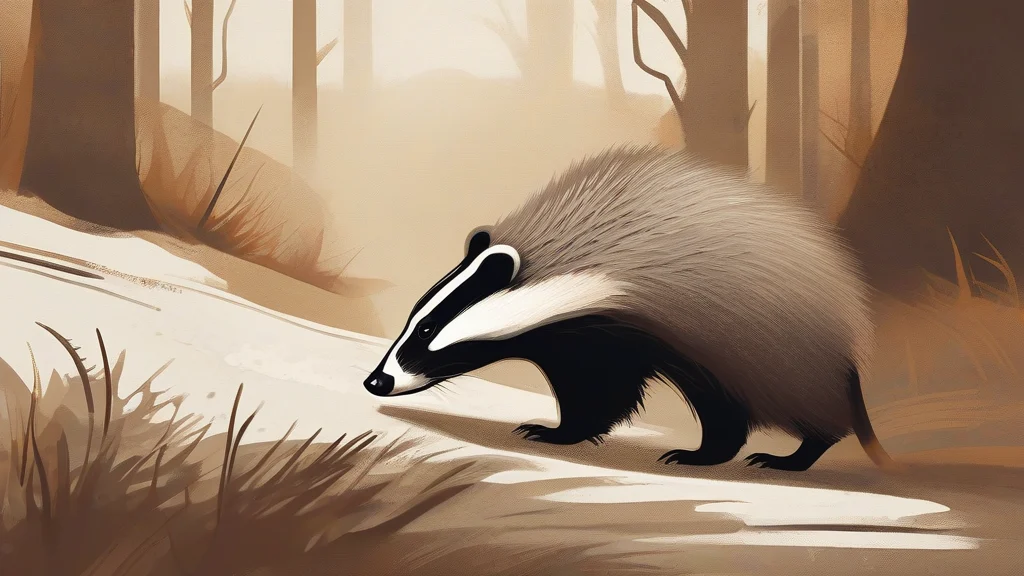
Brock is an old English word for the badger, the stocky, black-and-white-faced burrowing mammal of the weasel family. It entered the language from Old English 'brocc', which itself was borrowed from a Celtic source, and it served as the ordinary country term for the animal for centuries, especially in northern England and Scotland. Today it is rarely heard in everyday speech, having been almost entirely displaced by 'badger', but it lives on in regional dialect, in traditional verse and proverb, and in literature — most famously as Beatrix Potter's Tommy Brock, the disagreeable badger of 'The Tale of Mr. Tod'. The word also endures as a surname, borne by families whose ancestors were perhaps nicknamed for the animal's traits. For readers of older British writing, encountering a brock usually means one thing: somewhere nearby, a badger is about.
nounA badger; an archaic and regional British word for the European badger, Meles meles.
- A badger, especially the European badger (Meles meles) — now chiefly dialectal, literary, or historical.
"The old shepherd swore a brock had been raiding his hens' feed at dusk."
"Hunters once dug for the brock in its sett beneath the beech roots."
"In the tale, Tommy Brock is a lazy, disagreeable brock who steals another animal's home."
Regular plural, though rarely needed since the word itself is uncommon in modern use.
"Local lore held that the brocks would move setts if the wood was disturbed."
Before it was a surname, 'brock' was what English country folk actually called the badger — and Beatrix Potter's villainous Tommy Brock carries the old word straight from rural legend into children's literature.
Reviewed by Deb Chak, Editor. AI-assisted content curated by RJS Tech Solutions LLP.
Etymology of brock
Brock comes from the Old English 'brocc', meaning badger, which was itself borrowed early from a Celtic language — compare Welsh 'broch' and Irish and Scottish Gaelic 'broc'. The word was the common English name for the badger throughout the medieval period, before gradually yielding ground to 'badger' in standard usage while persisting in northern dialects. Its Celtic origin is reflected in related forms across the Celtic languages, and the name survives widely in English surnames such as Brock.
How brock is actually used
The word is largely confined to northern and midland English dialect, older rural writing, and folklore; modern speakers almost always say 'badger'. It survives recognizably in surnames (Brock, Brocks) and in literary characters such as Beatrix Potter's Tommy Brock.
Easily confused with brock
A brooch is an ornamental pin fastened to clothing, whereas a brock is simply an archaic name for a badger.