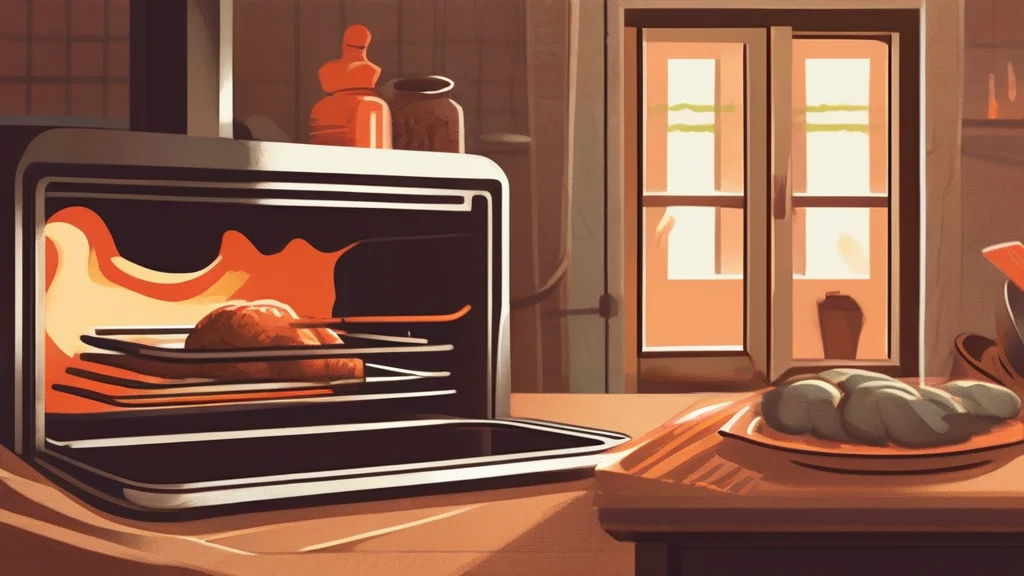
What does broiling mean?
Broiling describes intense, oppressive heat — most often of weather, sunlight, or enclosed spaces — as in 'a broiling summer afternoon'. It derives from the verb 'to broil', which has two distinct strands: one meaning to cook food quickly under direct radiant heat (the everyday American sense of broiling steaks or vegetables), and an older, now rare one meaning to burn or blaze fiercely. The adjectival use grew out of that fiery sense, so calling a day 'broiling' evokes being cooked by the sun itself. In American kitchens, broiling means applying dry heat from above, roughly equivalent to what the British call grilling; this regional divide makes the word a useful marker of American usage. Figuratively, 'broiling' conveys discomfort, exertion, and relentlessness rather than pleasant warmth, giving writing about heat an immediate, physical vividness.
Intensely hot; scorching, especially of weather or sunlight.
"They abandoned the match as the court became broiling under the midday sun."
Common in both British and American English; often applied figuratively to describe exhausting heat.
Present participle of 'broil': to cook by direct radiant heat, typically from above; or, more rarely, to burn or be intensely hot.
"The chef was broiling peppers until their skins blistered."
The cooking sense is chiefly North American; British English uses 'grilling' for the same technique.
Americans 'broil' their steaks, but say the word to a Brit and they'll think you're talking about a blazing hot day — the same word split into two lives across the Atlantic.
Reviewed by Deb Chak, Editor. AI-assisted content curated by RJS Tech Solutions LLP.
Etymology of broiling
The verb 'broil' entered Middle English from Old French, where two similar verbs converged: 'brusler/bruillir' meaning to burn (ultimately of Germanic origin), and 'broiller' meaning to mix or confuse (related to 'brouet', a broth). The cooking sense — exposing food to direct fire — reflects the burning strand, while the unrelated homonym 'broil' meaning a brawl or quarrel comes from the confusing strand, which also gives us 'embroil'. The adjectival use of 'broiling' for extreme heat arose naturally from this fiery core, attested from at least the early modern period.
Related word forms
How broiling is actually used
As an adjective describing heat, 'broiling' is common in both British and American English ('a broiling day'). As the participle of the cooking verb, it is chiefly North American; British speakers typically use 'grilling' for the same method, reserving 'broil'-related senses accordingly.
Easily confused with broiling
'Boiling' means heated to the point of bubbling or extremely hot in a similar figurative way, while 'broiling' refers specifically to dry heat from above or intense heat, and the two words sound similar but differ in first consonant and vowel.
'Grilling' is the common British term for what Americans call 'broiling'; both mean cooking by direct heat, but 'broiling' is chiefly American.