What does brontosaur mean?
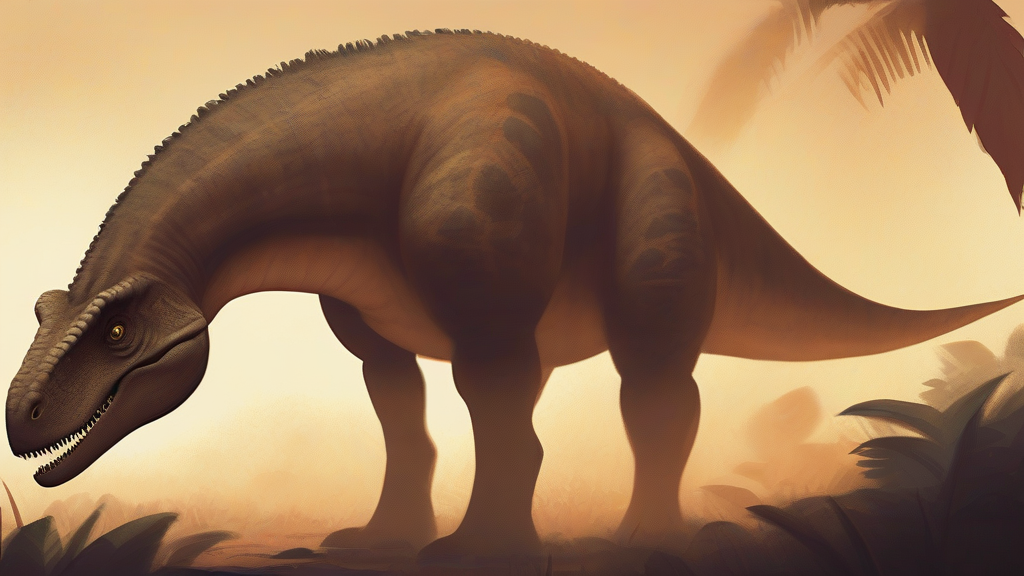
A brontosaur is one of the most famous dinosaurs: an enormous, long-necked, plant-eating sauropod that lived during the late Jurassic period, roughly 150 million years ago. The word is a shortened, informal form of 'brontosaurus', whose name means 'thunder lizard' — chosen because its footsteps were imagined to shake the ground. In everyday English, 'brontosaur' appears most often in popular writing, children's books, and journalism rather than in technical paleontology, where the animal's naming has been famously contested: the genus was absorbed into Apatosaurus in 1903, only to be revived as valid by some researchers in 2015. Figuratively, calling something a brontosaur suggests it is massive, slow, and outmoded, as in describing an unwieldy bureaucracy as a brontosaur. Its enduring cultural presence makes it a useful shorthand for prehistoric scale and ponderousness alike.
nounA brontosaur is a very large herbivorous dinosaur of the late Jurassic period, belonging to the sauropod group; the name is a short form of 'brontosaurus' and refers to what is now often classified as Apatosaurus.
- A large herbivorous sauropod dinosaur of the late Jurassic period (short form of brontosaurus).
- Informally, any very large, lumbering creature or thing, used figuratively to suggest size and sluggishness.
"The museum's reconstructed brontosaur skeleton towered over every other exhibit in the hall."
"The brontosaur waded into the shallow lake, its long neck sweeping down to strip waterweeds from the bottom."
"He called the old mainframe a brontosaur — enormous, slow, and hopelessly out of step with modern computing."
Regular plural; used when referring to multiple individuals of the animal or, figuratively, to several large sluggish things.
"Herds of brontosaurs once roamed the floodplains of what is now the western United States."
For over a century scientists declared the brontosaur a mistake that never existed — then in 2015 they brought it back from extinction.
Reviewed by Deb Chak, Editor. AI-assisted content curated by RJS Tech Solutions LLP.
Etymology of brontosaur
The word derives from New Latin 'Brontosaurus', coined by American paleontologist Othniel Charles Marsh in 1879 from the Greek elements 'brontē' meaning 'thunder' and 'sauros' meaning 'lizard'. The shortened English form 'brontosaur' arose naturally by dropping the Latin-style '-us' ending. The Greek root 'brontē' also appears in other scientific coinages such as 'brontology', the study of thunder. The name reflects a nineteenth-century tradition of dramatic dinosaur naming alongside contemporaries like 'Stegosaurus'.
Related word forms
How brontosaur is actually used
'Brontosaur' is an informal or journalistic shortening of 'brontosaurus', more common in casual writing than in technical paleontological literature. The figurative sense describing anything huge and slow-moving is colloquial. The scientific status of the animal has been debated: the genus was merged with Apatosaurus in 1903 but revalidated as distinct by some researchers in 2015.
Easily confused with brontosaur
'Brontosaurus' is the full formal genus name, while 'brontosaur' is a shortened, informal form referring to the same animal.
'Apatosaurus' is the scientifically valid genus name for what was long called Brontosaurus; the two names refer to the same dinosaur.
'Diplodocus' is a different, closely related sauropod dinosaur with a longer tail and different skeletal proportions, not a brontosaur.