What does broodiness mean?
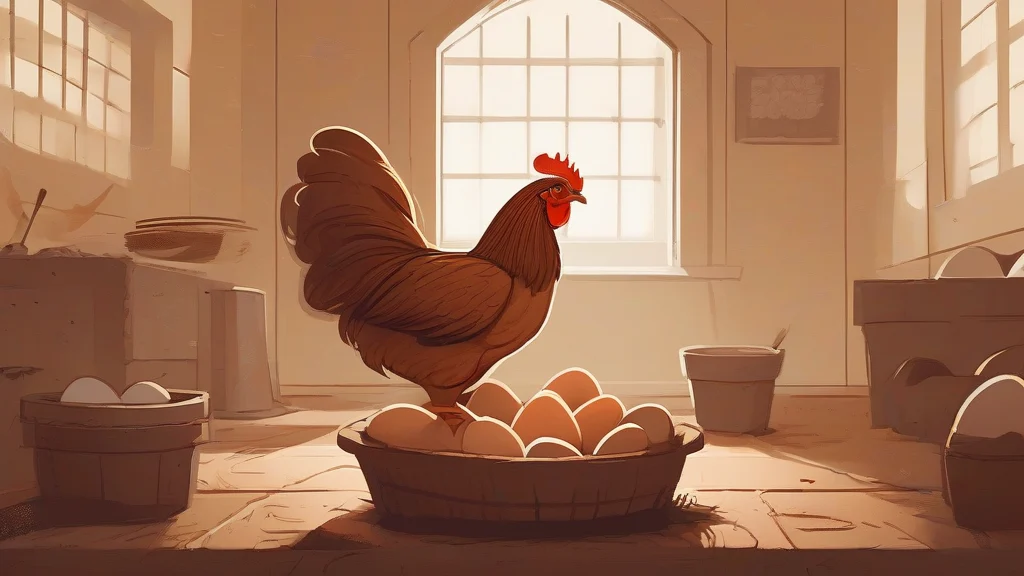
Broodiness is the noun form of "broody" and carries two related senses. In everyday use, it describes a mood of deep, often gloomy absorption in one's thoughts — a sullen pensiveness that makes someone quiet and withdrawn. In a warmer register, especially in informal British English, it refers to a strong desire to have a baby, as in "her sudden broodiness surprised everyone." The word's oldest sense belongs to poultry keeping: broodiness is the hormonal condition that prompts a hen to stop laying and sit persistently on her eggs hoping to hatch them, something commercial egg producers actively select against. All these meanings descend from the Old English word "brōd," meaning the young of birds hatched at one time. Broodiness is therefore a useful word precisely because it links three domains — human emotion, maternal longing, and animal instinct — under one evocative term.
nounThe state or quality of being broody: a mood of deep, often sullen thoughtfulness, or the strong instinctive urge (especially in a domestic hen) to sit on eggs and hatch chicks.
- A mood of deep, sullen, or absorbed thoughtfulness; the state of being broody.
- The instinctive urge of a hen (or other bird) to sit on eggs to hatch them; by extension, a person's strong desire to have a baby.
"A wave of broodiness came over her as she wandered through the empty nursery."
"He lapsed into a broodiness that no amount of cheerful chatter could lift."
"The hen's broodiness meant she stopped laying and refused to leave the nest."
Rarely used in the plural, since the word usually denotes an uncountable state or mood; a plural appears only when contrasting distinct instances.
"The novel traces his various broodinesses across a difficult decade."
In hens, broodiness is a real hormonal state that farmers actively try to breed out of laying flocks — the same word we use for humans yearning for a baby.
Reviewed by Deb Chak, Editor. AI-assisted content curated by RJS Tech Solutions LLP.
Etymology of broodiness
Broodiness derives from "broody," which combines "brood" with the suffix "-y." "Brood" comes from Old English "brōd," meaning offspring or the young hatched from eggs at one time, from the Germanic verb root behind words such as "breed." The figurative sense of dark, absorbed thinking developed from the image of a bird sitting intently over its eggs, and the noun "broodiness" arose in modern English to name both this temperament and, in farming, the hens' nesting urge.
Related word forms
How broodiness is actually used
Common in informal British English when describing a longing for children (often applied, sometimes stereotypically, to women); in agriculture it is standard technical vocabulary. The emotional sense can carry a slightly negative connotation of gloominess.
Easily confused with broodiness
"Brooding" is the act or quality of dwelling on dark thoughts (or hovering protectively), while "broodiness" is the noun for that mood — or, in poultry-keeping, the hormonal urge to sit and hatch eggs.