What does bucked mean?
"Bucked" is the past tense of "buck", a verb with two principal meanings. The most common figurative sense means to resist or oppose something firmly: a business might have "bucked the trend", or a person might have "bucked convention" by choosing an unconventional path. The literal sense describes the behavior of a horse or similar animal that leaps with its back arched and head down, often in an attempt to throw off a rider — a movement familiar from rodeo events. A related informal use applies to machines or vehicles that move in sudden jolts, as when an old car "bucked" over rough ground. The word carries connotations of defiance, energy, and resistance to control, which is why it works so well metaphorically for people who refuse to conform. It is a vivid, versatile verb that adds color to both everyday and literary writing.
verbPast tense and past participle of "buck" — to resist, oppose, or refuse stubbornly; or (of a horse) to jump with the back arched and legs stiff, trying to throw off a rider.
- To resist, oppose, or refuse stubbornly (e.g. 'bucked the trend', 'bucked authority').
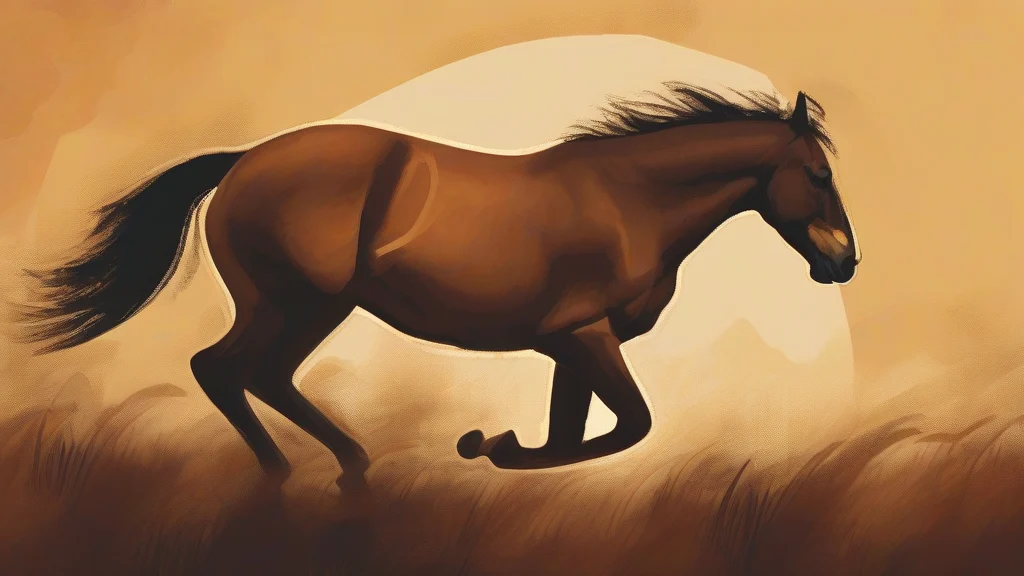
- (Of a horse or other animal) To leap upward suddenly with an arched back and lowered head, typically to throw off a rider.
- (Informal) To struggle or move jerkily forward, as a vehicle or machine that bucks.
"The company bucked the trend by posting record profits during the recession."
"Despite the economic downturn, she bucked expectations and launched a thriving business."
"The bronco bucked violently for nearly eight seconds before the rider was thrown off."
When you 'buck the trend,' you're channeling the spirit of a rodeo horse — refusing to be tamed by whatever everyone else is doing.
Reviewed by Deb Chak, Editor. AI-assisted content curated by RJS Tech Solutions LLP.
Etymology of bucked
"Buck" as a verb meaning to leap or spring first appeared in English in the mid-19th century, likely from the noun "buck" referring to a male deer or goat known for leaping. Its figurative sense of resisting or opposing developed later in American English, drawing on the image of an animal refusing to be tamed. It is unrelated to the Old English "bucc" (male goat) in origin of the verb sense, though both share the same spelling; some etymologists link the verb to Dutch or Low German cognates.
Related word forms
How bucked is actually used
Predominantly used in informal to neutral register. Most common today in the idiom "bucked the trend," meaning to go against prevailing patterns or expectations. The equine sense is common in rodeo, ranching, and equestrian contexts. The mechanical sense (a car bucking) appears mainly in informal American speech.
Easily confused with bucked
"Butted" means pushed or collided headfirst (as a goat butting someone), while "bucked" means resisted or jumped violently like a horse.
"Booked" means reserved or registered in advance, whereas "bucked" means resisted or opposed something.