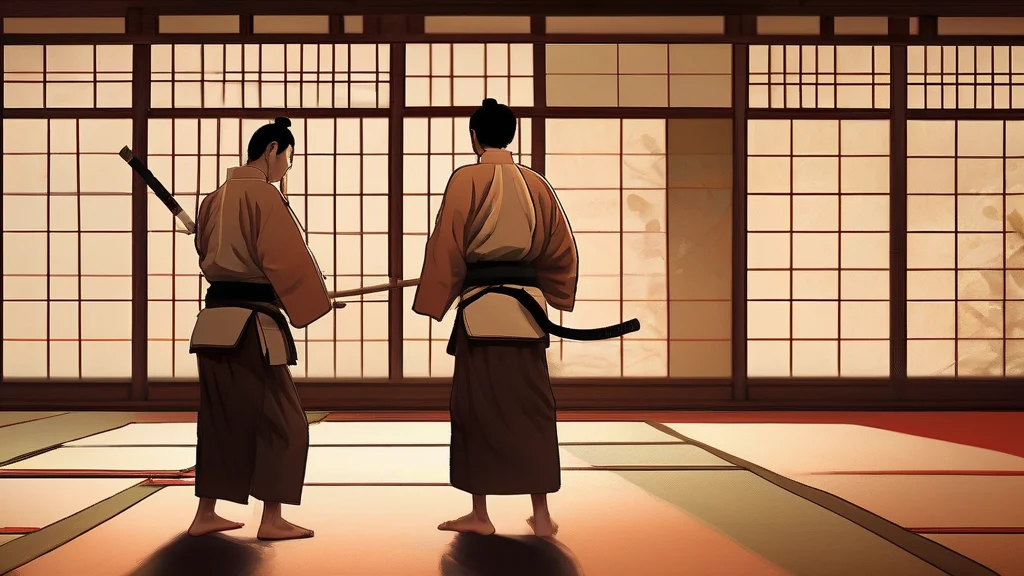
What does budo mean?
Budo is a Japanese loanword used in English to describe the family of modern martial disciplines that evolved from the fighting arts of Japan's samurai class, including judo, kendo, aikido, and archery (kyudo). The term combines 'bu', meaning martial or military matters, with 'dō', meaning way or path, signalling that these practices are understood not merely as systems of combat but as lifelong paths of physical, mental, and ethical refinement. Where the older term 'bujutsu' points to battlefield technique, budo reflects a post-feudal reframing in which mastery of form, etiquette, and self-control takes precedence over victory itself. Practitioners and writers use the word to capture this philosophical dimension: a person who trains in budo is seen as pursuing character development through disciplined physical practice. It appears most often in contexts discussing Japanese culture, martial-arts pedagogy, and traditional values.
A Japanese term for the modern Japanese martial arts descended from samurai-era fighting techniques, such as judo, kendo, and aikido, which are practised as paths of physical and moral self-cultivation.
"She has studied budo for over a decade, moving from karate into kendo and aikido."
Often contrasted with 'bujutsu', which refers specifically to the practical combative techniques of feudal Japan.
By extension, the philosophy or ethos underlying these martial disciplines, emphasising discipline, respect, humility, and continuous self-improvement.
"His teaching stressed that budo is ultimately about refining the self, not defeating an opponent."
As a mass noun referring collectively to the martial ways, budo has no standard plural in English usage; it functions as an uncountable collective term rather than a countable one.
"Budo encompasses a range of disciplines, each with its own forms and traditions."
In budo, the character for 'war' sits right next to the character for 'way' — the idea being that true mastery of fighting means transcending the desire to fight.
Reviewed by Deb Chak, Editor. AI-assisted content curated by RJS Tech Solutions LLP.
Etymology of budo
Budo comes directly from Japanese 武道, written with the characters for 'martial' (bu) and 'way' or 'path' (dō). The word entered English through Western contact with Japanese martial culture in the late nineteenth and early twentieth centuries, as arts like judo gained international followings. Its second element, dō ('way'), is shared by a whole family of related terms including judo, kendo, aikido, and kyudo, all of which frame their disciplines as paths of self-cultivation rather than mere fighting methods.
How budo is actually used
The word is a loanword from Japanese, used primarily in English writing about East Asian martial culture; it carries a respectful, somewhat formal connotation and is often capitalised or italicised in older texts. It contrasts with 'bujutsu', which denotes the practical combative techniques of the feudal era, while budo emphasises moral and spiritual cultivation in the modern era.
Easily confused with budo
Bushido is the ethical code of conduct followed by the samurai warrior class, whereas budo refers to the martial disciplines themselves as practised today.