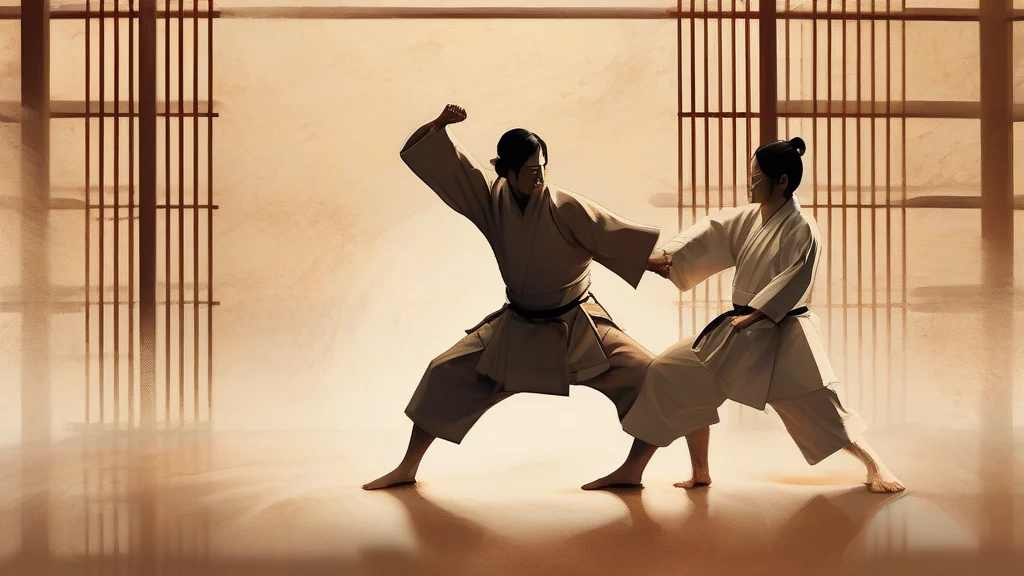
What does aikido mean?
Aikido is a modern Japanese martial art created in the early twentieth century by Morihei Ueshiba, who synthesized elements of older jujutsu traditions into a discipline centered on harmony rather than confrontation. Unlike striking-based arts such as karate or taekwondo, aikido teaches practitioners to blend with an attacker's motion, using circular movements, joint locks, and throws to neutralize aggression while minimizing harm to both parties. The name itself expresses this ethos: it combines Japanese characters meaning 'harmony,' 'energy' or 'spirit,' and 'the way.' Aikido is practiced worldwide in dojos, where students train cooperatively rather than competitively, since its techniques are designed for self-defense rather than sport. Beyond physical technique, the word often carries connotations of calmness, balance, and conflict resolution, and it is sometimes invoked metaphorically to describe defusing disputes gracefully. For anyone interested in martial arts or Japanese culture, aikido represents a distinctive philosophy as much as a method of combat.
nounA Japanese martial art founded in the 20th century that emphasizes blending with an attacker's movements and redirecting their force through throws and joint locks rather than meeting force with force.
- A Japanese martial art of self-defense based on harmonizing with an attacker's movement and redirecting their energy through throws and joint locks.
- The philosophy or principles underlying this art, emphasizing non-resistance and harmony.
"After years of practicing aikido, she could disarm an opponent almost effortlessly by turning his own momentum against him."
"He took up aikido to learn self-defense without relying on brute strength."
"The sensei explained that at its heart, aikido is about resolving conflict peacefully rather than overpowering an opponent."
Rarely used; aikido is normally an uncountable noun referring to the art as a whole. The plural appears only when distinguishing separate styles or lineages of the art.
"Several distinct aikidos emerged after the founder's death, each emphasizing different aspects of his teaching."
Aikido's founder reportedly developed the art after a near-fatal duel convinced him that true victory means defeating an opponent without harming them.
Reviewed by Deb Chak, Editor. AI-assisted content curated by RJS Tech Solutions LLP.
Etymology of aikido
Aikido comes directly from Japanese, combining three elements: 'ai' meaning harmony or joining, 'ki' meaning spirit or energy, and 'dō' meaning way or path. It was coined in the twentieth century by the art's founder, Morihei Ueshiba, to name the discipline he developed from earlier Japanese jujutsu schools. The element 'dō' links aikido etymologically to other Japanese 'way' disciplines such as judo, kendo, and bushido, all of which frame their practice as a lifelong path rather than mere technique.
How aikido is actually used
Aikido is always used as a singular mass noun in ordinary contexts; it is typically written lowercase and is not usually italicized in modern English prose. Practitioners are called aikidoka.
Easily confused with aikido
Taekwondo is a Korean martial art centered on striking and kicking techniques, whereas aikido is a Japanese art focused on throws, joint locks, and redirecting an attacker's energy.