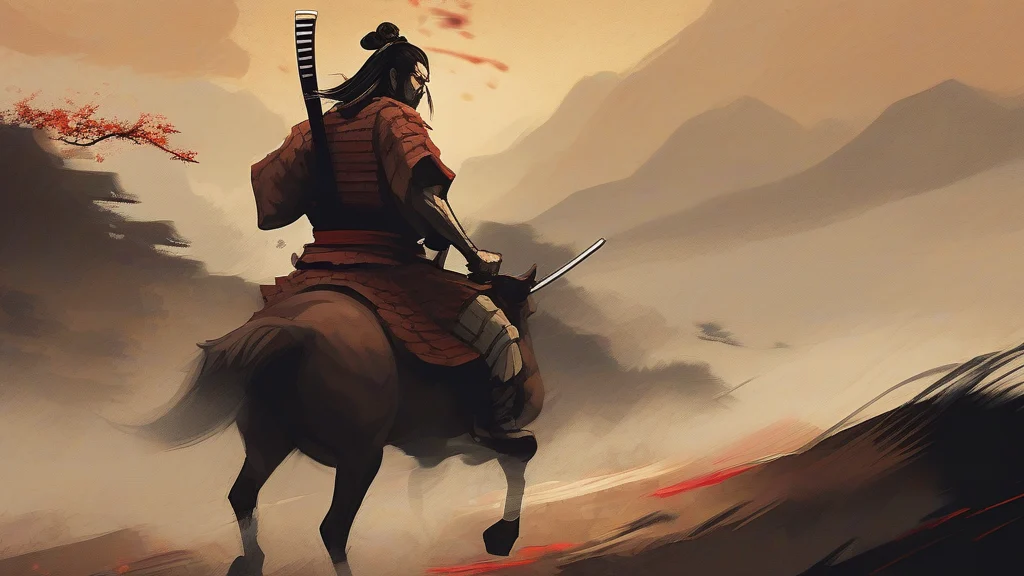
What does bushido mean?
Bushido is the historical code of conduct that governed the behaviour of the samurai, Japan's military aristocracy. Literally translating as 'the way of the warrior,' it prescribed values such as loyalty to one's lord, personal courage, frugality, mastery of the martial arts, and acceptance of death as an ever-present possibility. Although rooted in earlier medieval practice, bushido was formalized as a coherent philosophy during the peaceful Edo period (1603–1868), when thinkers like Yamaga Soko and later Nitobe Inazo gave it written form; Nitobe's 1899 book 'Bushido: The Soul of Japan' introduced the concept widely to Western readers. Today the word appears most often in discussions of Japanese history, martial arts, and ethics. It is generally uncountable and often capitalized. Bushido carries connotations of stoic discipline and self-sacrifice, making it a resonant term whenever uncompromising honour or duty is being described.
nounThe traditional code of honour, discipline, and moral conduct followed by the Japanese samurai, emphasizing loyalty, courage, and self-sacrifice.
- The ethical code of the Japanese samurai class, stressing loyalty, honour, self-discipline, and readiness for death.
"According to bushido, a samurai's loyalty to his lord outweighed even his own life."
"The samurai lived strictly according to the principles of bushido."
"In his novel, the author explores how bushido shaped the protagonist's sense of duty."
Bushido literally means 'the way of the warrior' — and its eight virtues, from courage to compassion, still echo through modern Japanese culture from business ethics to martial arts.
Reviewed by Deb Chak, Editor. AI-assisted content curated by RJS Tech Solutions LLP.
Etymology of bushido
The word bushido comes directly from Japanese 武士道 (bushidō), combining 'bushi' (武士, meaning warrior or samurai) with 'dō' (道, meaning way or path), so it literally means 'the way of the warrior.' The concept was articulated in Japanese texts from the Edo period onward, and the term entered English usage in the late nineteenth century, largely through Nitobe Inazo's influential 1899 book 'Bushido: The Soul of Japan.' Related Japanese terms sharing the same root include 'bujutsu' (martial techniques) and 'bugei' (martial arts).
How bushido is actually used
Bushido is an uncountable noun in English, typically treated as a proper cultural term and often capitalized. It is used in formal, historical, and martial-arts contexts rather than everyday speech. Because it refers specifically to the Japanese warrior tradition, it is not applied loosely to other cultures' codes of conduct.
Easily confused with bushido
Hara-kiri (or seppuku) is the ritual suicide practiced under bushido; bushido itself is the broader ethical code, not the act.