What does buggy mean?
Buggy is a versatile English word functioning as both a noun and an adjective. As a noun, it denotes a small light wheeled vehicle — historically a one-horse carriage, and today anything from a dune buggy to a golf cart to, in American usage, a supermarket shopping cart. In British English, a buggy most often means a baby's pushchair or stroller, making it an everyday word for parents. As an adjective, buggy has two main senses: literally, it describes something infested with insects, as in a buggy cellar or buggy campsite; figuratively, it is a staple of computing vocabulary, describing software riddled with errors and defects. The word derives from 'bug', which originally referred to a ghost or hobgoblin before shifting to mean insect and then fault. Its range of meanings makes it regionally sensitive but universally useful, appearing everywhere from parenting guides to technology reviews.
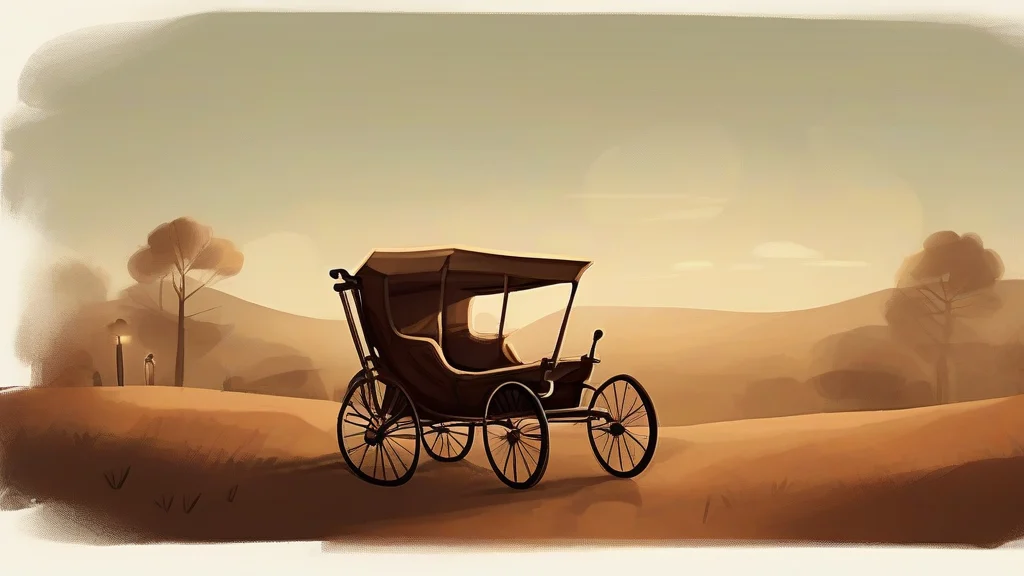
A small light wheeled vehicle, such as a four-wheeled horse-drawn carriage, a dune buggy, a golf cart, or (in British English) a baby's pushchair.
"The Amish farmer drove his buggy into town on market day."
In British English the noun usually refers to a baby's pushchair; in American English it commonly means a horse-drawn carriage, golf cart, or informally a supermarket shopping trolley.
Infested with insects, or (of software) containing many faults or errors.
"The beta version was far too buggy for a public launch."
Standard plural for all noun senses of buggy.
"Several buggies were parked outside the general store."
The word 'buggy' traces back to 'bug', which once meant a ghost or goblin — the same spooky root that gave us 'bugbear' and 'bogeyman'.
Reviewed by Deb Chak, Editor. AI-assisted content curated by RJS Tech Solutions LLP.
Etymology of buggy
Buggy derives from the English word 'bug', which in older usage meant a ghost, goblin, or frightening spectre — the same root behind 'bugbear' and 'bugaboo'. The sense shifted over time so that 'bug' came to mean an insect or crawling creature, and by the late eighteenth century 'buggy' had emerged in America as a term for a light, one-horse carriage, possibly suggesting something small or flimsy like a bug. The computing sense of the adjective arose from the established use of 'bug' to mean a technical fault, famously popularised by early computer pioneers such as Grace Hopper's team.
How buggy is actually used
As a noun, meaning varies sharply by region and context: in Britain a buggy is typically a baby's pushchair, while in America it can mean an Amish horse-drawn carriage, a golf cart, a dune buggy, or informally a supermarket shopping cart. As an adjective, 'buggy' is common in computing to describe faulty software, and more broadly to describe places or objects overrun with insects. The word is informal to neutral in register.
Easily confused with buggy
A pram is specifically a baby carriage with a flat, lying-down design for infants, whereas a buggy more broadly covers any small wheeled vehicle including upright pushchairs and horse-drawn carts.