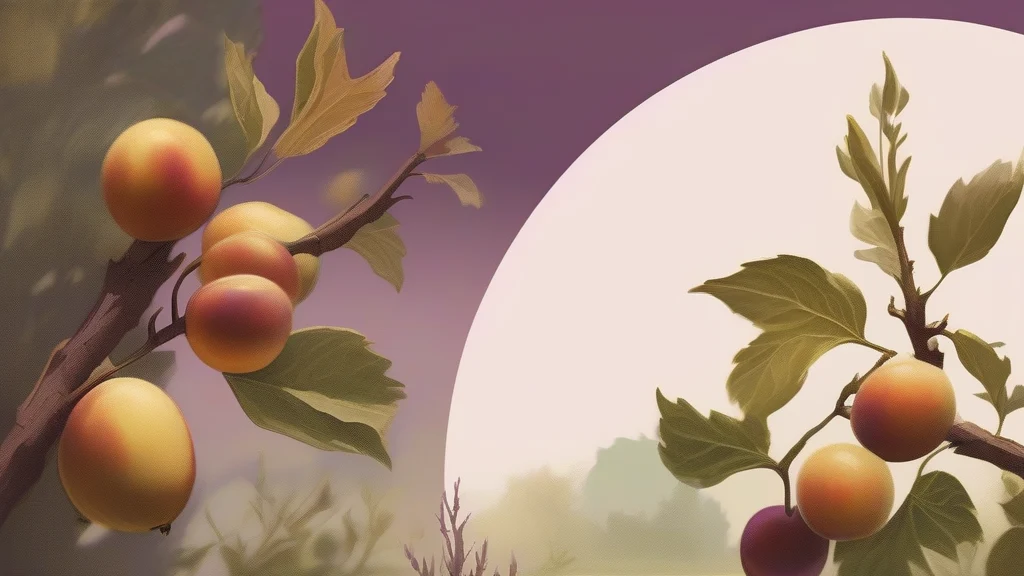
What does bullace mean?
The bullace is a small wild plum native to Britain and parts of Europe, the fruit of a thorny shrub closely related to the domesticated plum and the damson. Its skin may be greenish-yellow or purple-black when ripe, and its flesh is notably tart, which makes it less appealing raw but well suited to jams, jellies, pies, and traditional country wines after cooking with sugar. The word is chiefly British and has a distinctly rural, old-fashioned flavour: it surfaces in hedgerow-foraging guides, seasonal recipes, and nature writing far more often than in ordinary speech. Bullaces ripen in early autumn, and for centuries they have been gathered free from field margins and lanes as one of the countryside's reliable wild harvests. For readers interested in native British fruits or traditional preserving, the bullace occupies an honoured niche alongside the sloe and the elderberry.
nounA small European wild plum with a yellowish-green or dark purple skin and sour flesh, growing on a thorny shrub; also the shrub itself.
- The small wild plum (fruit) of Prunus domestica subsp. insititia, typically greenish-yellow or purple-black with sour flesh.
- The thorny shrub that bears this fruit.
"The hedgerows were heavy with ripe bullaces in late September."
"She simmered the bullaces slowly with sugar until they yielded a deep crimson jam."
"In autumn the old lane was lined with bullace bushes bent under their crop of small purple fruits."
The standard plural takes -es; the plural is common because the fruit is usually discussed in quantity.
"The children filled their baskets with bullaces along the lane."
Long before garden plums, foragers across medieval England were gathering wild bullaces from thorny hedgerows — a fruit so old it still carries its French name in English.
Reviewed by Deb Chak, Editor. AI-assisted content curated by RJS Tech Solutions LLP.
Etymology of bullace
Bullace entered Middle English around the fourteenth century, borrowed through Anglo-Norman or Old French forms such as beloce, ultimately tracing back to a Late Latin word for a small fruit. It has been applied in England since medieval times to the small wild plums gathered from hedgerow shrubs. The word remains current mainly in British regional and rural usage.
How bullace is actually used
"Bullace" is chiefly a British word, used most often in rural and regional contexts, especially southern England, and carries a rustic, traditional connotation. It appears mostly in writing about food, foraging, jam-making, and countryside lore rather than everyday conversation.
Easily confused with bullace
A damson is a larger, sweeter cultivated plum of the subspecies Prunus domestica subsp. insititia, while the bullace is its smaller, wilder, more sour counterpart.
The sloe is the fruit of the blackthorn (Prunus spinosa) and is much smaller and more bitter than the bullace.