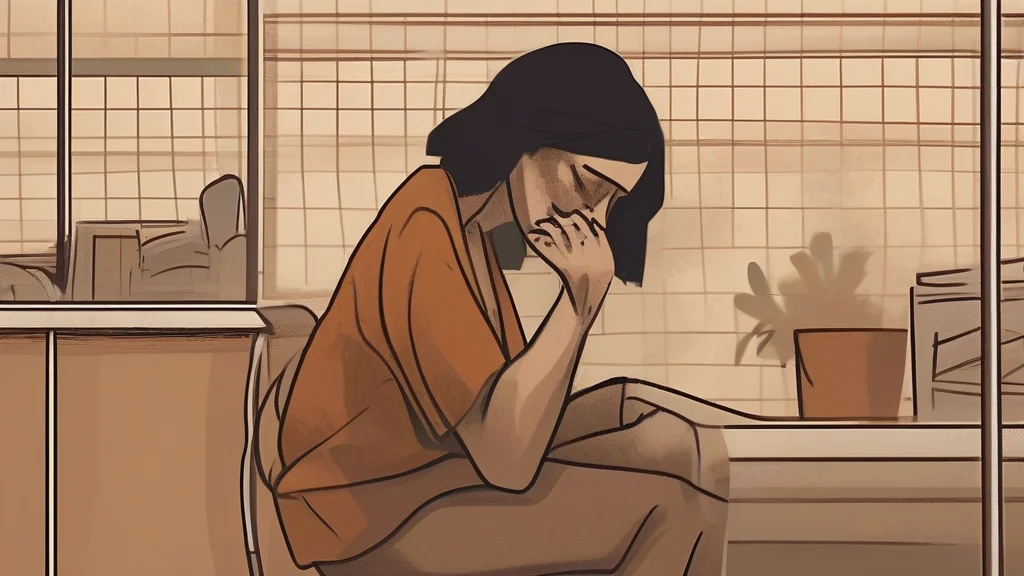
What does bummed mean?
Bummed is an informal English adjective describing a state of disappointment, dejection, or mild upset, most typically in reaction to plans falling through or bad news. Speakers usually say someone is 'bummed' or 'bummed out' about something, as in 'I was bummed when the show sold out.' The word derives from American slang: 'bum', originally a term for an idle person or tramp from the late 19th century, gave rise to the verb 'to bum' (to beg or borrow) and then to the emotional sense of feeling let down, which became widespread in mid-20th-century American colloquial speech. Today it carries a casual, conversational tone rather than deep sorrow — being bummed suggests a temporary slump of spirits rather than serious grief. Because of its informality, it suits everyday conversation and social media but is best avoided in formal or academic writing. Its near-synonyms include 'disappointed', 'dejected', and 'downcast', though none match its breezy, idiomatic feel.
Disappointed or annoyed, especially about something that has gone wrong; informal, usually in the phrase 'bummed out'.
"We were all pretty bummed that the trip had to be cancelled."
Informal register; common in everyday speech and social media.
Past simple and past participle of the verb 'bum': to obtain something by begging or asking without paying.
"He bummed a cigarette from a stranger outside the bar."
From slang for a loafer to shorthand for heartbreak — 'bummed' turned a word for idleness into one for disappointment in barely a century.
Reviewed by Deb Chak, Editor. AI-assisted content curated by RJS Tech Solutions LLP.
Etymology of bummed
The word traces to American slang 'bum', first recorded in the mid-19th century meaning an idle person or tramp, possibly from the German dialect word 'bummler' meaning a loafer. From this came the verb 'to bum', meaning to beg or borrow something, attested by the early 20th century. By the 1960s, American college slang had produced the phrase 'bummed out' to mean depressed or disillusioned, which shortened over time to simply 'bummed' for feeling disappointed.
Related word forms
How bummed is actually used
Strictly informal register; avoid in formal writing. Most common in North American English, though widely understood elsewhere. Often intensified with 'really', 'pretty', or 'totally'. The sense 'obtained by begging' is a verb use and is now less common than the adjectival sense.
Easily confused with bummed
'Bum' is a noun meaning a lazy or homeless person (US) or the buttocks (British), while 'bummed' is its adjectival form describing a feeling of disappointment.