
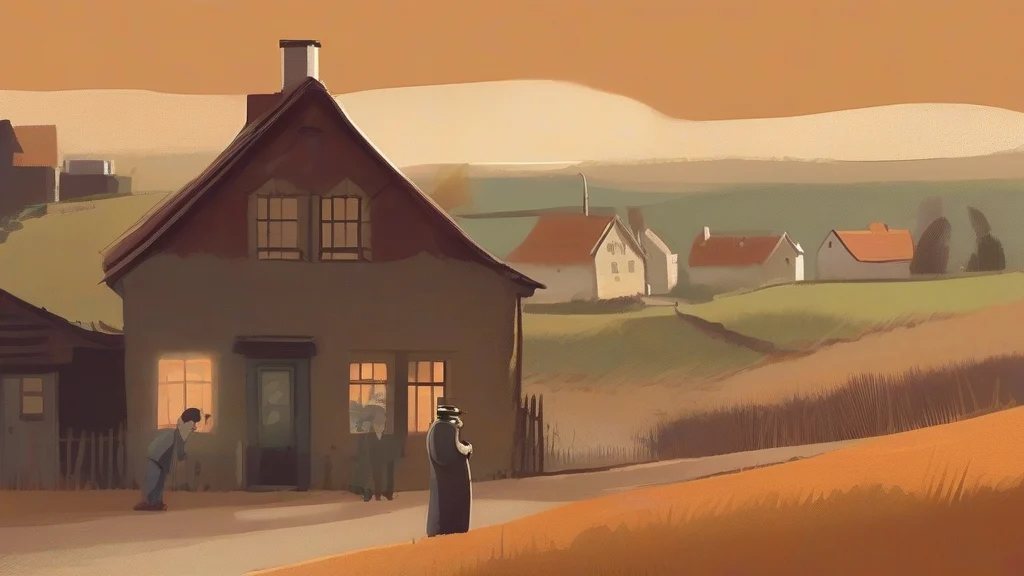
What does bumpkin mean?
A bumpkin is an unsophisticated, awkward person from a rural area — someone whose manners, dress, or speech mark them as unfamiliar with city ways. The word is informal and typically carries a gently mocking or condescending tone, making it more likely to appear in comedy, satire, or affectionate teasing than in neutral description. English offers a rich family of near-synonyms, including yokel, hick, hayseed, and rube, with 'bumpkin' being one of the older and more widely understood across both British and American English. The term dates to the early seventeenth century, when it could also denote something short and stubby, such as a small barrel, before settling into its modern sense of a rustic simpleton. Writers frequently deploy the bumpkin as a stock comic figure: the naive newcomer who is dazzled, cheated, or ultimately vindicated in the big city.
An awkward, unsophisticated person from the countryside.
"The visiting bumpkin was easily spotted among the gallery-goers by his mud-caked boots."
Informal; usually mildly derogatory or teasing.
(Historical) A short, stumpy person or thing; a short barrel.
"In old naval inventories, a bumpkin was recorded as a short cask."
Rare and chiefly historical.
Regular plural; standard in both British and American English.
"The play satirized a pair of bumpkins lost in the metropolis."
Shakespeare used 'bumpkin' as an insult on stage — but the word may have started life meaning a small barrel or a little tree.
Reviewed by Deb Chak, Editor. AI-assisted content curated by RJS Tech Solutions LLP.
Etymology of bumpkin
Bumpkin entered English in the early seventeenth century, probably from Dutch 'boomken', a diminutive meaning 'little tree' — fitting for a word later applied to rustic people. An alternative account derives it simply from 'bump', suggesting someone short and clumsy. Its earliest senses referred to anything short and stubby, including a small barrel, before it narrowed to mean an awkward country person.
Related word forms
How bumpkin is actually used
The word is informal and almost always carries a mildly mocking or condescending tone; it is generally used about others rather than oneself. It overlaps with regional American terms like 'rube' and 'hayseed', though 'bumpkin' is common on both sides of the Atlantic.
Easily confused with bumpkin
Pumpkin is a large orange squash, whereas a bumpkin is a person considered unsophisticated; the two merely share the '-umpkin' ending and rhyme.