
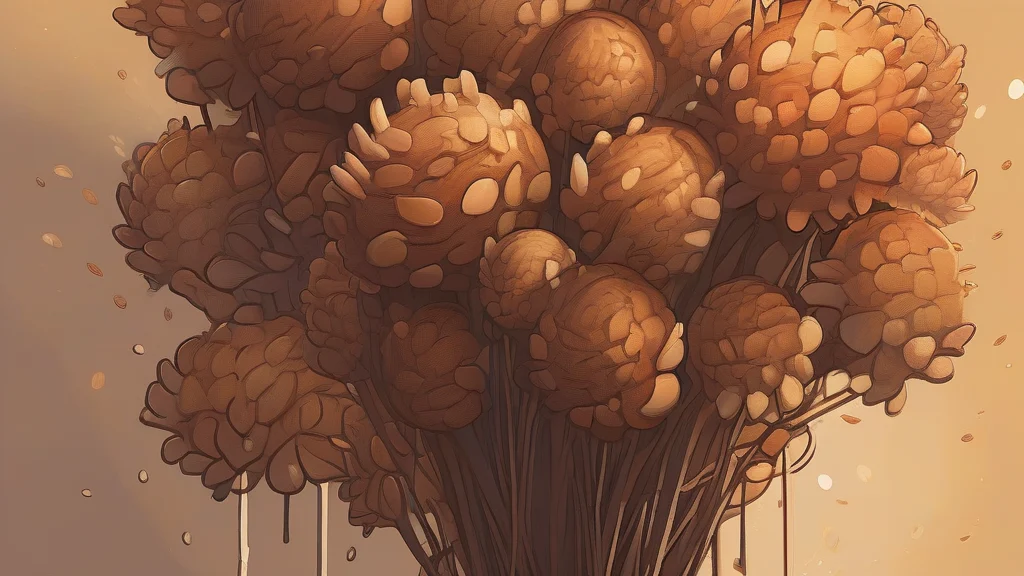
What does bunchier mean?
Bunchier is the comparative form of the adjective bunchy, meaning having more, larger, or denser bunches, clusters, or tufts. It is applied to things that naturally gather into clumps — grape clusters, wool or hair, foliage, herbs, or fabric folds — and it signals a greater degree of that clustered quality: a bunchier bouquet has fuller, tighter groupings of flowers, while a bunchier coat on an animal suggests thicker, lumpier tufts of fur. The word belongs to informal, everyday register rather than technical writing, where terms like 'clustered' or 'fascicled' might be preferred in botany. Because it is built transparently from the familiar noun 'bunch', its meaning is immediately intuitive to English speakers, making it handy for vivid, concrete description even though it remains relatively uncommon in formal prose.
adjectiveComparative form of 'bunchy': having more or larger bunches, clusters, or tufts than something else; gathered more densely into clumps.
- Having more or denser bunches, clusters, or tufts; growing in thicker clumps.
"The newer variety of grapes grows bunchier clusters than the older vines."
"The sheep's winter coat is much bunchier than its sleek summer fleece."
"Pruning the hedge made it grow back bushier and bunchier at the base."
Reviewed by Deb Chak, Editor. AI-assisted content curated by RJS Tech Solutions LLP.
Etymology of bunchier
Bunchier derives from bunchy, an adjective formed from the noun bunch, a word of uncertain origin first recorded in English in the late sixteenth century, possibly connected to 'bun' or to Middle French 'bonce'. The noun originally denoted a protuberance or swelling before settling into its modern sense of a cluster of things fastened or growing together. Adding the suffix -y produced the adjective, and regular comparison yields bunchier.
Related word forms
How bunchier is actually used
An informal comparative adjective used chiefly in descriptive contexts about plants, hair, fabric, and produce. It is formed regularly from 'bunchy' with the -ier ending.
Easily confused with bunchier
'Punchier' means more forceful or lively, while 'bunchier' describes things gathered into denser clusters.