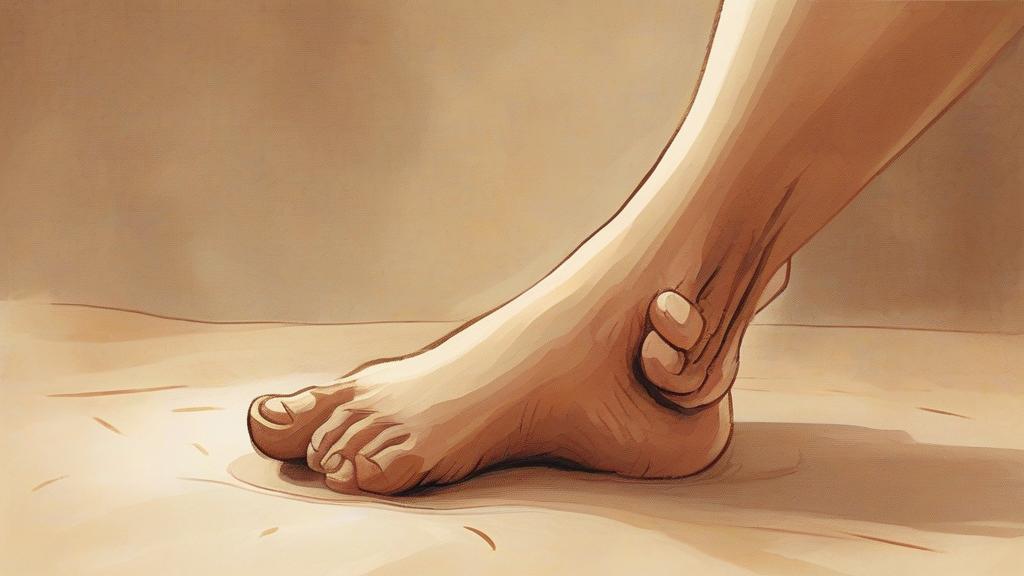
What does bunion mean?
A bunion is a bony bump that forms on the joint at the base of the big toe, caused when the big toe gradually leans inward toward its neighbors and forces the joint outward. Medically known as hallux valgus, the condition produces a swollen, sometimes painful prominence on the inner side of the foot. Bunions develop slowly and are influenced by inherited foot structure, arthritis, and prolonged pressure from narrow or high-heeled shoes, which tend to aggravate rather than solely cause them. Symptoms range from mild cosmetic concern to persistent pain, redness, and difficulty finding comfortable footwear. Treatment begins conservatively, with roomy shoes, padding, and orthotics, while severe cases may require corrective surgery. A related bump on the outside of the little toe is called a tailor's bunion. The word is standard in both everyday conversation and medical contexts, making it a useful term for anyone discussing foot health.
nounA painful swelling on the side of the big toe, formed by the joint enlarging and pushing the toe inward toward the other toes. It is a common foot deformity often aggravated by tight or ill-fitting footwear.
- A painful bony swelling at the base of the big toe, where the joint protrudes as the toe angles toward the other toes.
- By extension, a similar swelling at the base of the little toe (known specifically as a tailor's bunion or bunionette).
"Years of squeezing into narrow shoes left her with a bunion that made walking uncomfortable."
"The podiatrist recommended wider shoes and orthotic inserts before considering surgery to correct the bunion."
"Her grandmother's bunions were so severe that she had her shoes custom-made to accommodate them."
The plural is regular and frequently used when referring to both feet or to the condition in general.
"Both of his parents had bunions, so he was careful about the shoes he wore."
A 'tailor's bunion' got its name because tailors once sat cross-legged for hours with the outside edge of their feet pressing against the ground — and it forms on the little toe, not the big one.
Reviewed by Deb Chak, Editor. AI-assisted content curated by RJS Tech Solutions LLP.
Etymology of bunion
The word "bunion" appeared in English in the early 17th century, likely from French "buignon," meaning a swelling, which itself derives from Old French "bugne," a bump or lump. Its ultimate deeper origins are considered uncertain by lexicographers, though it is often linked to words for swelling or protuberance in Romance languages. The term has referred to the same toe-joint swelling since its earliest recorded uses.
How bunion is actually used
"Bunion" is a neutral medical and everyday term, used both by podiatrists and laypeople without awkwardness. The formal clinical term is "hallux valgus," which describes the underlying deformity rather than the visible bump. The plural "bunions" is common when referring to the condition generally or to both feet being affected.
Easily confused with bunion
A corn is a small patch of hardened skin caused by friction, whereas a bunion is a structural deformity in which the joint at the base of the big toe swells and protrudes.
A callus is thickened skin that can form anywhere on the foot from repeated pressure, while a bunion is an actual misalignment of the big-toe joint.