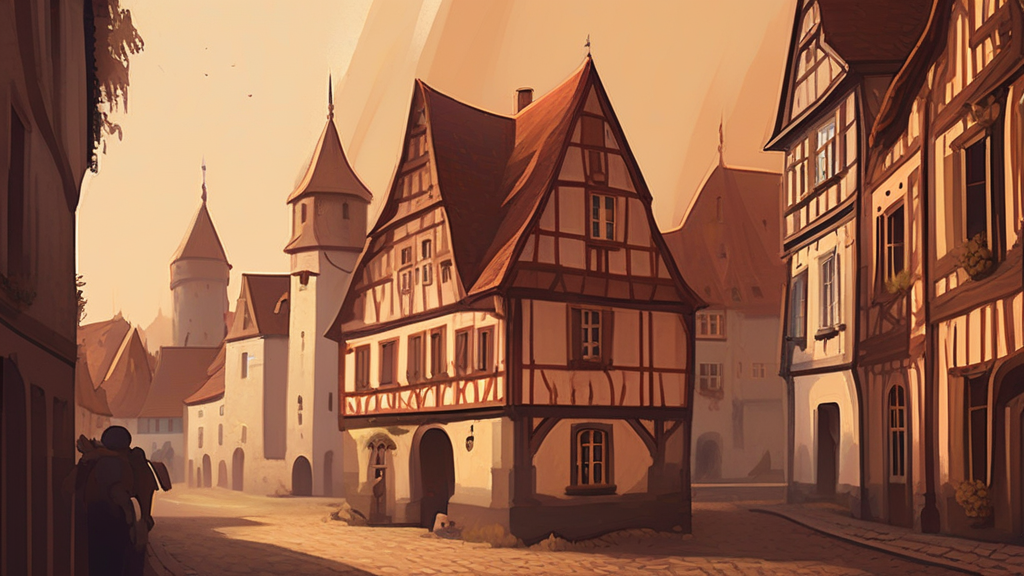
What does burghal mean?
Burghal is an adjective meaning of or relating to a burgh — the Scottish counterpart of a borough, that is, a town formally chartered by the crown with special trading and administrative rights. The word turns up almost exclusively in historical scholarship: historians of medieval and early modern Scotland use terms like burghal status, burghal records, and burghal society to describe the distinctive institutions of these towns, from merchant guilds to town councils. Because Scotland's network of royal burghs shaped its economy and politics for centuries, burghal carries connotations of civic privilege, self-government, and urban tradition. It is a specialist term rather than everyday vocabulary — readers will meet it in academic writing far more often than in conversation — but within its domain it is precise and well established. Anyone researching Scottish urban history, genealogy, or local government will find it useful and unavoidable.
adjectiveRelating to or characteristic of a burgh — a Scottish chartered town or borough — especially in respect of its municipal administration, institutions, or privileges.
- Of or relating to a burgh (a Scottish chartered town), especially its municipal organization or privileges.
"The council's records offer a remarkably detailed picture of burghal life in medieval Aberdeen."
"Medieval charters granted the settlement full burghal status, including the right to hold markets."
"Historians of urban Scotland rely heavily on burghal court records to reconstruct everyday commerce."
Every 'burg', 'borough' and even 'bourgeois' traces back to the same ancient Germanic root as this rare little word.
Reviewed by Deb Chak, Editor. AI-assisted content curated by RJS Tech Solutions LLP.
Etymology of burghal
Burghal derives from burgh, which comes from Old English burg, meaning a fortified place or stronghold, ultimately from the Proto-Germanic root *burg-. That same root produced borough and burgess in English, bury in place names like Canterbury, and, through Frankish borrowing into French, bourgeois — so words as different as a Scottish town charter and the French middle class share one ancestry. The adjective form arose in English scholarship on Scottish towns, where burgh remains the standard spelling for such municipalities.
How burghal is actually used
A scholarly term found chiefly in Scottish history and archaeology; it sounds formal and academic rather than conversational. It applies specifically to Scottish burghs rather than English boroughs, though the underlying concept is shared.
Easily confused with burghal
Borough is the noun for an incorporated town itself, while burghal is the adjective describing things pertaining to such a town.