What does burgonet mean?
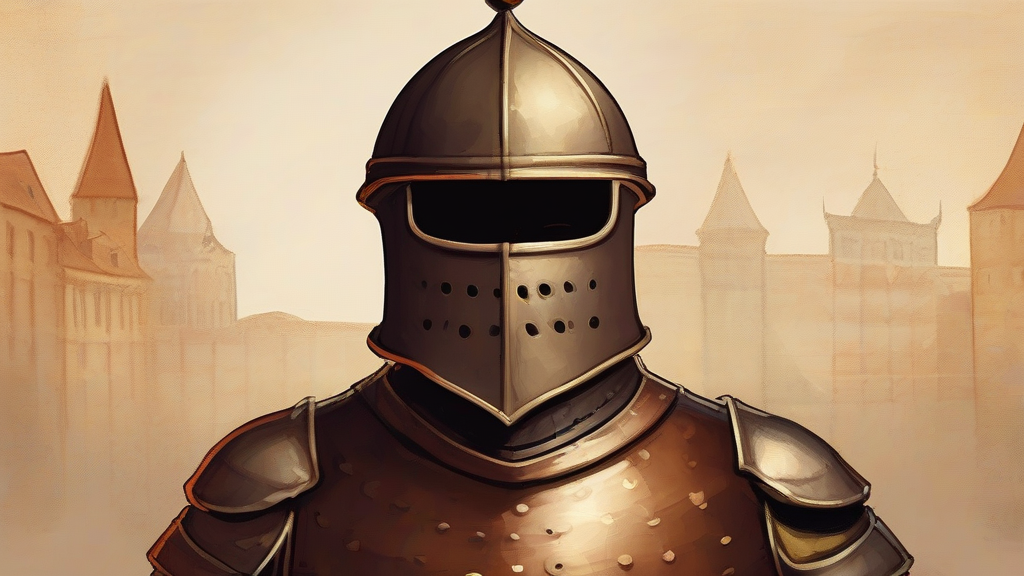
A burgonet is a light, open-faced steel helmet worn primarily during the sixteenth and early seventeenth centuries, an era when firearms were transforming the battlefield. Unlike the fully enclosed helmets of the medieval knight, the burgonet left the face exposed: it featured a rounded crown often reinforced with a central comb, a projecting peak over the brow, and a flared brim at the back to protect the neck. Many examples included hinged cheek-pieces, and some were paired with a separate falling buffe or visor for added protection. The name derives from the French bourguignotte, a nod to Burgundy, whose ducal court was renowned for military fashion. Today the word survives mainly in armour studies, museum catalogues, and historical fiction, where it evokes the pike-and-shot armies of the Renaissance. For readers interested in the material culture of war, the burgonet is a precise, evocative term that distinguishes a distinctly Renaissance form of head protection from its medieval predecessors.
nounA light, open-faced steel helmet with a peaked front and a small brim at the back of the neck, worn by soldiers in the 16th and early 17th centuries.
- A light, open-faced steel helmet with a peaked crown and rear brim, worn chiefly by infantry in the 16th and early 17th centuries.
"The pikeman's burgonet gleamed dully under the morning sun as the column marched out."
"Museum curators carefully dusted the engraved burgonet, its cheek-plates long since separated from the skull piece."
"In Shakespearean stage directions and period dramas alike, the burgonet marks the soldier as a man of the pike-and-shot era."
Standard regular plural; used mainly in historical, archaeological, and museum-writing contexts when referring to surviving examples.
"The armoury's collection includes several burgonets recovered from Elizabethan shipwrecks."
The burgonet got its name from Burgundy — one of Europe's most fashionable courts gave its name to the helmet every 16th-century soldier wanted.
Reviewed by Deb Chak, Editor. AI-assisted content curated by RJS Tech Solutions LLP.
Etymology of burgonet
The word burgonet entered English in the sixteenth century from French bourguignotte, literally 'Burgundian', reflecting the association of this style of helmet with Burgundy, a region celebrated in the fifteenth and sixteenth centuries for its armourers and military prestige. The underlying root is the Germanic word for fortress or stronghold (*burg), which also yields English borough, burgher, and bourgeois through related channels. The term has remained essentially unchanged since its adoption, confined to historical and technical usage.
How burgonet is actually used
A specialised historical term used almost exclusively in discussions of arms, armour, military history, and museum contexts; it is rare outside these registers and would sound archaic in everyday speech.
Easily confused with burgonet
A bascinet is a close-fitting medieval helmet that could be fitted with a visor to enclose the face, whereas the later burgonet is an open-faced Renaissance helmet with a brim and comb.
Burgundy is a region of France and a wine colour, while a burgonet is a type of helmet — though both trace back to associations with the historical region of Burgundy.