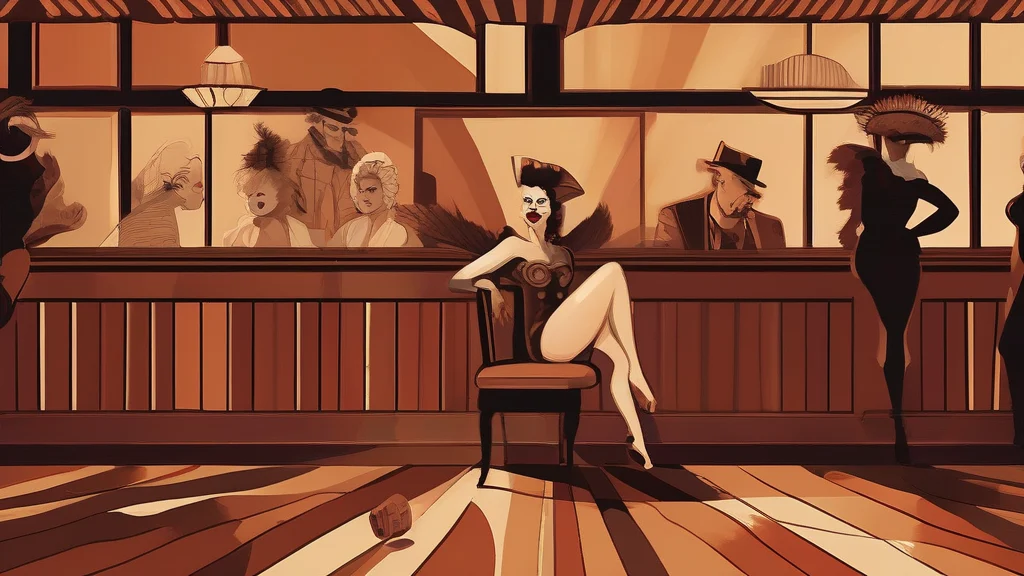
What does burlesquer mean?
A burlesquer is a person who performs or creates burlesque, a form of entertainment defined by comic exaggeration and mockery of elevated subjects. The term has two main applications. Historically and in literary criticism, a burlesquer is a writer who produces burlesque works — plays, poems, or operas that deflate heroic or serious material by treating it in an incongruously trivial or absurd style. More commonly today, especially since the revival of neo-burlesque, a burlesquer is a stage entertainer in the variety tradition associated with striptease, comedy routines, and glamorous costumes. The word carries a theatrical, slightly old-fashioned flavor; performers are more often called burlesque artists or dancers in casual speech, leaving burlesquer to appear mostly in journalism, histories of the stage, and program notes.
nounA performer or writer of burlesque — that is, someone who takes part in or creates a theatrical or literary work that comically and often grotesquely imitates a serious subject, or, in modern usage, an entertainer in the variety genre featuring striptease and comic acts.
- A performer in burlesque entertainment, especially the American variety tradition featuring striptease, comedy, and elaborate costumes.
- A writer or composer of burlesque — literary or dramatic works that ridicule a subject by treating it with mock-heroic or incongruously low style.
"The veteran burlesquer brought down the house with her feather-fan finale."
"The festival celebrated golden-age burlesquers like Gypsy Rose Lee."
"As a burlesquer, he specialized in lampooning politicians through absurd operatic parodies."
Regular plural; used when referring to multiple performers or writers collectively.
"The show featured a dozen burlesquers from across Europe."
"Burlesquer" is one of those rare words that lets you describe both a satirical playwright of the 1600s and a feather-boa-wearing showgirl of today — with a straight face.
Reviewed by Deb Chak, Editor. AI-assisted content curated by RJS Tech Solutions LLP.
Etymology of burlesquer
Burlesquer derives from burlesque, which English borrowed from French in the mid-17th century; the French word itself comes from Italian burla, meaning "joke" or "mockery." The agent suffix -er simply denotes a person who does something, so a burlesquer is literally one who burlesques. Cognates include Italian burlesco and burletta (a short comic opera).
How burlesquer is actually used
The word is relatively uncommon; "burlesque dancer," "burlesque performer," or simply "burlesque artist" are more frequent in everyday use. In historical and theatrical writing it also covers authors of burlesque literature.
Easily confused with burlesquer
Burlesque is the art form or performance itself, while a burlesquer is the person who performs or writes it.