What does burley mean?
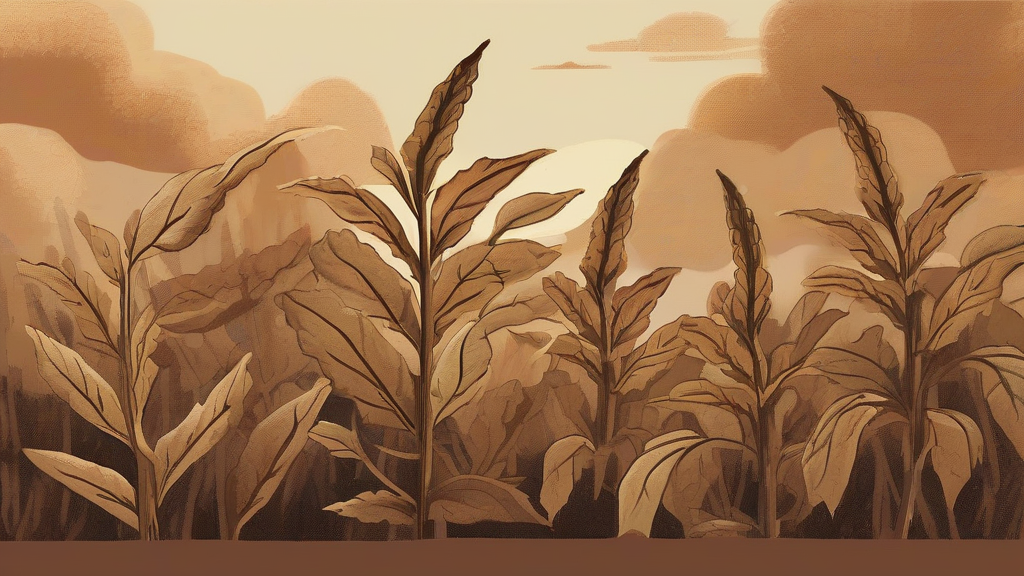
Burley is a variety of tobacco distinguished by its broad leaves, low sugar content, and pale, light-coloured leaf after curing. Unlike flue-cured tobaccos such as Virginia, burley is air-cured — hung in well-ventilated barns for weeks — which gives it a dry character and a remarkable ability to absorb flavourings and aromas from casing sauces. These properties made it indispensable to the development of the American blended cigarette, where it contributes body and a mellow, nutty taste alongside brighter, sweeter tobaccos. The variety is strongly associated with the United States, particularly Kentucky, Tennessee, and neighbouring states, where it has been a mainstay of farm economies since the nineteenth century. The term also appears in phrases such as 'white burley', referring to an especially prized light-leaved strain. Outside tobacco farming, trade, and blending, 'burley' has little currency, making it a specialist vocabulary item tied firmly to the history and industry of tobacco.
nounA variety of tobacco having broad leaves and a low sugar content, cured by air-curing to produce a light-coloured leaf used widely in cigarette and pipe blends.
- A variety of tobacco with broad leaves and low sugar content, air-cured to a light colour and used chiefly in cigarette and pipe blends.
"The barns were filled with hanging burley, curing slowly in the autumn air."
"Kentucky farmers have grown burley for generations, and the crop remains central to the state's agricultural identity."
"The blender added a measure of burley to balance the brighter Virginia leaf."
Plural usage is rare and usually refers to different varieties or crops of burley tobacco.
"The warehouse held several distinct burleys, each with its own curing profile."
Without air-cured burley, the modern American blended cigarette as we know it might never have existed.
Reviewed by Deb Chak, Editor. AI-assisted content curated by RJS Tech Solutions LLP.
Etymology of burley
The word burley is first recorded in American English in the nineteenth century, arising in Kentucky tobacco-growing country. Its origin is generally considered uncertain; it is commonly linked to the name Burley, possibly that of a farmer or figure associated with the strain's early cultivation, though no single account is definitively established. The term became widespread with the success of the white burley strain discovered in Ohio in the 1860s, which cemented the word's place in American agricultural vocabulary. It should not be confused with barley, the unrelated cereal grain.
How burley is actually used
The word is almost exclusively encountered in agricultural, commercial, and historical contexts relating to tobacco cultivation and blending. It is a specialist term rather than a word of everyday conversation, and carries no figurative or slang senses in general use.
Easily confused with burley
Barley is a cereal grain used for food and brewing, whereas burley is a variety of tobacco leaf.