What does bushel mean?
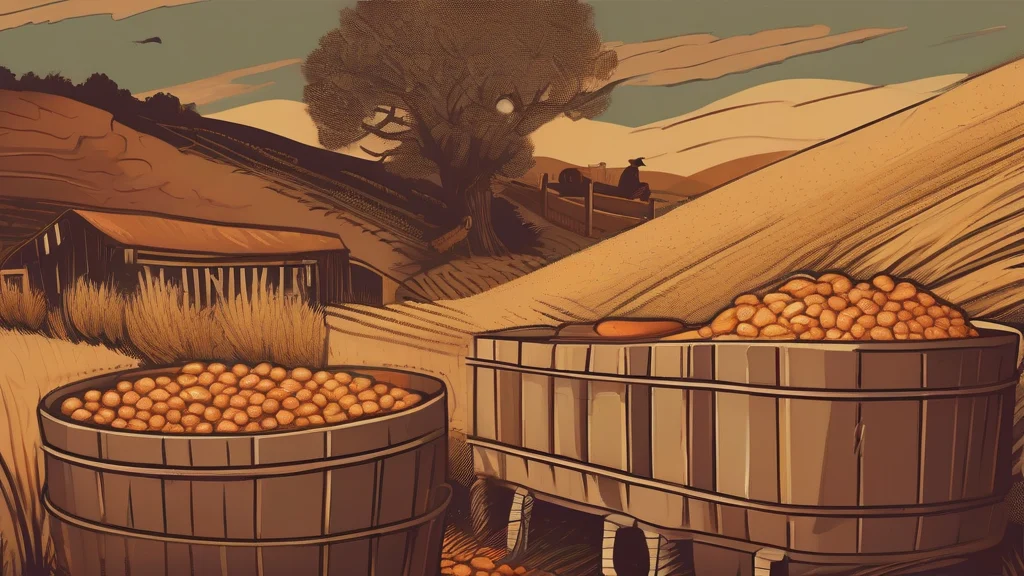
A bushel is a traditional unit of dry volume, equal to four pecks and roughly thirty-five litres, long used to measure staple crops such as wheat, corn, barley, and fruit. Though the metric system has displaced it in most everyday contexts, it survives firmly in agriculture and commodity trading, where grain prices are still quoted per bushel in both Britain and the United States — with the US bushel (about 35.2 litres) slightly smaller than the older British imperial version (about 36.4 litres). Beyond its technical meaning, 'bushel' has taken on an informal, figurative life as shorthand for a plentiful amount: people speak of having 'bushels of' patience, ideas, or energy. The word also carries cultural weight through the well-known proverbial expression 'to hide one's light under a bushel', which originates in the Sermon on the Mount and refers to concealing one's talents. Familiar yet quietly specialised, the bushel links everyday language, farming tradition, and scripture in a single measure.
nounA unit of dry measure equal to four pecks or approximately 35.2 litres (8 gallons), used chiefly for agricultural produce such as grain and fruit. Informally, a large indefinite quantity of something.
- A unit of dry volume equal to four pecks (about 35.2 litres), used for measuring agricultural produce.
- (informal) A large, unspecified quantity of something.
"The orchard sold apples by the bushel at the autumn market."
"Wheat prices are quoted per bushel on commodity markets around the world."
"She had bushels of energy and never seemed to tire."
Regular plural; commonly used when discussing quantities of produce or grain.
"He bought several bushels of apples for the cider press."
"Hide your light under a bushel" comes from the Bible — and the 'bushel' in question was never a lampshade at all: it was a dry-measure basket used as an improvised lid.
Reviewed by Deb Chak, Editor. AI-assisted content curated by RJS Tech Solutions LLP.
Etymology of bushel
The word 'bushel' entered Middle English from Old French 'boissiel', a diminutive form related to 'boisse', meaning a box or container used for measuring grain. Its roots ultimately trace back to Vulgar Latin '*buxia', derived from Latin 'buxus', meaning boxwood — the hard, fine-grained wood from which such measuring vessels were traditionally made. Cognates appear across the Romance languages, reflecting the shared medieval practice of standardising grain measures in wooden containers.
How bushel is actually used
The imperial bushel (about 36.4 litres) and the US bushel (about 35.2 litres) differ slightly; the term is largely confined today to agriculture and commodity markets. The informal sense ('bushels of something') is conversational rather than formal.
Easily confused with bushel
A basket is a woven container, while a bushel is a specific unit of volume measurement, though baskets were historically sized to hold roughly one bushel.