What does bushmaster mean?
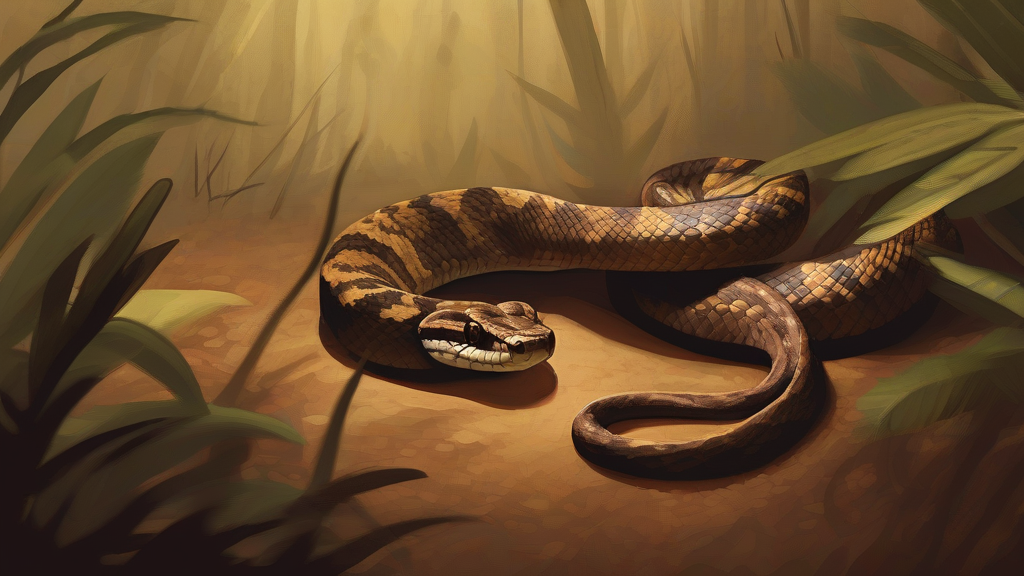
The bushmaster is a large, highly venomous pit viper belonging to the genus Lachesis, native to the tropical forests of Central and South America. It is notable as the longest venomous snake in the Americas, sometimes exceeding three metres in length, yet it is rarely seen because its mottled brown pattern blends almost perfectly with the forest floor's leaf litter. Nocturnal and generally shy, it strikes only when threatened, but its potent venom and considerable size make it one of the region's most feared serpents. The word combines 'bush', evoking wild, untamed vegetation, with 'master', suggesting dominion — a vivid name for an animal at the top of its food chain. Beyond herpetology, the term occasionally lends itself metaphorically to anything lurking unseen and dangerous, and it appears in place names, military hardware designations, and popular accounts of jungle expeditions.
nounA large, highly venomous pit viper (genus Lachesis), native to Central and South America, known for being the longest venomous snake in the Americas.
- A large venomous pit viper of the genus Lachesis found in Central and South America.
"The herpetologist moved slowly through the leaf litter, knowing a bushmaster might be coiled there in the dark."
"Hikers in Costa Rica are warned to watch for the bushmaster, whose bite can be fatal without antivenom."
"The bushmaster's cryptic coloration makes it nearly invisible among fallen leaves on the rainforest floor."
Standard regular plural.
"The reserve protects habitat where bushmasters breed undisturbed."
The bushmaster can grow over ten feet long, making it the longest venomous snake in all of the Americas.
Reviewed by Deb Chak, Editor. AI-assisted content curated by RJS Tech Solutions LLP.
Etymology of bushmaster
The word 'bushmaster' is a compound of English 'bush' — from Old Norse 'buskr', meaning shrub or thicket — and 'master', from Old English 'mægister', borrowed ultimately from Latin 'magister'. It was formed by English speakers to describe the great snake that dominates the American bush, with the compound attested from around the late eighteenth or early nineteenth century as European naturalists catalogued South American fauna. Its Latin-derived element links it distantly to words like 'magistrate' and 'magisterial'.
How bushmaster is actually used
The name is applied to snakes of the genus Lachesis; it is used chiefly in natural history and travel writing about Central and South America, and carries connotations of danger and remoteness.
Easily confused with bushmaster
A bushman is a person who lives or works in the bush or wilderness, whereas a bushmaster is a large venomous snake.