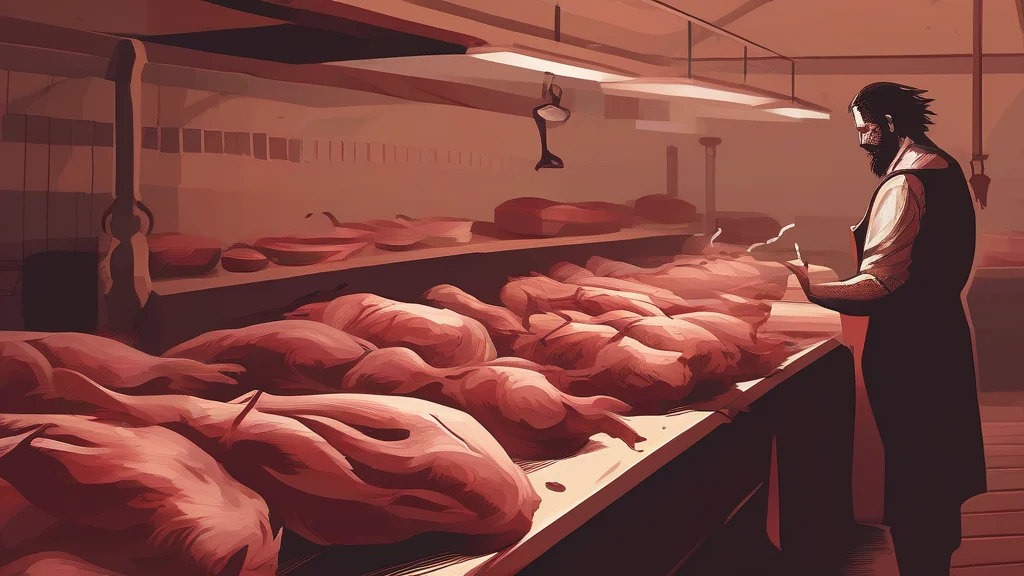
What does butcherly mean?
"Butcherly" is a rare English adjective meaning cruel, savage, or bloodthirsty in a way that evokes the work of a butcher — indiscriminate, gory, and merciless. It is typically applied to acts of violence, massacres, or treatment so brutal it seems fit only for a slaughterhouse: historians might describe a general's butcherly repression of a revolt, or a critic might recoil at a novel's butcherly scenes of carnage. Formed simply from the noun "butcher" plus the adjectival suffix "-ly," the word inherits all the horror of its root while functioning as a descriptor of manner or character rather than of profession. It belongs to formal and literary register, appearing chiefly in journalism, history, and polemic where a writer wants to brand violence not merely as deadly but as crude, excessive, and dehumanizing. Because it is uncommon, it can lend writing a pointed, archaic force that more familiar words like "brutal" lack.
adjectiveResembling or characteristic of a butcher; cruel, savage, or marked by bloody violence, especially in killing or slaughter.
- Cruel, savage, or bloodthirsty in a manner likened to that of a butcher; involving indiscriminate or gory slaughter.
"The critic condemned the film's butcherly depiction of the battlefield."
"The report described the dictator's butcherly suppression of the uprising."
"His butcherly handling of the carcass shocked even the veteran hunters."
Butcherly literally means 'like a butcher' — a word English built by bolting its everyday '-ly' onto one of its grimmest trades.
Reviewed by Deb Chak, Editor. AI-assisted content curated by RJS Tech Solutions LLP.
Etymology of butcherly
"Butcherly" is formed within English from the noun "butcher" combined with the suffix "-ly." The noun traces back through Middle English "bocher" to Old French "bouchier," meaning a slaughterman, which derives from "bouche" (mouth), from Latin "bucca" (cheek or mouth) — a link preserved today in rare cognates such as "debouch" and the anatomical term "buccal." The adjective arose in early modern English, when writers needed a vivid way to characterize slaughter as befitting a butcher.
How butcherly is actually used
A rare, literary word used almost exclusively to condemn violence as crude and excessive; it carries strongly negative connotations and appears mostly in historical or journalistic writing rather than everyday speech.
Easily confused with butcherly
"Butchery" is a noun meaning the trade of slaughtering animals or an act of brutal, incompetent killing, while "butcherly" is an adjective describing something that resembles a butcher in cruelty or gore.