What does butted mean?
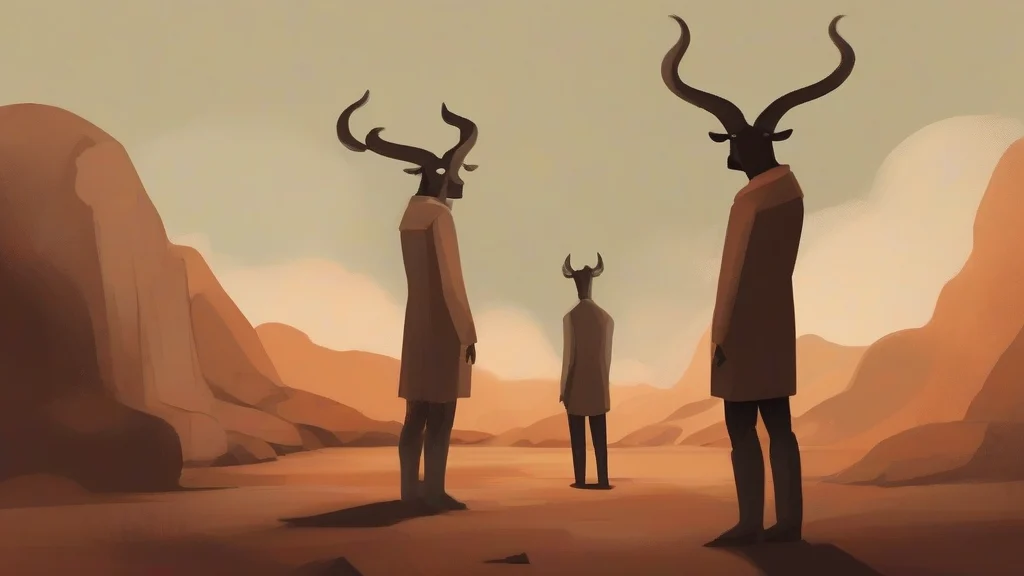
Butted is the past tense and past participle of the verb butt, meaning to strike or push forward with the head or horns — the way goats, rams, and bulls clash. By extension it appears in vivid figurative phrases: people who quarrel are said to have 'butted heads', and someone who interrupts uninvited has 'butted in'. A second, quieter sense belongs to craft and building: when two pieces of wood or metal are placed end to end so their surfaces touch directly, they are said to be butted together, forming a butted joint. The word therefore spans two very different worlds — animal aggression on one side and precise carpentry on the other. It is common in everyday speech and journalism, generally informal in tone except in technical contexts. Its versatility makes it useful for describing both physical collisions and social friction.
verbPast tense and past participle of 'butt': to strike or push with the head or horns, or to join end-to-end.
- Struck or pushed with the head or horns, as animals do
- Butted in — interrupted rudely or intruded into a conversation
- Butted against / butted together — placed or joined so ends or edges touch
"The ram butted the fence repeatedly until a plank gave way."
"The young bull butted his rival squarely in the flank."
"She apologized after realizing she had butted into a private conversation."
Goats don't argue politely — they literally 'butt heads', which is why that phrase exists at all.
Reviewed by Deb Chak, Editor. AI-assisted content curated by RJS Tech Solutions LLP.
Etymology of butted
The verb butt comes from Middle English 'butten', likely from Anglo-French 'buter' meaning to strike or push, ultimately connected to Old Norse 'búta' (to butt) and related to the notion of thrusting against a mark or target — the same root gives us 'butte' as a raised landform and the archaic sense of 'butt' as a target for archery practice. The word has been used of horned animals clashing since Middle English times, giving rise centuries later to the figurative phrase 'to butt heads'. Its use for joining materials end-to-end developed in trade and craft vocabulary.
Related word forms
How butted is actually used
Mostly informal in its figurative senses; 'butted heads' implies conflict between people, while 'butted in' carries a mildly rude connotation of unwelcome interruption. In carpentry and construction, 'butted' describes joints where two pieces meet end-to-end without overlap ('a butted joint').
Easily confused with butted
'Abutted' means joined at an edge or border, while 'butted' can mean struck with the head or also joined end-to-end — the overlap in the joining sense causes confusion.
'Putted' is the past tense of putt (in golf), whereas 'butted' is the past tense of butt (to strike with the head or push against).