What does buttoned mean?
"Buttoned" is the adjectival form of the verb "to button," used primarily to describe clothing that has been fastened shut with buttons, as in a cardigan buttoned to the top. Beyond the literal sense, it carries a well-established figurative meaning: someone described as buttoned-up is reserved, formal, or tightly self-controlled, evoking the image of a person whose exterior is as neatly closed as their coat. This figurative use is common in journalism and character description, where it can suggest either admirable discipline or emotional stiffness depending on tone. A close relative, "button-down," originated with shirts whose collars fastened with buttons and now denotes a conservative, conventional style or personality. The word derives ultimately from Old French "bouton," meaning a bud or knob. Whether describing a raincoat battened against the cold or a cautious accountant who never loosens his tie, "buttoned" conveys neatness, restraint, and closure.
adjectiveFastened with buttons, especially describing clothing closed at the front by buttons. Figuratively, it describes a person who is reserved, prim, or strictly conventional in manner.
- (Of clothing) fastened or closed with buttons.
- (Figurative) Primly conventional, reserved, or emotionally guarded — as in "a buttoned-up executive".
"She wore a high-collared coat buttoned to the throat against the winter wind."
"His overcoat was buttoned all the way to the collar."
"She gave a buttoned, formal speech that revealed little of her true feelings."
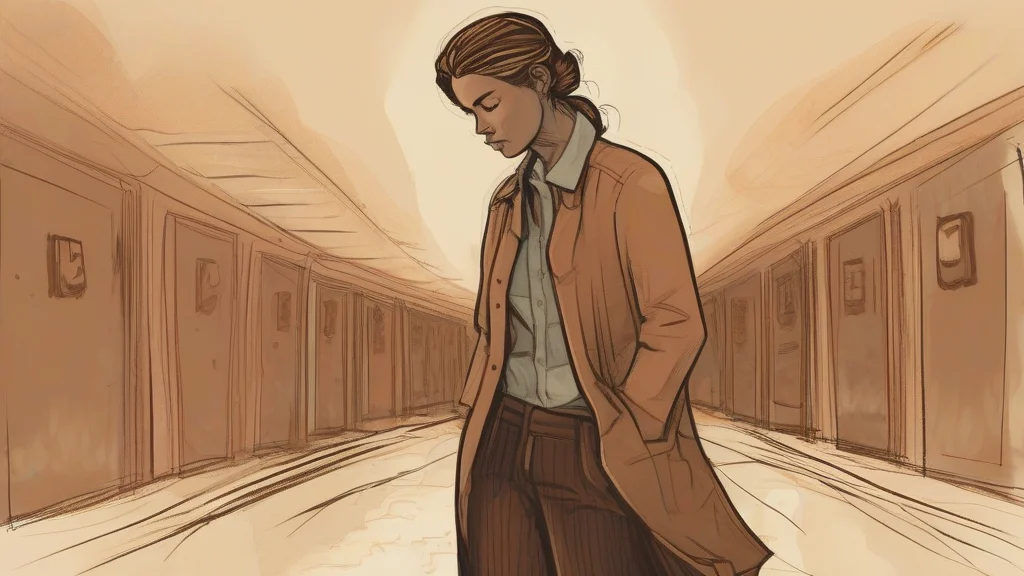
The phrase "buttoned-up" originally described neatly fastened coats — then came to describe people whose personalities were just as tightly closed.
Reviewed by Deb Chak, Editor. AI-assisted content curated by RJS Tech Solutions LLP.
Etymology of buttoned
The word traces to the verb "button," which entered Middle English from Old French "botoner," derived from "bouton," meaning a bud, knob, or protuberance — buttons having originally resembled small buds. The root is the Germanic-origin Old French verb "bouter," "to thrust or push." The adjective "buttoned" arose naturally as the participial form of the verb, and by extension came to describe not only fastened clothing but also tightly restrained personalities, especially in the modern phrase "buttoned-up." Related borrowings from the same French stock include "boutonnière," a flower worn in a buttonhole, and "buttress," an architectural support.
Related word forms
How buttoned is actually used
Most often used predicatively or attributively to describe garments. The figurative sense appears chiefly in the collocation "buttoned-up", which can carry either approval (organized, disciplined) or mild criticism (inflexible, emotionally distant). The related hyphenated adjective "button-down" derives from collar buttons on shirts and now connotes conservative respectability.
Easily confused with buttoned
"Butted" means collided with or joined end-to-end (as in butting heads), while "buttoned" refers to fastening with buttons.