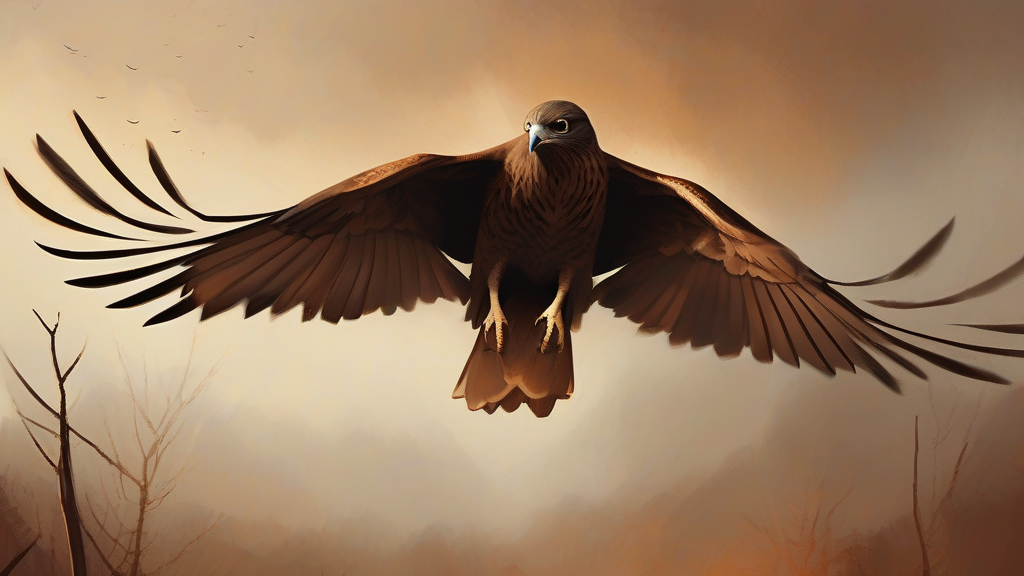
What does buzzard mean?
The word "buzzard" names a large bird of prey, though exactly which bird depends on where you are. In British English, a buzzard is a broad-winged hawk of the genus Buteo — most familiarly the common buzzard, now one of Britain's most widespread raptors, often seen soaring over farmland on outstretched wings. In North American informal usage, by contrast, "buzzard" typically refers to a vulture, especially the turkey vulture, giving the word a slightly scruffy, old-fashioned flavor there. The term traces back through Old French to Latin buteo, meaning a kind of hawk, and survives in compound names such as the honey buzzard. Because the two senses describe quite different birds — an active hunter in Europe, a carrion-eater in America — context and region matter when using this word. For writers and birdwatchers alike, "buzzard" is a useful reminder that common bird names can travel across the Atlantic and change their meaning along the way.
nounA large bird of prey: in Britain, a broad-winged hawk of the genus Buteo (the common buzzard), and in North America, informally, a vulture such as the turkey vulture.
- A medium-to-large broad-winged hawk of the genus Buteo, especially the common buzzard of Eurasia (chiefly British usage).
- Any scavenging bird such as a vulture, especially the turkey vulture (informal North American usage).
"The buzzard circled lazily above the hedgerows, scanning the fields for rabbits."
"A lone buzzard hung on the thermal above the moor, wings barely moving."
"The old-timers called every vulture that perched on the fence post a buzzard."
Regular plural; used both for groups or multiple individuals of the hawk and, in American informal speech, for vultures.
"Several buzzards rose slowly from the stubble field at dawn."
Same word, different bird: to a Brit a buzzard is a noble hawk, but to many Americans it's just another name for a vulture.
Reviewed by Deb Chak, Editor. AI-assisted content curated by RJS Tech Solutions LLP.
Etymology of buzzard
"Buzzard" entered Middle English from Old French busart (modern busard), which derives from Latin buteo, a word for a kind of hawk. The Latin root also gives us the scientific genus name Buteo and the ornithological term "buteonine". The word has been used in English since the medieval period, originally for hawks regarded as less noble in falconry, and later extended in North America to vultures.
How buzzard is actually used
Regional meaning differs sharply: in British English, 'buzzard' names a specific common hawk (Buteo buteo) and carries no negative connotation; in North American informal speech it usually denotes a vulture and can sound unflattering or folksy. The word is standard for the bird but the North American scavenger sense is informal.
Easily confused with buzzard
In British English a buzzard is itself a type of broad-winged hawk, but in North American informal usage 'buzzard' refers to a vulture, not a true hawk.
Vultures are carrion-feeding scavengers; Americans often call them 'buzzards', whereas the British buzzard is an active hunting hawk.