What does cabezon mean?
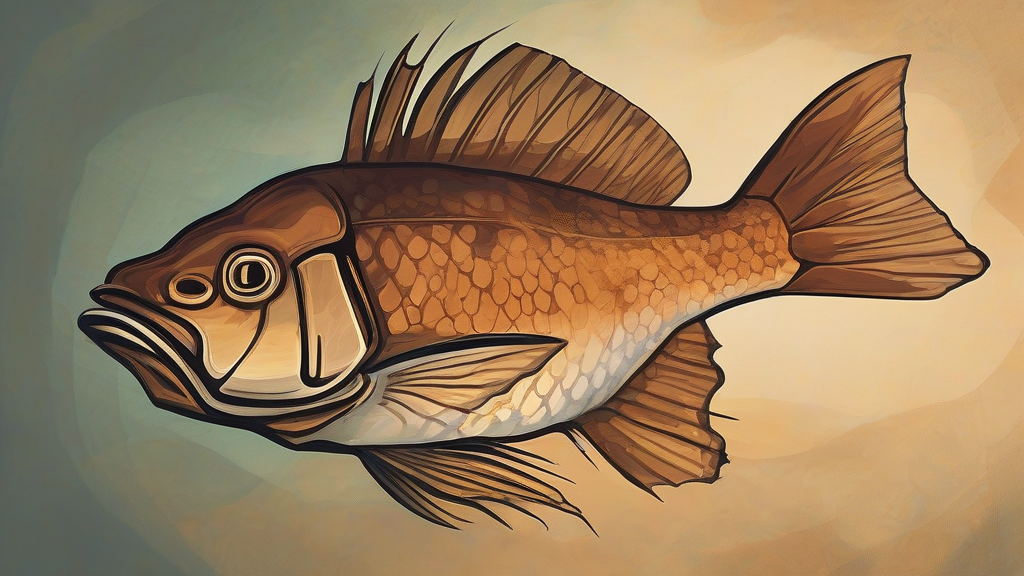
Cabezon is the common English name for Scorpaenichthys marmoratus, a large, heavy-bodied marine sculpin that inhabits rocky reefs and kelp forests along the Pacific coast of North America, from Alaska to Baja California. The name comes from the Spanish word for 'big-headed,' a fitting label for a fish whose broad, spiny head is its most distinctive feature. Mottled olive-green to reddish in color, the cabezon is a sit-and-wait predator, ambushing crabs, squid, and smaller fish, and it guards its eggs aggressively. It is a popular target for shore-based anglers, though care must be taken around its sharp spines and toxic roe. In Spanish, the related term cabezón can also describe a stubborn or foolish person, giving the word a colorful figurative life beyond ichthyology.
nounA large marine sculpin fish (Scorpaenichthys marmoratus) of the Pacific coast of North America, prized by anglers and named for its unusually large head; also, more generally, a big-headed or stubborn person (from the Spanish word for 'bighead').
- A large-headed marine sculpin (Scorpaenichthys marmoratus) found along the Pacific coast of North America.
- (From Spanish) A stupid or obstinate person; a bighead.
"The angler hauled a mottled green cabezon out of the kelp bed off Monterey."
"Divers spotted a well-camouflaged cabezon resting motionless among the rocks."
"In colloquial Mexican Spanish, calling someone a cabezón is a teasing way to say they're stubborn or dim."
Both forms occur; 'cabezones' follows the Spanish plural, while the unmarked 'cabezon' is common in angling usage as a collective or invariant plural.
"Several cabezon were sheltering beneath the ledge."
The cabezon's name literally means 'big head' in Spanish — and this grumpy-looking Pacific sculpin certainly lives up to it.
Reviewed by Deb Chak, Editor. AI-assisted content curated by RJS Tech Solutions LLP.
Etymology of cabezon
The word comes from Spanish 'cabezones', meaning 'big-headed ones', derived from 'cabeza' ('head'), which traces back through Latin 'caput'. American fishermen adopted the Spanish name for the big-headed sculpin of the Pacific coast, and it became the standard English common name. The same Latin root gives us cognates such as 'capital' and 'decapitate'.
How cabezon is actually used
In English, 'cabezon' is primarily used in the context of West Coast sport fishing and marine biology. The Spanish sense referring to a person is usually written 'cabezón' with an accent and appears mainly in Spanish-language contexts.
Easily confused with cabezon
A cabochon is a polished, domed gemstone cut, while a cabezon is a big-headed fish or (in Spanish-derived usage) a stubborn person.