What does cackled mean?
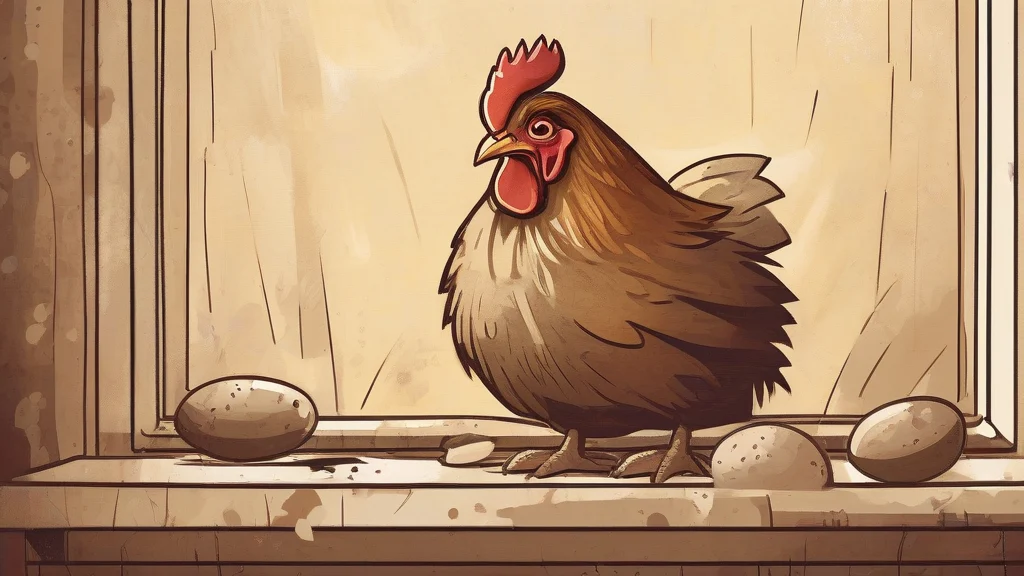
'Cackled' is the past tense and past participle of the verb 'cackle', meaning to laugh in a loud, harsh, broken, and repetitive way. Unlike a chuckle or giggle, a cackle sounds sharp and unlovely — the kind of laugh associated in fiction with witches, villains, and gleeful schemers, though it can also describe anyone laughing in a raucous, uncontrolled fashion. The word has a second, older sense: a hen is said to cackle when it squawks noisily, typically after laying an egg, and this barnyard image is in fact where the human sense derives from, both being imitative of the same clucking sound. Informal and highly evocative, 'cackled' appears frequently in narrative writing precisely because its sound mirrors its sense: saying it aloud nearly forces a rasping tone. Writers reach for it when they want a laugh that feels shrill, wicked, or comically excessive rather than warm or refined.
verbPast tense and past participle of 'cackle': to laugh in a loud, harsh, broken manner, or (of a hen) to squawk after laying an egg.
- To laugh loudly, harshly, and repetitively, especially in a way suggesting shrillness, age, or malice.
- (Of a hen) To make a loud squawking cry, especially after laying an egg.
"The old witch cackled as she stirred her bubbling cauldron."
"The villain cackled as his plan unfolded before him."
"Grandmother cackled at her own joke until tears rolled down her cheeks."
The witch's laugh got its name from a hen: 'cackle' originally described the noisy squawk a chicken makes after laying an egg.
Reviewed by Deb Chak, Editor. AI-assisted content curated by RJS Tech Solutions LLP.
Etymology of cackled
The verb 'cackle' entered Middle English in the medieval period, likely formed as an imitative echo of a hen's clucking, with close continental counterparts such as Dutch 'kakelen' and Low German 'kakkeln'. Its application to human laughter developed later by extension, transferring the bird's harsh squawk to a similarly grating human laugh. The word's onomatopoeic character has remained stable across its history, which is why its sound so closely matches its meaning.
Related word forms
How cackled is actually used
The verb carries strongly negative or comic connotations — a cackle suggests shrillness, age, or sinister glee rather than warm amusement. It is informal and vivid, common in fiction and caricature, and rarely used of pleasant or gentle laughing.
Easily confused with cackled
'Chuckled' denotes a soft, quiet, amused laugh, whereas 'cackled' denotes a loud, harsh, often unpleasant-sounding laugh.