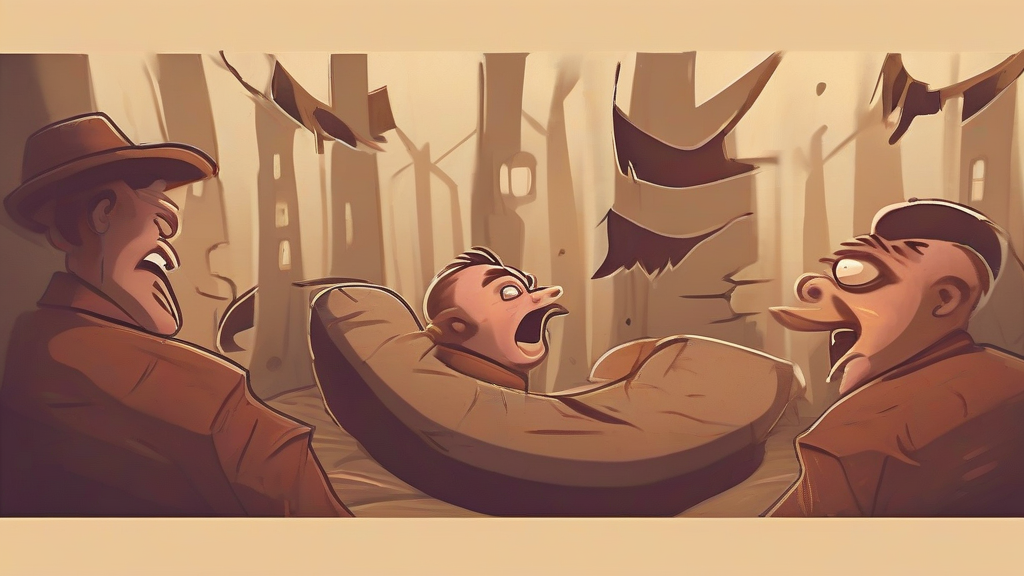
What does cackle mean?
Cackle refers to a loud, harsh, broken laugh — the kind of laughter that cuts through a room rather than blending into it. It can also describe the distinctive clucking cry a hen makes, particularly after laying an egg, and in this sense the word likely began as direct imitation of that sound. When used of people, cackle almost always carries a negative or comic connotation: it implies laughter that is shrill, unrefined, or unsettling rather than warm. This is why the witch's cackle has become such a fixed image in folklore, fairy tales, and Halloween imagery, and why describing someone as cackling rarely flatters them. The word functions both as a verb ('she cackled at the joke') and as a noun ('his cackle filled the hall'). Informal in tone, it is a vivid, evocative alternative to gentler words like chuckle or giggle whenever the writer wants laughter to sound sharp, raucous, or slightly sinister.
To laugh in a loud, harsh, broken manner; also, (of a hen) to give its characteristic loud clucking cry.
"The villain cackled as his plan finally came together."
A loud, harsh laugh; also the clucking cry of a hen.
"Her cackle could be heard from three rooms away."
Standard plural, used chiefly for repeated instances of the laugh or cry.
"The barnyard rang with the cackles of startled hens."
The word cackle imitates the sound it describes — one of English's oldest surviving onomatopoeias, tracing back to Middle English.
Reviewed by Deb Chak, Editor. AI-assisted content curated by RJS Tech Solutions LLP.
Etymology of cackle
Cackle derives from Middle English 'cakelen', an onomatopoeic formation imitating the clucking of a hen, first attested in the medieval period. It is related to similar echoic words in other Germanic languages, such as Dutch 'kakelen' and Low German forms, all of which imitate the same hen-like sound. The extended use of the word for harsh human laughter developed naturally from the resemblance between that laughter and the bird's cry.
Related word forms
How cackle is actually used
Cackle carries strongly negative or comic connotations when applied to human laughter — it suggests something shrill, uncontrolled, or villainous, which is why it is stereotypically associated with witches in folklore and fiction. It is informal in register.
Easily confused with cackle
A giggle is a light, often nervous or amused laugh, whereas a cackle is a loud, harsh, and typically unpleasant laugh.