What does cacti mean?
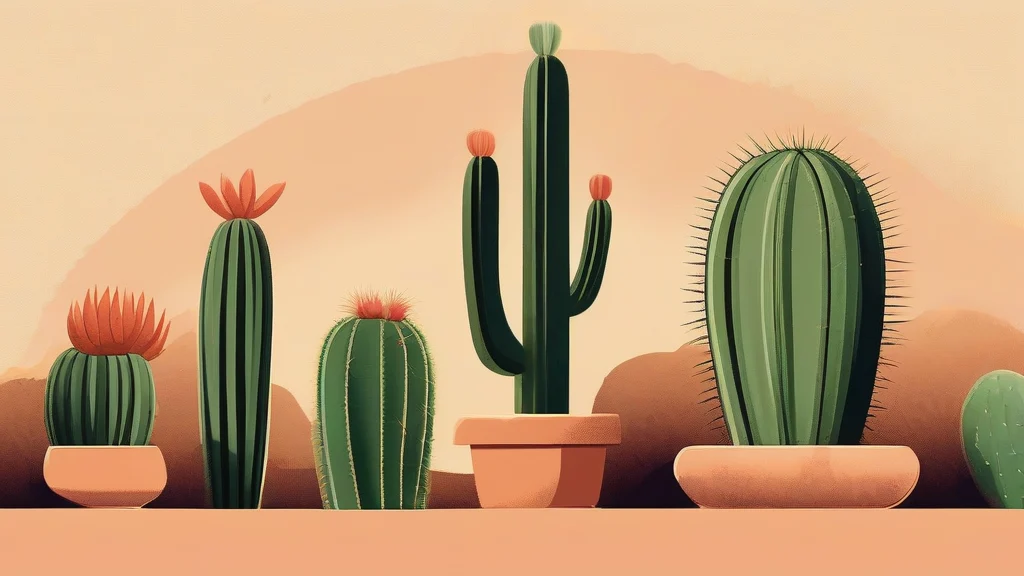
Cacti is the plural form of cactus, denoting multiple members of the plant family Cactaceae — hardy, slow-growing succulents distinguished by their thick, water-storing stems, reduced leaves, and protective spines. Native primarily to the Americas, cacti range from tiny button-sized species to the towering saguaro, which can exceed twelve meters in height. The word is used in both scientific contexts, where botanists classify hundreds of genera and thousands of species, and in everyday speech describing houseplants, desert landscapes, and gardens. Because they store water so efficiently, cacti have become enduring symbols of resilience and survival in harsh conditions. Both the Latin-derived plural "cacti" and the anglicized "cactuses" are accepted in contemporary usage, though "cacti" is generally preferred in formal writing. The term appears frequently in gardening, ecology, and popular culture, making it a familiar yet richly interesting word.
nounCacti is the plural of cactus, referring to multiple spiny, fleshy-stemmed plants adapted to dry environments.
- The plural form of cactus: multiple plants of the succulent family Cactaceae, characterized by thickened fleshy stems and spines adapted for water storage.
"The desert garden was filled with towering saguaro and barrel cacti."
"Rows of potted cacti lined the sun-drenched windowsill."
"Botanists catalogued over a hundred species of cacti native to the Sonoran Desert."
"Cacti" follows the Latin pattern for plurals and is the traditional, more formal choice; "cactuses" is fully acceptable in everyday English. Using "cactuses" as a singular or treating "cacti" as singular are common errors to avoid.
"Several tall cacti stood guard along the entrance path."
Despite their fearsome spines, some cacti can survive for years without a drop of water — one specimen famously lived seven years unplanted before being repotted.
Reviewed by Deb Chak, Editor. AI-assisted content curated by RJS Tech Solutions LLP.
Etymology of cacti
The word derives from Latin "cactus", which was borrowed from Ancient Greek "kaktos", a name the Greeks applied to a spiny plant — likely a kind of thistle or cardoon rather than the New World plants we now call cacti. Linnaeus adopted the Latin form when formally naming the family Cactaceae in the 18th century, fixing its use for these American succulents. As a Latin second-declension masculine noun, it forms the classical plural "cacti", alongside the anglicized alternative "cactuses".
Related word forms
How cacti is actually used
Both "cacti" (Latin-style plural) and "cactuses" (English-style plural) are widely accepted in modern English, though "cacti" remains the more traditional choice.
Easily confused with cacti
"Cactus" is the singular form referring to one plant, while "cacti" is the plural referring to more than one.