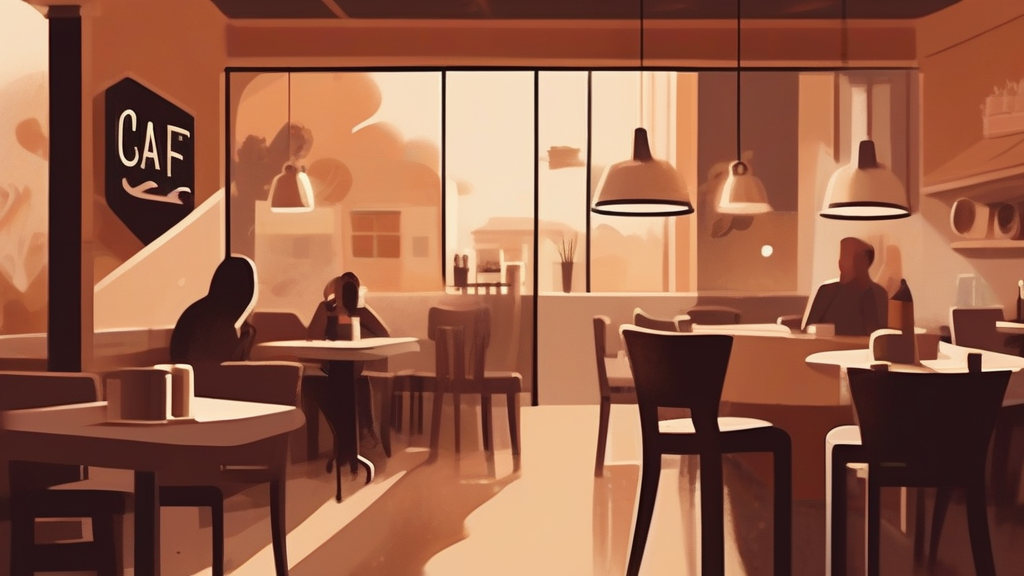
What does caf mean?
'Caf' is an informal abbreviation of either 'café' or 'cafeteria', referring to a small, relaxed establishment that serves coffee, snacks, sandwiches, and other light meals. It functions as a noun and appears almost exclusively in casual conversation and informal writing, particularly in British, Australian, and New Zealand English, where phrases such as 'the school caf' or 'the student caf' are everyday shorthand for familiar canteens and coffee shops. The tone of the word is friendly and unpretentious, evoking quick lunches with colleagues, catch-ups between lectures, or a flat white at a neighbourhood counter. In formal contexts, writers should use the full forms instead. Though modest in scope, 'caf' captures something culturally distinctive: the humble institution at the heart of daily routines in schools, hospitals, offices, and towns across the English-speaking world.
nounAn informal shortening of 'café' or 'cafeteria': a small, casual restaurant or canteen where light meals, snacks, and drinks are served.
- A café: an informal short form used especially in British, Australian, and New Zealand English for a small casual eating place serving coffee, snacks, and light meals.
- A cafeteria: an informal short form for a self-service canteen, common in schools, universities, hospitals, and workplaces.
"We grabbed a quick lunch at the student caf before afternoon lectures."
"The new caf by the station does excellent flat whites and sourdough toasties."
"Meet me in the hospital caf at one — I've only got half an hour."
Because 'caf' is an informal clipping, its plural simply adds -s; some writers prefer to use the plural of the full word ('cafés') in careful prose.
"There are three good cafs within walking distance of campus."
'Caf' is what happens when busy students and workers get tired of saying two whole syllables for their lunch spot.
Reviewed by Deb Chak, Editor. AI-assisted content curated by RJS Tech Solutions LLP.
Etymology of caf
'Caf' arose as a natural clipped abbreviation of 'café' and 'cafeteria'. The full word 'café' entered English from French in the early nineteenth century, ultimately tracing back to Italian 'caffè' and Turkish 'kahvehane', with the beverage name deriving from Arabic 'qahwah'; 'cafeteria' came into American English in the nineteenth century via Spanish 'cafetería'. As with many clipped colloquialisms, 'caf' developed through everyday speech, becoming especially entrenched in Australian and New Zealand usage before spreading informally to Britain. It shares its ultimate origin with related words such as 'coffee', 'caffeine', and 'coffeehouse'.
How caf is actually used
'Caf' is distinctly colloquial and conversational; it belongs to speech, texting, and casual writing rather than formal prose. It is most established in Australia, New Zealand, and Britain; North Americans more often say 'café', 'diner', or simply 'the cafeteria'. Because it is an abbreviation rather than a separate word, it should be avoided in formal or edited writing, where 'café' or 'cafeteria' is preferred.
Easily confused with caf
'Café' is the full standard word for a coffeehouse or small restaurant, while 'caf' is merely its informal spoken abbreviation.
'Cafeteria' denotes a self-service restaurant where customers queue and carry trays, whereas 'caf' can abbreviate either it or 'café' informally.