What does caisson mean?
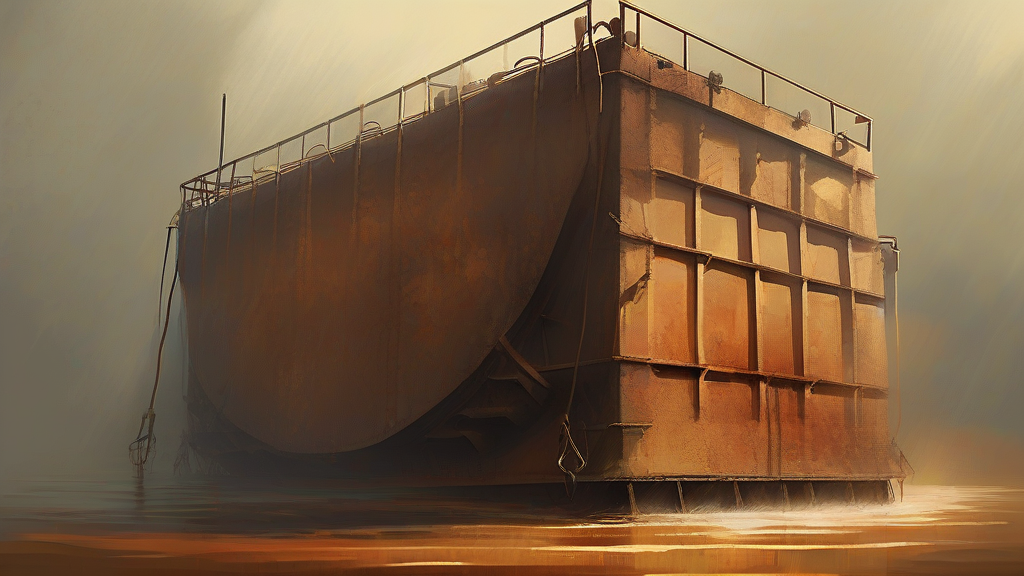
A caisson is a large, watertight chamber used in civil engineering to allow construction work in waterlogged ground, most famously in building the foundations of bridges and harbour walls. Sunk into a riverbed or seabed, it may be filled with compressed air to keep water out so that workers can excavate and pour concrete in relatively dry conditions. The word also has an older military sense: a chest or wagon for transporting artillery ammunition, still seen today when a ceremonial caisson carries a flag-draped coffin at a state funeral. In architecture, 'caisson' describes a recessed panel set into a ceiling or vault, giving a decorative coffered effect. Working inside pressurized caissons gave its name to 'caisson disease', better known as decompression sickness or 'the bends'. The term derives from French 'caisse' meaning box or case.
A large watertight chamber, open at the bottom, sunk into a riverbed or waterlogged ground and often filled with compressed air, within which construction work such as bridge pier foundations can be carried out.
"Divers helped guide each concrete caisson into position on the riverbed."
Often qualified as 'pneumatic caisson', 'open caisson', or 'box caisson' depending on the design.
A chest for storing ammunition, especially one towed or carried alongside artillery pieces.
"The gunners replenished their cannon from the caisson parked just behind the line."
This older military sense survives mainly in historical and ceremonial contexts.
A recessed ornamental panel in a ceiling or vault, forming part of a coffered design.
"The Pantheon's dome is famed for its rings of stepped caissons."
Sometimes called a 'coffer' in architectural terminology.
Standard regular plural.
"Several caissons were floated out to the site and sunk in sequence."
The word 'the bends' — decompression sickness — was first named 'caisson disease' after the tunnel builders who suffered it working inside pressurized underwater chambers.
Reviewed by Deb Chak, Editor. AI-assisted content curated by RJS Tech Solutions LLP.
Etymology of caisson
The word 'caisson' entered English from French in the early 18th century, deriving ultimately from 'caisse', meaning a box or case, which itself traces back through Old French to Latin 'capsa' ('a container'). It was first used in English for ammunition chests before being adopted by engineers in the 19th century for the watertight structures used in underwater construction. Cognates sharing this root include 'case' and 'chase', while Italian 'cassone' preserves the original 'large chest' meaning.
Related word forms
How caisson is actually used
In modern usage 'caisson' most often refers to the engineering structure used in bridge and harbour construction. The military sense survives chiefly in ceremonial contexts such as funerals at Arlington National Cemetery. 'Caisson disease' is now more commonly called decompression sickness or 'the bends'.
Easily confused with caisson
'Casson' is primarily a surname and lacks the engineering and military senses of 'caisson'; 'caisson' is the standard spelling for both the construction structure and the ammunition chest.