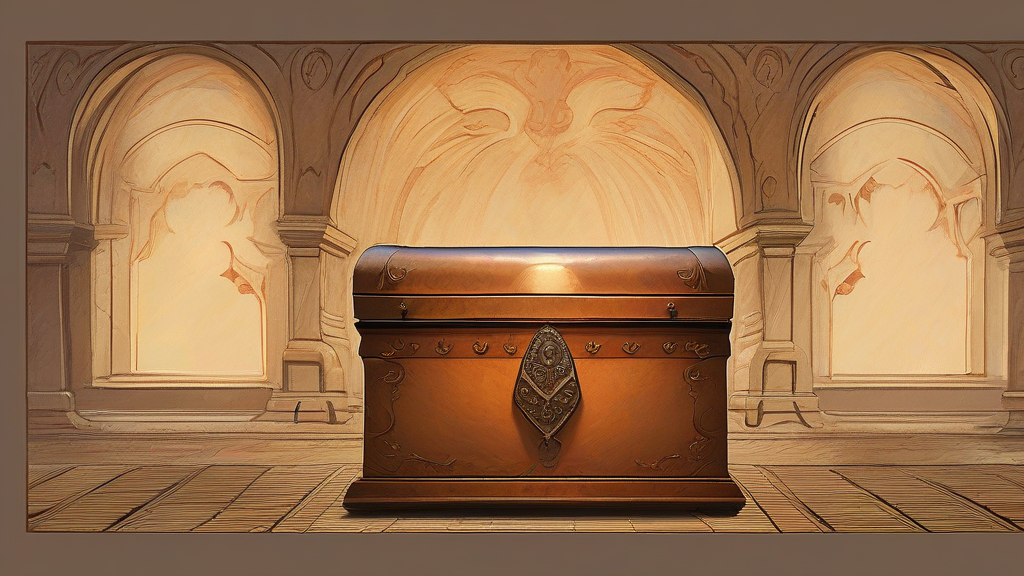
What does cassone mean?
A cassone is a large, richly decorated chest produced primarily in Italy during the Renaissance, most famously in Florence and Siena. These imposing pieces of furniture served as storage for clothing, textiles, and household goods, but they held particular cultural significance as bridal items: a cassone was often commissioned for a wedding, filled with the bride's trousseau, and conveyed ceremonially to her husband's household. Many surviving examples feature elaborate carved and gilded ornamentation or painted panels depicting biblical, mythological, or historical narratives, making them important documents of Renaissance art as well as domestic life. The term comes from Italian, ultimately from Latin capsa, meaning box or container, which also gives English words such as 'case' and 'caisson'. Today 'cassone' appears mainly in art-historical writing, auction catalogues, and museum descriptions, where it denotes a specific and celebrated genre of Renaissance furniture.
nounA large ornamental chest, typically made in Italy during the Renaissance, used to store clothing and linens and often given to a bride as part of her dowry. Cassoni were frequently elaborately painted or carved with mythological and historical scenes.
- A large ornate chest made in Renaissance Italy, especially one given to a bride for her trousseau and decorated with painting or carving.
"The museum's Renaissance gallery is dominated by a magnificent painted cassone commissioned for a Florentine wedding in the 1470s."
"The bride's cassone, painted with scenes from classical mythology, was paraded through the streets of Florence to her new husband's house."
"Collectors of Renaissance furniture prize cassoni for their gilded stucco work and narrative panels."
The plural follows the Italian pattern; 'cassones' occasionally appears but 'cassoni' is standard.
"Two painted cassoni flank the fireplace in the palazzo's main salon."
Every cassone tells a love story: these painted chests carried a bride's trousseau into her new home, and their panels often depicted scenes meant to inspire virtue in newlyweds.
Reviewed by Deb Chak, Editor. AI-assisted content curated by RJS Tech Solutions LLP.
Etymology of cassone
Cassone derives from Italian, where it means a large chest, formed with the augmentative suffix '-one' on 'cassa', itself from Latin 'capsa', a box or receptacle. The same Latin root underlies English words such as 'case', 'caisson', 'cassette', and 'casket'. The English adoption of the term dates from the nineteenth century, when scholars and collectors began studying Renaissance furniture closely.
How cassone is actually used
A specialized term used chiefly in art history, museum contexts, and discussions of Renaissance furniture; plural is 'cassoni'. The word retains its Italian character and is usually italicized in formal writing.
Easily confused with cassone
A cassone is a decorative Italian Renaissance chest, while a caisson is a watertight structure used in engineering or underwater construction.