What does calabaza mean?
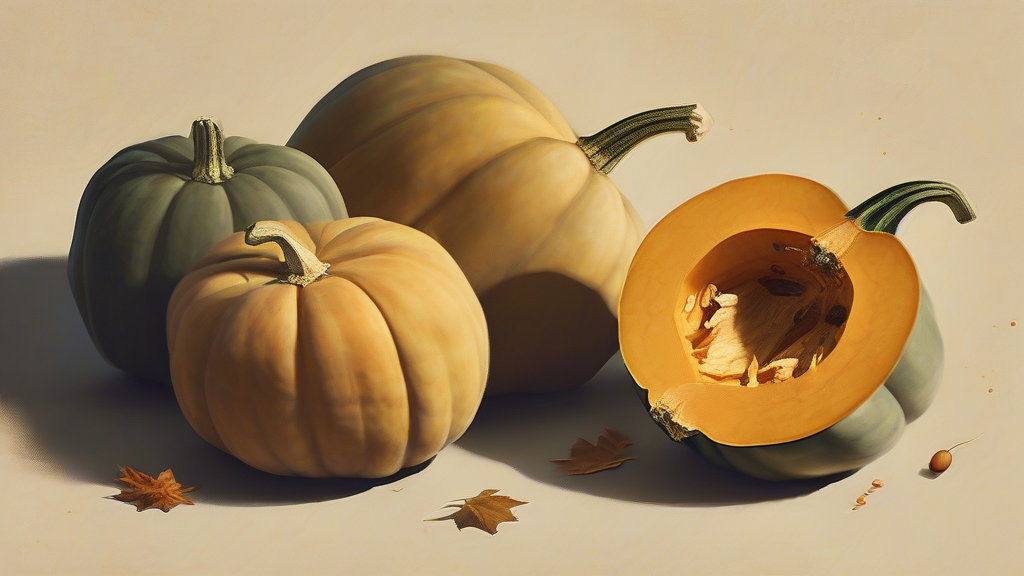
Calabaza is a noun borrowed from Spanish that denotes a large, edible pumpkin-like squash, typically of the species Cucurbita moschata and related varieties. It has long been central to Latin American, Caribbean, and Iberian cooking, where its sweet, dense orange flesh is used in soups, stews, candied desserts, and holiday dishes. In American English the term is most familiar in regions with strong Hispanic influence — Florida, Texas, the Southwest, and Caribbean communities — where markets label these squash as 'calabaza' rather than pumpkin. Because Spanish uses the word broadly for pumpkins and squashes alike, it resists the narrow botanical categories English speakers often expect. The word carries warm, domestic connotations of harvest and home cooking, and it shares an ultimate Arabic ancestry with the unrelated-sounding 'calabash', a fact that frequently surprises even careful readers of food writing.
nounA large pumpkin-like squash of various cucurbit species, especially Cucurbita moschata, widely grown and eaten in Latin America and the Spanish-speaking Caribbean.
- An edible pumpkin-like winter squash (Cucurbita moschata and related species) common in Latin American and Caribbean cooking
- (in some regional usage) any gourd or pumpkin-like fruit
"The market stalls were heaped with green-skinned calabaza, its dense orange flesh ideal for soups and stews."
"She roasted chunks of calabaza with olive oil until the edges caramelized."
"Puerto Rican sofrito often begins with diced onion, peppers, and calabaza."
The regular anglicized plural 'calabazas' is standard in American English; the Spanish original treats the word as feminine singular with the same plural form.
"Three calabazas sat in a pyramid at the farm stand."
In much of the Spanish-speaking world, 'calabaza' is simply what English speakers would call a pumpkin — so Cinderella's carriage, translated into Spanish, rolls on calabazas.
Reviewed by Deb Chak, Editor. AI-assisted content curated by RJS Tech Solutions LLP.
Etymology of calabaza
Calabaza entered English as a direct borrowing from Spanish, where 'calabaza' means pumpkin or squash. The Spanish word itself traces back through Andalusian Arabic during the centuries of Muslim rule in Iberia, ultimately deriving from the Arabic word for a large gourd or melon (related to 'qarʿ'). Its Arabic lineage makes it a cousin of the English word 'calabash', which arrived separately by way of French and Portuguese but descends from the same Arabic source family. The term became established in American English largely through Caribbean and Latin American foodways.
How calabaza is actually used
Borrowed directly from Spanish, the word is most at home in American English in areas with Hispanic culinary influence; elsewhere 'squash' or 'pumpkin' is more usual. In everyday Spanish it covers both pumpkins and squashes generally, so English speakers should not assume a single botanical species.
Easily confused with calabaza
Calabash refers to the bottle gourd (Lagenaria siceraria) or vessels made from its hard shell, whereas calabaza is an edible pumpkin-like squash of the genus Cucurbita.